
Built structures · Cabinets and chamber conversions
Cellar cheese cabinet with controlled supplementation
A cabinet in a cellar that adds controlled cooling, humidity and airflow when the cellar alone is too warm or too dry for cheese ripening.
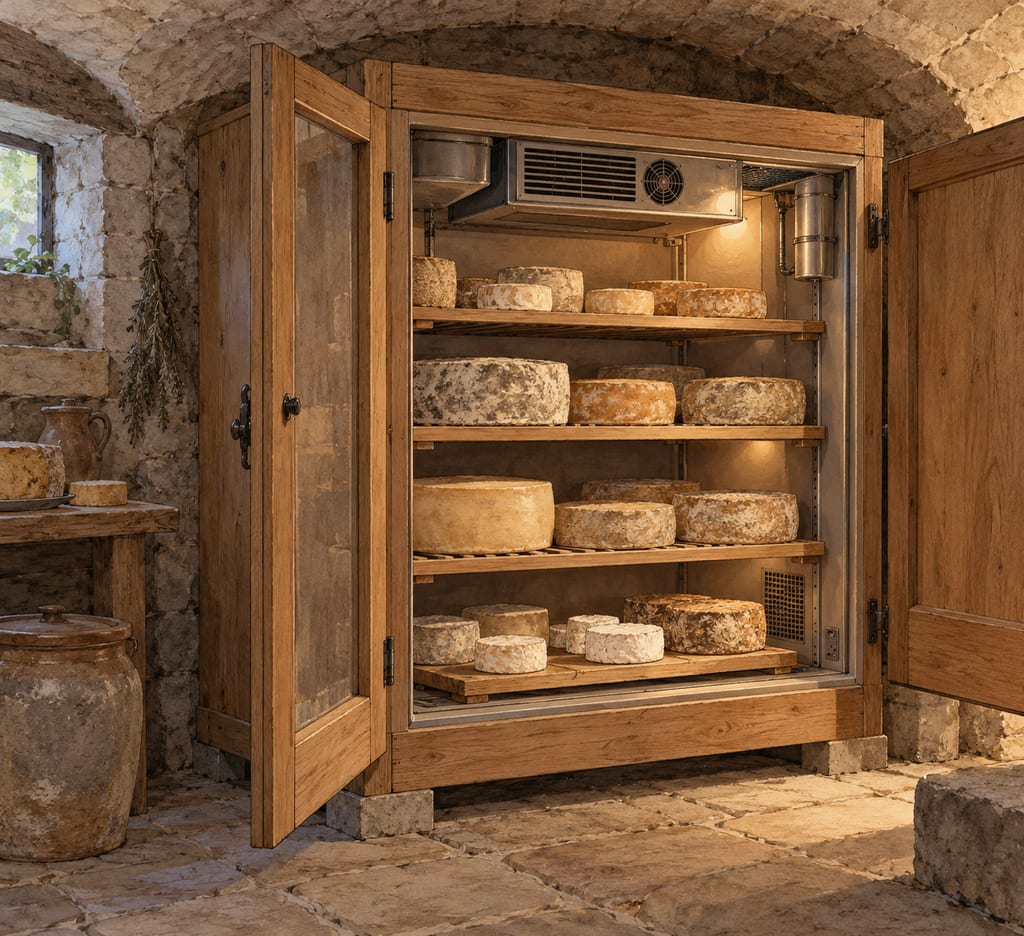
Overview
A cellar cheese cabinet holds cheese in a cool, humid enclosure inside a cellar. Supplementation adds controlled cooling, humidity or airflow where the cellar's own conditions fall outside the range needed.
The consulted sources are about curing chambers and fridge conversions. They describe the equipment, not cheese ripening.
Supplementing the cellar
The practice is to measure first, then correct only what is off. Where the cellar is dry, an ultrasonic humidifier raises humidity; a conventional vaporiser is advised against inside an enclosure because it raises the temperature when it runs.
Airflow is kept gentle. A fan run a few minutes a day avoids stagnant pockets without drying the surface.
Sources for this section
What is not established
The cheese-specific temperature, humidity and turning schedule are not established by the sources consulted. A separate cheese-ripening source is needed before a set point is chosen. A cellar cave conversion example exists in search results but was not read in full.
Sources for this section
Site
A build is made where it stands: moving it means building it again.
How it is built
Risks and precautions
Excess moisture allows unwanted mould; the guides advise cleaning humidifiers and wiping off mould.
Hazard sourceToo much airflow dries the surface too quickly.
Hazard sourceLog the cellar and the cabinet before any change.
Control sourceNot a validated ripening process. Cheese-specific temperatures and humidity are not established by the consulted sources.
Materials
- 1 unit Cabinet or cooler — Insulated enclosure in the cellar, with a door that seals.
- 1 set Temperature probe and controller — Probe placed away from vents and walls, controller on the cooling or heating device.
- 1 set Ultrasonic humidifier and humidity controller — Used only where the cellar is too dry; mist kept away from the cheese.
- 1 unit Small fan — Run for short periods to keep air moving.
- Log the cellar's temperature and humidity over several days before choosing a supplement.
- Place the temperature probe in the middle of the cabinet, away from the vent and the walls.
- Add humidity only when the cellar is dry; use an ultrasonic humidifier and keep its mist away from the cheese.
- Run a small fan for a few minutes at a time, positioned so that it does not blow on the cheese directly.
- Clean the humidifier regularly; the guides consulted advise monthly cleaning with vinegar.
Places
Documented for international use, with no single place of origin assigned.
Community
No community contributions have been published for this entry yet.
Share what you made
Sign in to contribute. Published comments and photos are free to read.
Sources
Eat Cured MeatMethod · Safety
How to build your DIY Curing ChamberFactory thermostat set to coldest, external controller in charge
Probe in the middle of the chamber away from vents and walls
Target 50 to 60 F (10 to 15 C) and 70 to 80 percent relative humidity with about 5 percent tolerance
Ultrasonic humidifier preferred; mist kept away from the meat
Small fan run a few minutes a day; compressor delay of 2 to 3 minutes
Clean humidifiers monthly with vinegar; white mould expected, others wiped off
Cited in: Overview; Supplementing the cellar
The House of HydroMethod
Meat Curing Chamber Humidity & TemperatureCuring humidity and temperature targets for home chambers, humidity control with a separate controller
Cited in: Supplementing the cellar
Ben StarrMethod
How to Convert a Refrigerator for Curing Meat or Aging CheeseRefrigerator conversion for curing and cheese ageing (search result; contents not read in full)
Cited in: Overview
Two Guys and a CoolerMethod
Building a Salami Chamber/Cheese CaveSalami chamber and cheese cave built from a cooler (search result; contents not read in full)
Cited in: What is not established