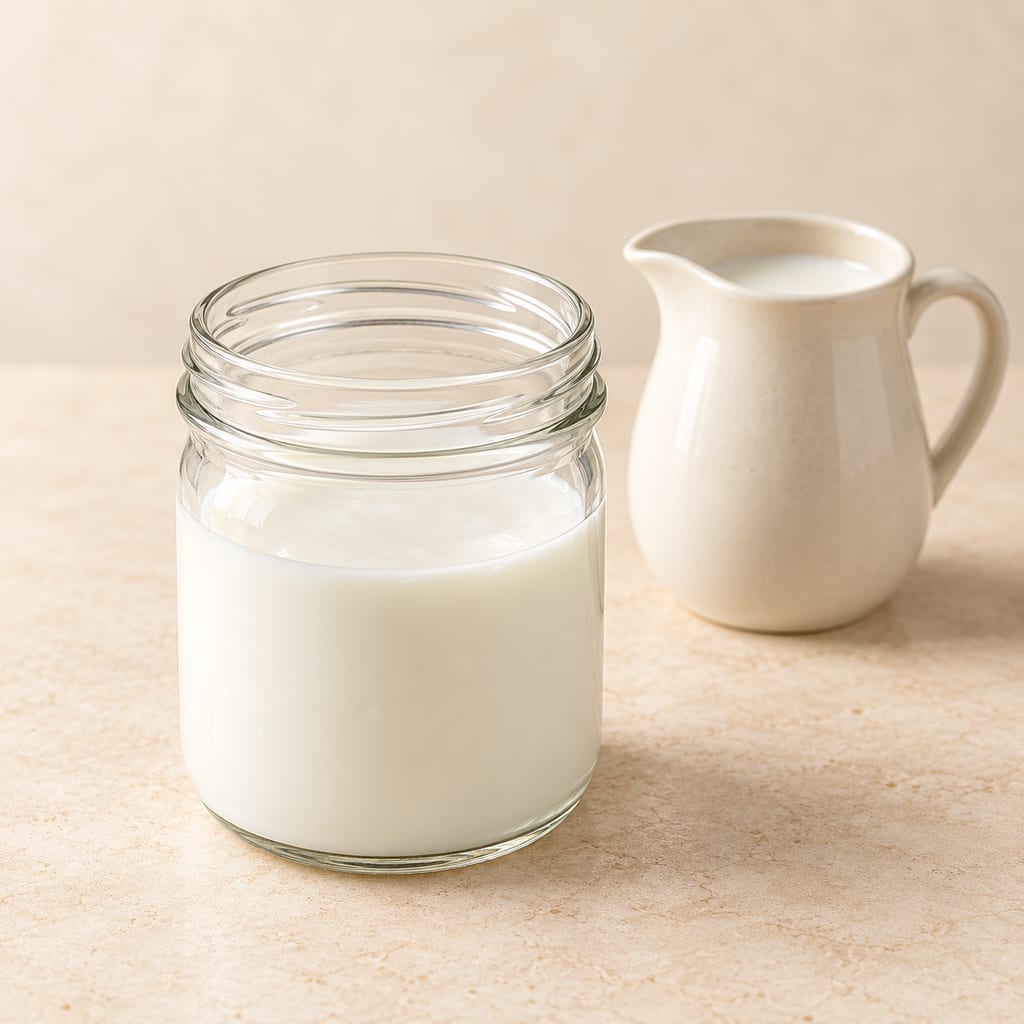
Set yogurt
Set yogurt keeps the milk’s cultured gel intact in its final container. This Canadian home method follows the same heating and inoculation as stirred yogurt, without the final stirring.
 FermenteaWhere food goes to change
Equipment · Incubators and warm holds
A washable insulated cooler with a removable jar rack and a low-power heater, holding covered yoghurt jars near 110 F (about 43 C) for several hours.
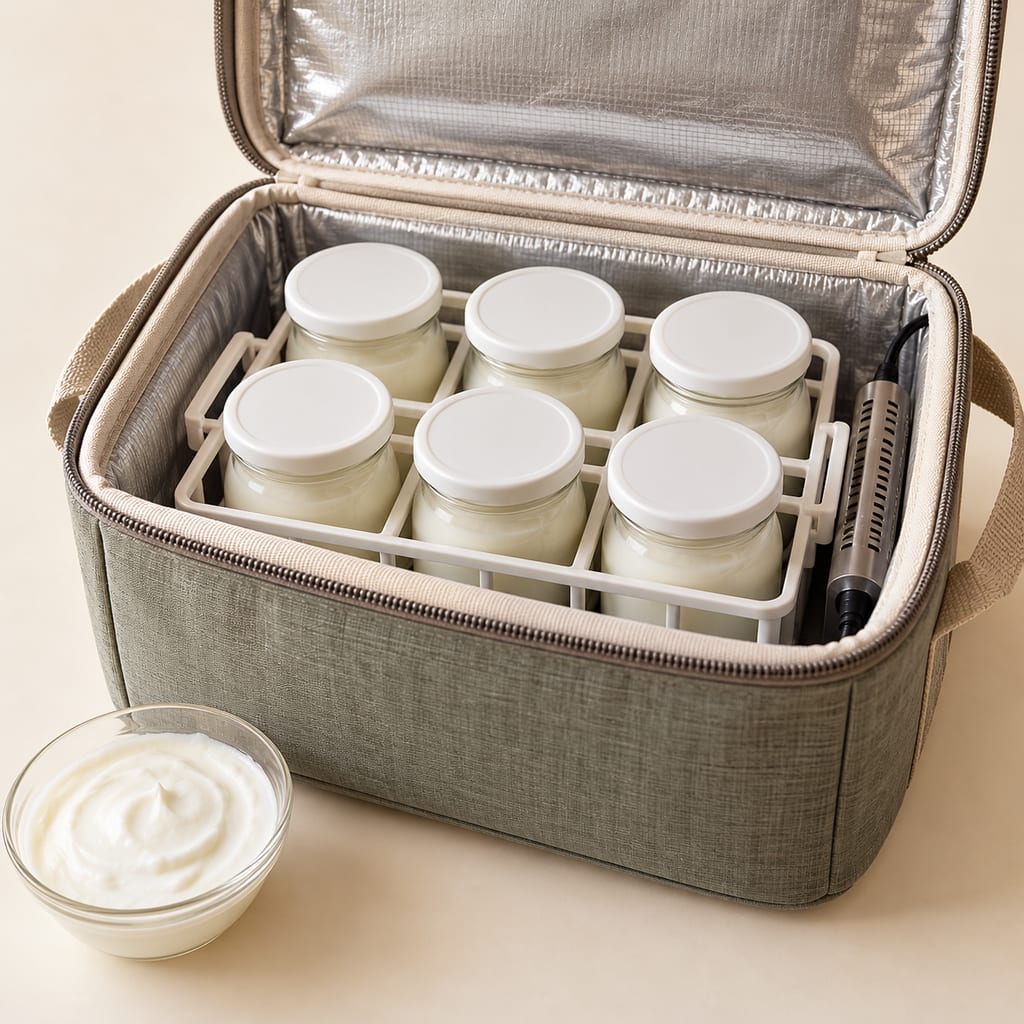
An insulated cooler incubator is a home-built warm hold. A cooler sealed around covered yoghurt jars stays warm by water or by a low-power heater. The brief treats it as the lowest-cost route to a stable temperature, and it sets a passive warm-water cooler as the baseline against which active control is measured.
The interior should be washable and fitted with a removable jar rack. A probe should measure product or water temperature independently of the controller, and an air-humidity sensor should not be immersed in water.
Colorado State University Extension gives 110 F (about 43 C) as the working target for yoghurt, with a tolerance of plus or minus 5 F. Its cooler method starts the water at 130 F and keeps it at or above 110 F during incubation, replacing the water as it cools.
The same guidance gives an incubation time of 4 to 12 hours. Yoghurt that drops below 110 F is still safe to eat, though it can come out looser. Warm-up behaviour, jar-to-jar variation and milk treatment are the points the brief asks the article to test.
Air heating and an external water-bath arrangement are both compared in the brief. A water bath is more even between jars, but it needs an immersion-rated heater, as described on the water bath incubator page.
Warm-up time and jar-to-jar variation are not measured in the consulted sources; power-loss recovery is unvalidated.
SourceYoghurt below 110 F (43 C) is still safe to eat, but may be looser; the target is not a food-safety threshold on its own.
Source →Documented for international use, with no single place of origin assigned.
Set yogurt keeps the milk’s cultured gel intact in its final container. This Canadian home method follows the same heating and inoculation as stirred yogurt, without the final stirring.
No community contributions have been published for this entry yet.
Sign in to contribute. Published comments and photos are free to read.
Colorado State University ExtensionMethod · Safety
Yogurt making at home (Colorado State University Extension)Target near 110 F (43 C) with plus or minus 5 F; cooler method keeps water at or above 110 F; 4 to 12 h; below 110 F is still safe but looser.
Cited in: What it is; Temperature and time; Comparison with other holds