
Built structures · Cold stores and coolers
Dedicated cold fridge for dry-ageing beef
A cold fridge kept only for dry-ageing beef, held at 1 to 3 C with controlled humidity, airflow and handling, so that the meat ages without spoiling.
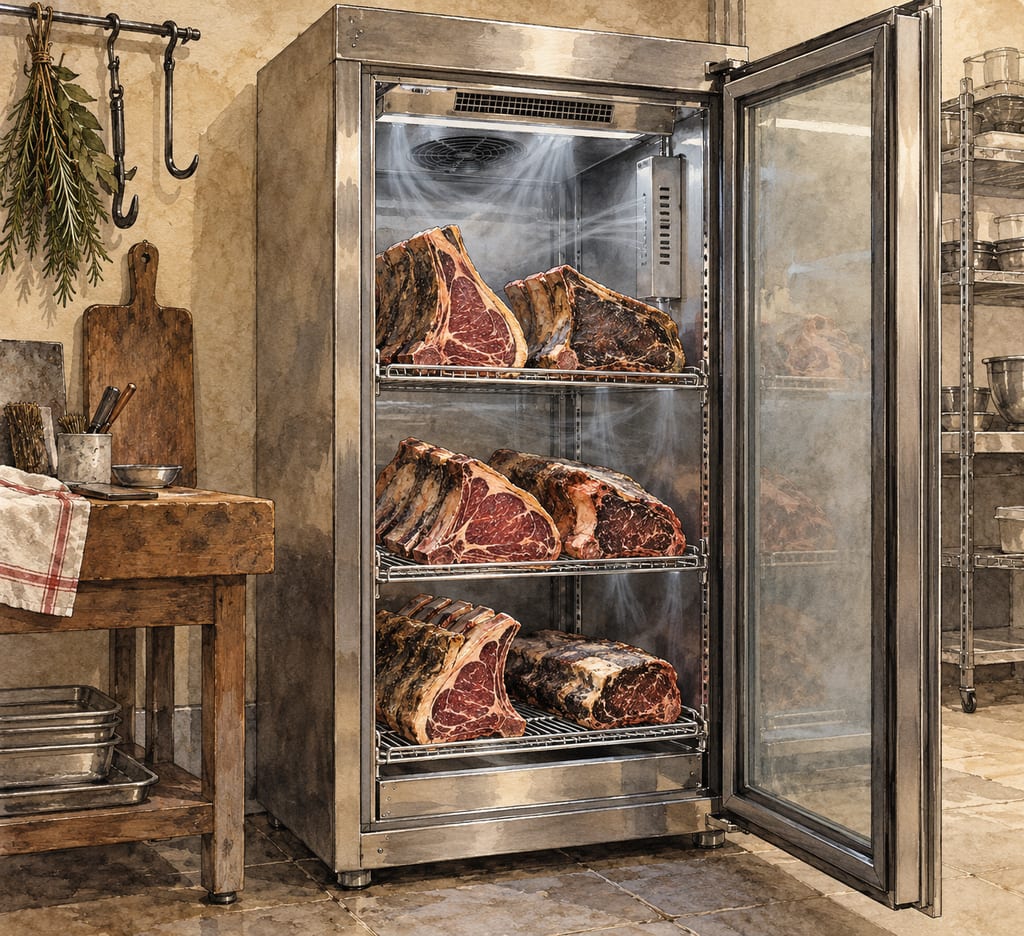
Overview
Dry-ageing beef holds a whole joint in a cold room so that moisture leaves the surface and enzymes tenderise the muscle. The surface dries and may form a mould crust that is trimmed before cooking. Dry-aged beef is kept for 15 to 28 days and can lose a third or more of its weight.
A dedicated fridge keeps the ageing separate from other food and holds the narrow temperature window the process needs.
Sources for this section
Temperature and humidity
Several guides place a dedicated fridge at 34 to 38 F (1 to 3 C). The window slows microbial growth while enzymes keep working. A manufacturer's figure of about 1.5 C and 82 percent humidity for 4 to 6 weeks is cited for beef.
Humidity figures disagree. Grade One Tools gives 75 to 85 percent; another source gives 60 to 80 percent. The readings in the actual fridge decide the setting.
Mould, trimming and handling
Surface mould is the main handling problem. The guides advise a small fan for air movement, changing the wrap every few days and trimming mould. The outer layer may darken while the interior stays sound. Frequent door openings disturb the conditions.
The bag alternative keeps surface mould off and reduces trim loss. A 2006 study in Meat Science found that aging in a moisture-permeable bag reduced weight loss, trim loss and yeast counts on lean at 21 days at 3 C.
Limits
The ageing record cannot establish that a joint is safe to eat. Trim loss, weight loss and humidity differ between sources. A product-specific record of temperature, humidity and time is needed for any joint sold or served.
Site
A build is made where it stands: moving it means building it again.
How it is built
Risks and precautions
Excess moisture lets unwanted mould grow; surface moulds form a crust that is trimmed off.
Hazard sourceTemperatures above the 1 to 3 C window let spoilage bacteria grow faster than the enzymes tenderise the meat.
Hazard sourceHold the fridge at 1 to 3 C, logged before and during ageing.
Control sourceKeep humidity in the range the chosen source gives, and log it.
Control sourceNot a validated ageing process for food safety. Ageing times and humidity differ between sources.
Materials
- 1 unit Dedicated fridge — Set to 1 to 3 C before any meat goes in; a non-frost-free design is easier to humidify.
- 1 unit Thermometer-hygrometer — Checked before loading.
- 1 unit Humidity device — Only where the fridge runs dry; the figures in the sources differ.
- 1 unit Small fan — Run for a short time each day.
- Racks or hooks — Tested with weight before loading.
- Run the fridge for 48 hours with the fan before loading, and confirm that it holds 1 to 3 C.
- Load the joint on a rack or hook with space around it, and avoid overcrowding.
- Change the wrap every few days and trim any surface mould, as the guides advise.
- Avoid frequent door openings, because each one upsets temperature and humidity.
- Age for 15 to 28 days or as the piece requires, and trim the crust before cooking.
Places
Documented for international use, with no single place of origin assigned.
Community
No community contributions have been published for this entry yet.
Share what you made
Sign in to contribute. Published comments and photos are free to read.
Sources
WikipediaHistory · Method
Beef agingDry-aged beef held near freezing for 15 to 28 days, losing up to a third or more of its weight
Surface moulds form a crust that is trimmed before cooking
After refrigeration, hanging sides of beef in coolers for weeks became standard
Cited in: Overview; Mould, trimming and handling
Butcher's HandbookMethod
How to Dry Age Beef at Home: Step-by-Step Butcher's Guide (2026)A dedicated fridge should hold 34 to 38 F (1 to 3 C) before meat goes in
Narrow temperature window slows microbial growth while enzymes tenderise
Cited in: Overview; Temperature and humidity; Limits
DRY AGERMethod
FAQ - Frequently asked questionsManufacturer recommends about 1.5 C and 82 percent humidity for 4 to 6 weeks, especially for beef
Cited in: Temperature and humidity
Grade One ToolsMethod
Understanding Meat Aging Fridge: Composition, Standards, and ApplicationsRelative humidity 75 to 85 percent cited for meat ageing; a second page gives 60 to 80 percent
Cited in: Temperature and humidity; Limits
ThermoWorksMethod
Dry Aging Beef at Home: A Thermal How-ToHome dry ageing under refrigeration with a thermometer-hygrometer checked before loading
Cited in: Temperature and humidity
Meat Science (Ahnstrom et al., 2006)Method
Dry aging of beef in a bag highly permeable to water vapourStrip loins aged 14 or 21 days at 3 C; bag aging reduced weight loss, trim loss and yeast counts on lean at 21 days
Cited in: Mould, trimming and handling
PMCMethod
Effects of Different Moisture-Permeable Packaging on the Quality of Aging Beef Compared with Wet Aging and Dry AgingMoisture-permeable packaging controlled water loss and reduced microbial contamination compared with dry ageing
Cited in: Mould, trimming and handling