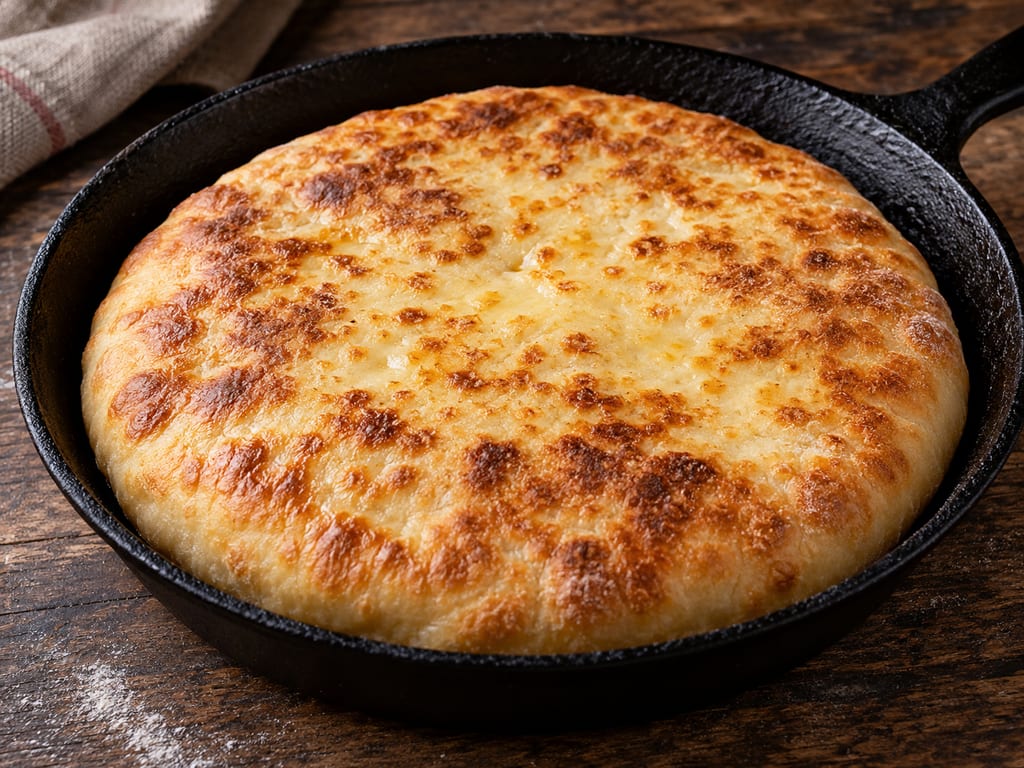
Gunda's pan-fried Imeretian khachapuri
Closed round cheese breads made with sour-cream dough and cooked in a frying pan. This named Gunda version has no added yeast or proofing stage.
 FermenteaWhere food goes to change
Equipment · Hearth pans and griddles
კეცი
A ketsi is a Georgian cooking pan traditionally used over hearth embers. Sources document clay pans in Imereti and a Gurian maker of stone or clay examples; they do not describe one standardized design.
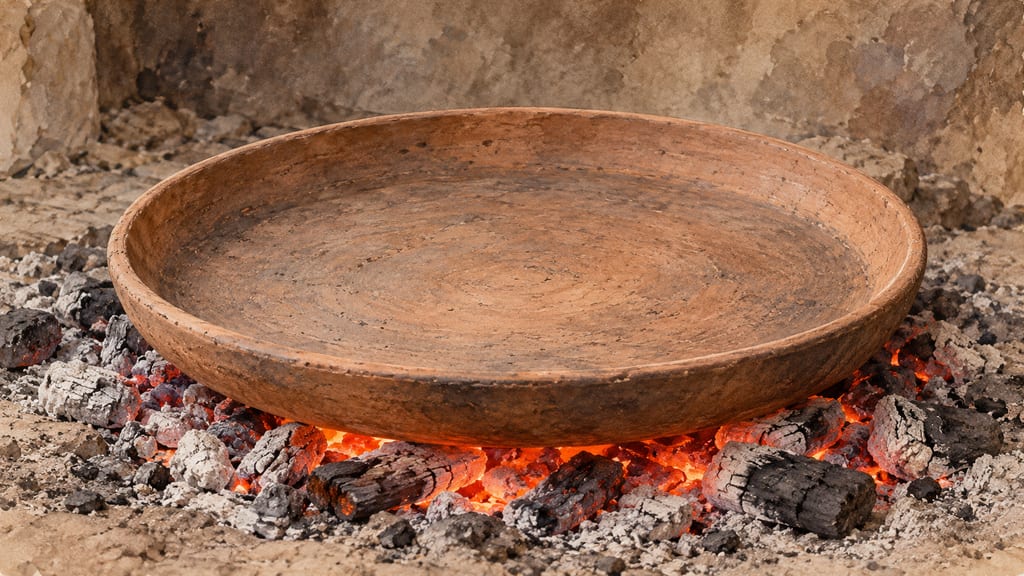
Ketsi is the Georgian name used for a cooking and baking pan. Its documented regional forms do not amount to a standardized product with one material, size or profile. Georgia Travel says bread in western Georgia was often baked on a ketsi, contrasting it with bread baked on the vertical wall of a tone oven. That distinction is about the surface receiving the dough: a horizontal heated pan rather than a heated oven wall.
An Imeretian khachapuri account calls the ketsi a clay pan placed on hot fireplace embers. A 2020 RFE/RL report uses the name for traditional stone or clay cooking pans made by a Gurian craft worker. These descriptions should remain separate: clay is documented for the Imeretian bread method, while the Gurian report records both stone and clay as local craft materials. Neither source says every ketsi has the same shape or composition.
Georgia Travel describes Imeretian khachapuri cooked on a clay ketsi over hot embers, a practice it says remains in some villages. In one documented version, dry bay-cherry leaves line the pan, the filled bread is placed on them, and more leaves cover it. That detail belongs to this described Imeretian method; it is not a universal instruction for every ketsi or every Georgian bread.
The pan provides a broad horizontal cooking surface warmed by the hearth. At the most basic physical level, contact with the heated clay cooks the base, while the surrounding embers and covering leaves shape the cooking environment. This clay-pan method is associated with a distinctive texture, but no measured heat, pan thickness, heating interval or standard baking time is established.
A Georgian wheat overview describes ketsi as a common western Georgian bread surface alongside the tone oven. A separate culinary overview notes that mchadi, a cornmeal cake, is traditionally baked in a clay ketsi. These references show that the pan is not limited to a single cheese bread, while the exact practice can differ by dish and community.
For a reader comparing equipment, a ketsi is a portable pan rather than a dug-in oven: the vessel can be made by a craft worker and placed at a hearth. It differs from a tone, whose dough adheres to a vertical heated wall. The available sources do not give a single universal diameter, depth, weight or fuel arrangement for ketsi.
A 2020 profile records Avto Sikharulidze saying he learned ketsi-making from his father as a child. It describes traditional Georgian stone or clay pans and identifies him at that time as the only maker in Guria still producing them in the traditional way. This is a dated report about one artisan and a regional craft; it does not prove that he was the only maker elsewhere in Georgia, that the craft later stopped, or that all pans are made by the same process.
The accompanying photograph shows round, shallow cooking pans beside the maker. It is useful evidence for one craft context, not a measured drawing or a universal template. The generated illustration on this page depicts a single clay example grounded in the Imeretian source and the inspected maker photograph; it is editorial interpretation, not documentation of a specific surviving artifact.
The material consulted here does not date the ketsi's origin, provide standardized dimensions or capacity, give a general cleaning or seasoning procedure, or establish current retail availability. The RFE/RL article records a maker in 2020, while Georgia Travel describes clay-pan cooking preserved in some villages; neither supplies a current product specification. A particular pan's material and maker determine what heating and care it can tolerate, so a traditional name alone is not a technical rating.
This record therefore treats ketsi as regional Georgian cooking equipment with documented clay and stone variants, not as one ancient or universal design. The related preparation links follow documented descriptions that name the pan; they do not imply that every Georgian bread uses it.
Georgia Travel describes ketsi baking in Imereti and western Georgia; RFE/RL reports a Gurian maker in 2020. Neither source dates the origin of the form or establishes a continuous history from a particular archaeological period.
The documented Imeretian method places the pan on hot fireplace embers; ordinary handling therefore involves hot surfaces. The source gives no handling controls.
Hazard sourceNo source here provides a temperature, clearance, handling tool, or validated heating schedule for a particular pan.
Georgia Travel associates western Georgian bread baking with ketsi; this does not claim a single origin.
Georgia Travel describes clay ketsi use over embers for Imeretian khachapuri, including a leaf-covered version.
RFE/RL documented Avto Sikharulidze making traditional stone or clay ketsi pans; not asserted as the type's exclusive production area.
Closed round cheese breads made with sour-cream dough and cooked in a frying pan. This named Gunda version has no added yeast or proofing stage.
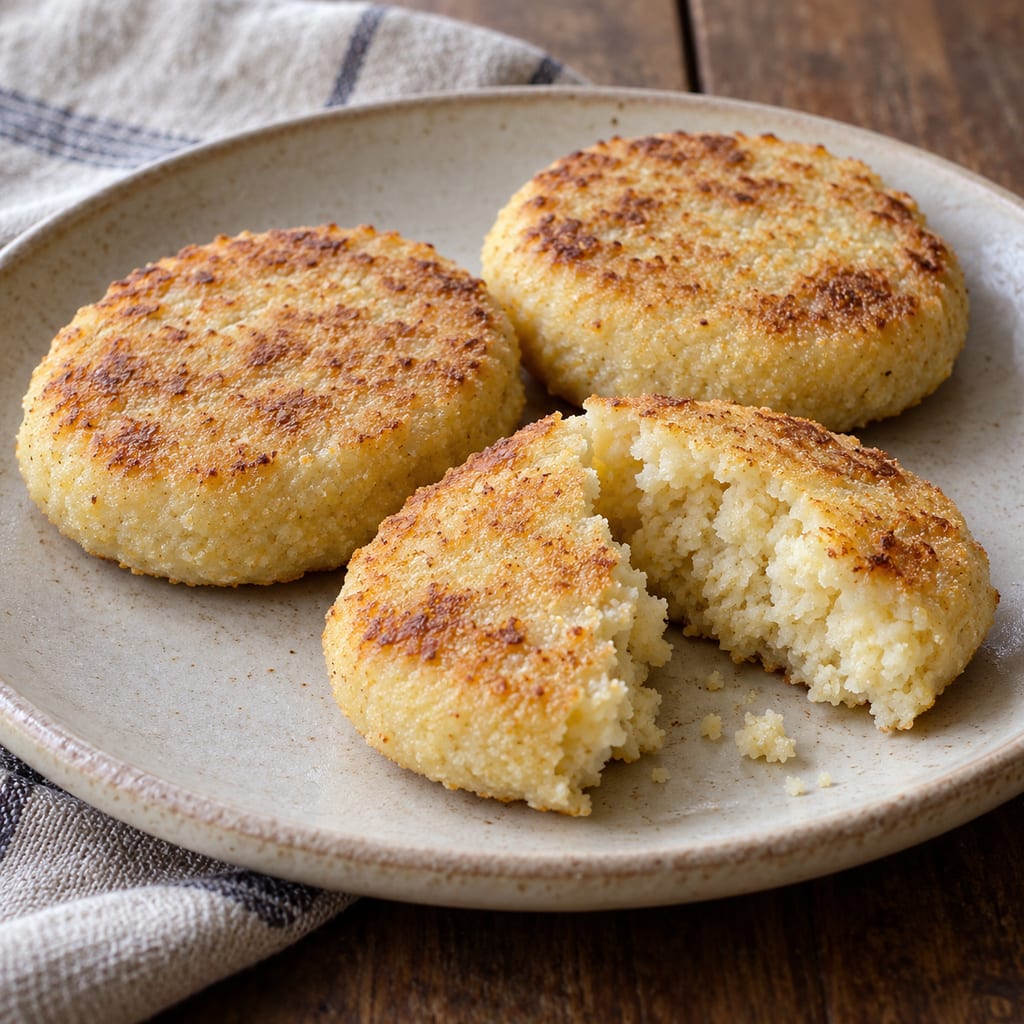
Unleavened cornmeal cakes mixed with cold water and cooked on both sides in a covered-then-uncovered pan. Cheese is served alongside rather than mixed into this dough.
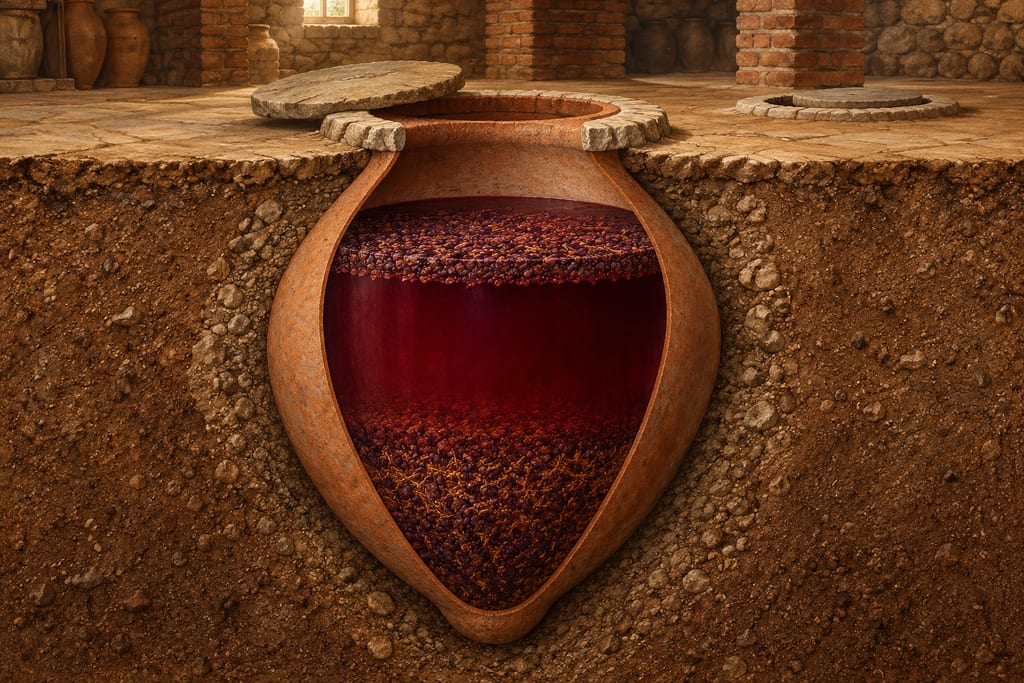
A qvevri (ქვევრი; kvevri), called churi (ჭური) in Imereti, is a large fired-clay Georgian wine vessel traditionally installed upright in the ground for fermentation, maturation and storage.
No community contributions have been published for this entry yet.
Sign in to contribute. Published comments and photos are free to read.
Georgian National Tourism Administration (Georgia Travel)Traditional use · Materials · Hearth baking · Geography
Imeretian KhachapuriCalls ketsi a clay pan placed on hot embers in a fireplace.
Associates the pan method with Imereti and says it is preserved in some villages.
Describes dry bay-cherry leaves beneath and above the khachapuri on the pan.
Cited in: A Georgian pan, not one fixed specification; Imereti: clay, embers and bread; Western Georgian bread uses vary; Guria and a documented craft tradition; What is not established
Georgian National Tourism Administration (Georgia Travel)Traditional use · Geography
Varieties of Georgian WheatSays bread in western Georgia has often been baked on a ketsi, contrasting it with tone-oven baking.
Provides regional bread context but no pan dimensions or date of origin.
Cited in: A Georgian pan, not one fixed specification; Western Georgian bread uses vary; What is not established
Radio Free Europe/Radio Liberty, Georgian ServiceCraft · Materials · Geography · Visual reference
Georgian 'Ketsi' Maker Fears Stone Craft Will Vanish With HimReports that Avto Sikharulidze learned ketsi-making from his father and was making traditional pans in Guria when profiled in 2020.
Describes traditional Georgian ketsi pans as stone or clay and reports that he was then the only traditional maker in Guria.
The accompanying photograph shows the maker with round, shallow pans; it does not supply dimensions or a measured design.
Cited in: A Georgian pan, not one fixed specification; Guria and a documented craft tradition; What is not established
Postcards.geTraditional use · Bread context
Corn in GeorgiaDescribes mchadi as a cornmeal bread and says it is traditionally baked in a clay ketsi.
Provides examples of regional mchadi fillings and names for cheese-filled forms; it does not date ketsi origins.
Cited in: Western Georgian bread uses vary; What is not established