
Built structures · Cabinets and chamber conversions
Plant-based cultured cheese fermentation cabinet
An enclosed cabinet for culturing cashew and other nut-based cheese alternatives with lactic acid bacteria and, for bloomy-rind styles, mould cultures.
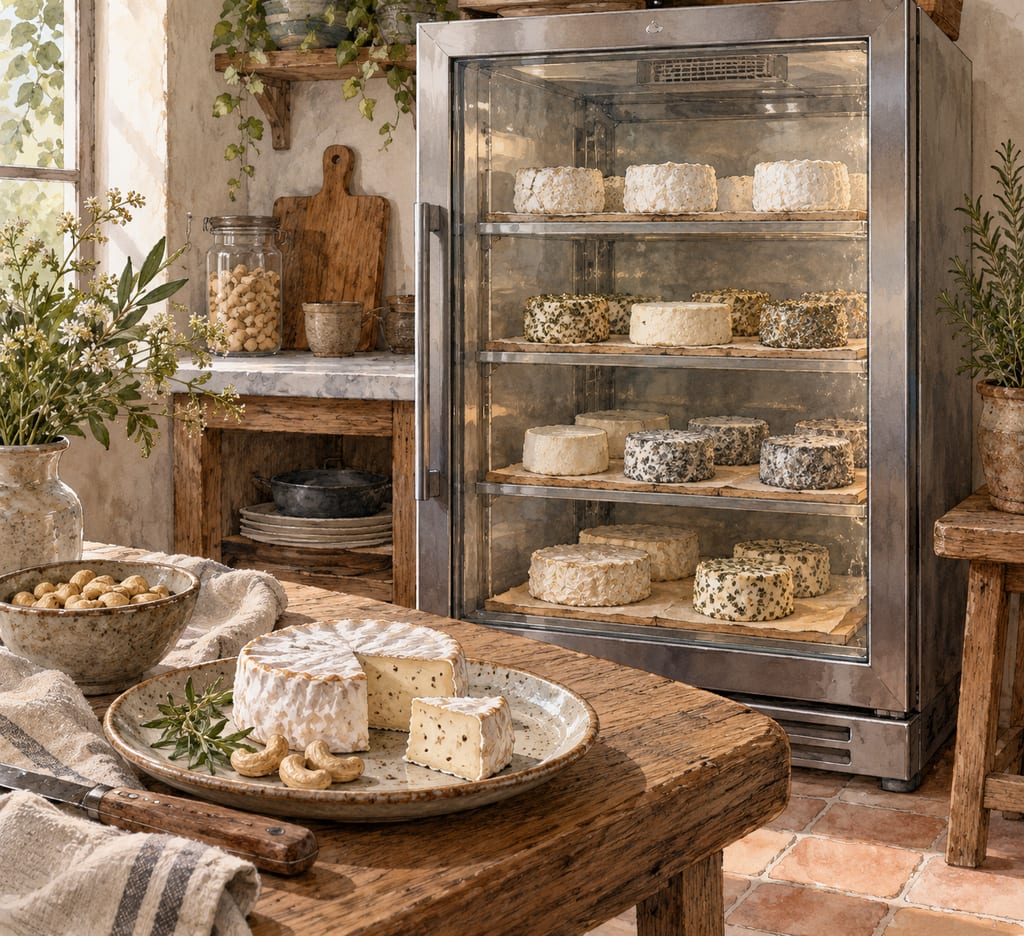
Overview
Plant-based cultured cheese is made from a nut, seed or legume base that is fermented by lactic acid bacteria and sometimes by moulds. The cabinet keeps the culture at a steady temperature while the base acidifies and forms its texture.
The sources treat the starter culture, not the cabinet, as the main variable. The cabinet supports the culture.
Sources for this section
Cultures and what they do
A 2024 study of eleven European soft-ripened plant-based cheeses, mostly cashew-based, found Lactococcus lactis and Leuconostoc mesenteroides as the dominant bacteria, and Geotrichum candidum and Penicillium camemberti as the dominant fungi. The authors suggest that many of these species were likely added as starters.
Lactic acid bacteria drive acidification and texture. Mould cultures are used for bloomy-rind styles. A 2026 study compared cashew, soy and sunflower substrates to find starter strains that build firmness without synthetic additives.
Acidity and the reading
A conference poster on nut-based lactic acid bacteria consortia reports faster acidification, reaching pH below 4.4 within 24 hours. That is a single poster, so the figure is a lead for testing, not a rule.
Measured pH over time, rather than elapsed hours in the cabinet, is the check the sources point to.
Sources for this section
Limits and open questions
The sources reviewed give no numerical cabinet temperature, humidity or ripening schedule. The microbial studies describe cultures found in finished cheeses, not controlled processes.
Open questions include the temperature for each starter, the humidity for rind formation, and a head-to-head comparison of cultures for consumer acceptance. The sources reviewed did not find a large trial of that kind.
Sources for this section
Site
A build is made where it stands: moving it means building it again.
How it is built
Risks and precautions
The base may not reach a safe acid level without a suitable starter and enough time.
Hazard sourceMeasure pH and confirm the target within the recipe's time
Control sourceA poster reports the pH target. It is not a validated process and does not cover every plant base.
Materials
- Enclosed cabinet with a controllable heat source — Holds the cultured curd at a steady temperature.
- Lactic acid bacteria starter — Acidifies the base and builds texture. Consortia were reported to acidify faster in one poster.
- Mould culture for bloomy rind — Geotrichum candidum or Penicillium camemberti, for soft-ripened styles.
- Calibrated pH meter — Tracks acidification against the target pH.
- Prepare the nut or other plant base and inoculate it with the lactic acid bacteria starter.
- Place the base in the cabinet at the temperature the tested recipe uses.
- Measure pH over the first day. The poster reports safe values below pH 4.4 within 24 hours with a consortium.
- For bloomy-rind styles, apply a mould culture and hold at the ripening conditions set by the recipe.
- Record texture and pH at each stage so the cabinet's effect can be compared with an ambient batch.
Places
Documented for international use, with no single place of origin assigned.
Community
No community contributions have been published for this entry yet.
Share what you made
Sign in to contribute. Published comments and photos are free to read.
Sources
MDPI FermentationMethod · History
Fermentation 12, 00111 (plant-based cultured cheese texture study, PDF)Lactic acid bacteria starters for texture in cashew, soy and sunflower substrates. Identity taken from the search listing; to be checked against the article.
Cited in: Overview; Cultures and what they do; Limits and open questions
Conference poster (UNIST Marjan repository)Safety · Method
Poster ICFF: nut-based lactic acid bacteria consortia (Montanari)Consortia reached pH below 4.4 within 24 hours. Conference poster, read via search summary.
Cited in: Cultures and what they do; Acidity and the reading
FAO AGRISSafety
FAO AGRIS record on plant-based fermented cheeseListed in search as a record on plant-based cheese fermentation. Cited for the acidification hazard only; record not opened.