Set yogurt
Set yogurt keeps the milk’s cultured gel intact in its final container. This Canadian home method follows the same heating and inoculation as stirred yogurt, without the final stirring.
 FermenteaWhere food goes to change
Equipment · food-and-preserving-jars
Small glass jars hold inoculated milk during warm-water yogurt incubation. The documented jar sizes and incubation setups vary by method; this is not canning equipment guidance.
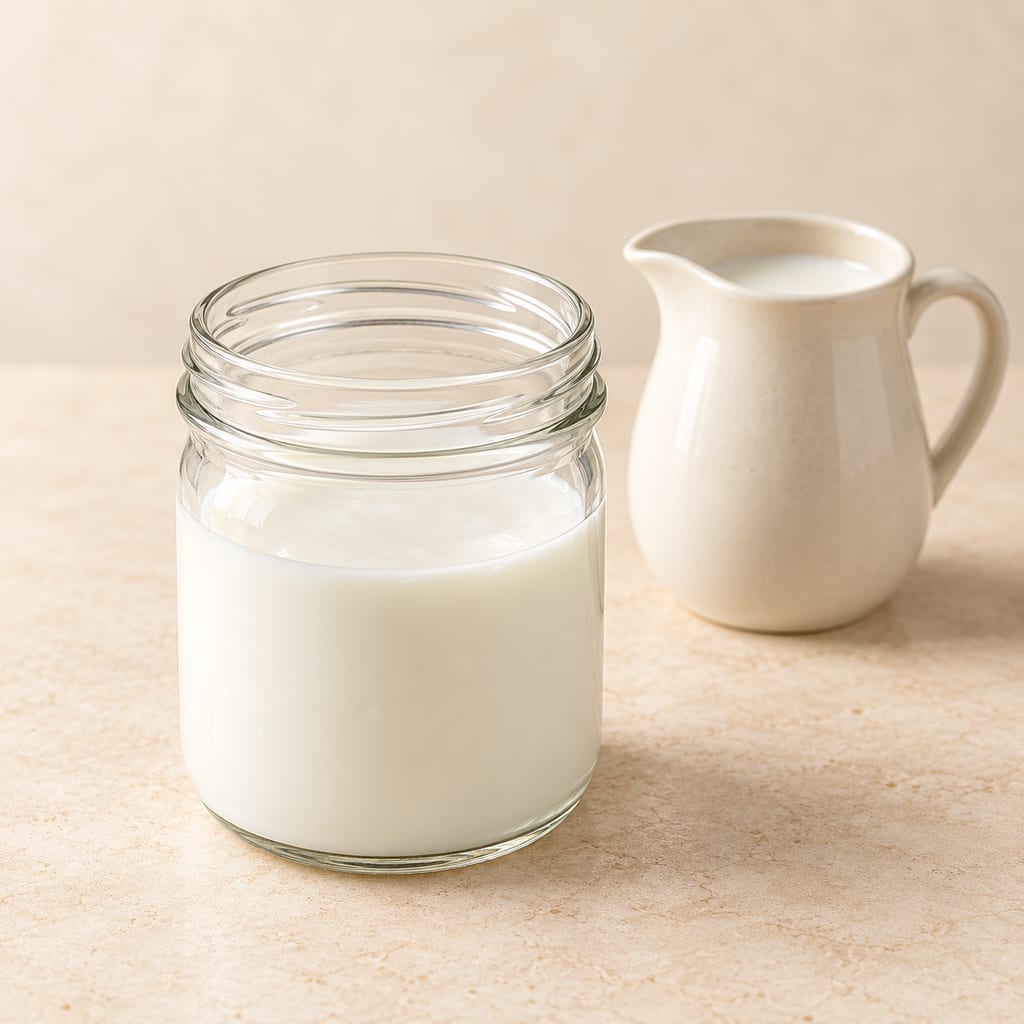
A small jar can keep a portion of inoculated milk together while yogurt cultures acidify it. The jar is both incubation vessel and serving or storage container in the documented methods; the milk's heating, cooling, culture and incubation instructions remain method-specific.
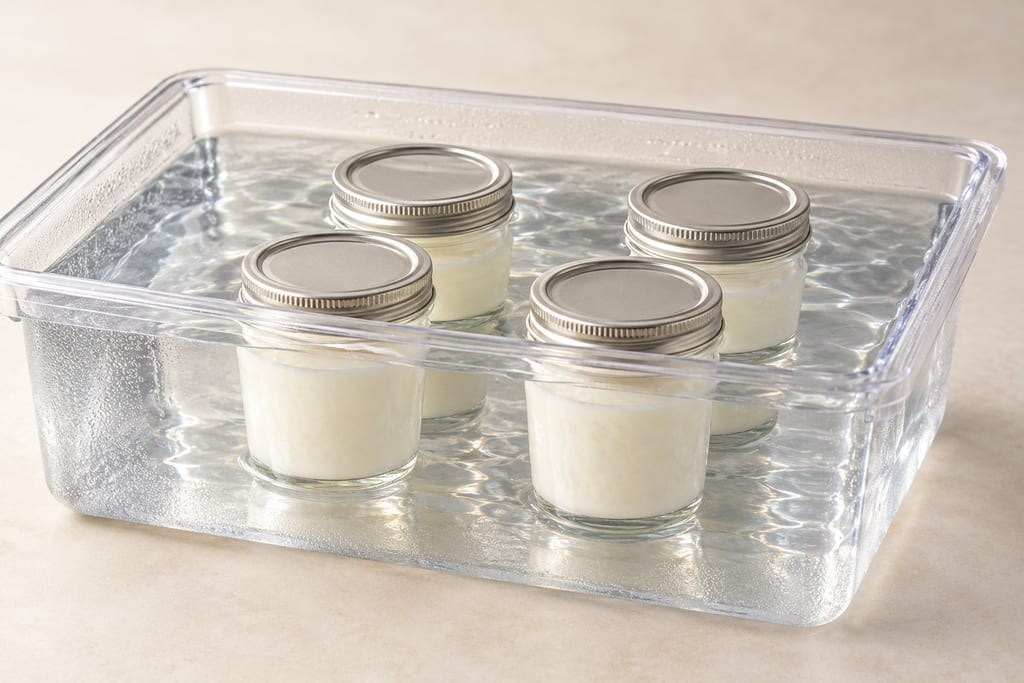
Anova's sous-vide recipe shows one version. It heats milk in a saucepan to 180°F (82.2°C), chills the milk below 110°F (43.3°C), mixes in active yogurt culture, then fills 4 oz Mason jars. The recipe says to tighten the lids only until they meet resistance, place the jars in a preheated 110°F (43.3°C) bath for 12 hours, and refrigerate them overnight. The jar receives cooled, inoculated milk; it is not the vessel used for the initial high-temperature heating.
The University of Alaska Fairbanks Cooperative Extension names 8 oz canning jars with lids as one option for yogurt. Its oven method sets the filled jars in deep pans of 110°F water, with the water reaching at least halfway up their sides, and calls for monitoring the temperature through incubation.
That is not the same arrangement as Anova's 4 oz Mason jars in a circulating bath. The source-specific sizes and instructions stay separate: neither recipe establishes one standard jar size, closure, bath geometry or schedule for every yogurt method.
The original intake grouped yogurt jars with general sample jars. The cited sources support jars for yogurt incubation, but do not define a separate sample-jar product or certify all glass jars for heating. For parallel tasting or culture trials, identical jars may be convenient; that is a way to organize a comparison, not a source-tested jar specification.
This equipment entry is about warm incubation of cultured milk. The jars are not being used to can food, and the source methods do not establish a room-temperature storage process. Use the selected yogurt recipe for its own jar preparation, cover, incubation and refrigeration directions.
Anova's 2023 update documents 4 oz Mason jars for sous-vide yogurt; University of Alaska Fairbanks guidance gives 8 oz canning jars for yogurt and a separate warm-water incubation method. These describe current jar uses, not the invention date of jar equipment.
The cited yogurt recipes use different vessel capacities and incubation arrangements; do not combine Anova's 4 oz jars and 12-hour bath with the separate University of Alaska Fairbanks method.
Source →These sources document yogurt incubation, not a universal heat-safe rating for every glass jar or a shelf-stable canning process.
Source →The methods are published by Anova and the University of Alaska Fairbanks but do not identify where the described jars were used; publisher location does not establish use geography.
Set yogurt keeps the milk’s cultured gel intact in its final container. This Canadian home method follows the same heating and inoculation as stirred yogurt, without the final stirring.
No community contributions have been published for this entry yet.
Sign in to contribute. Published comments and photos are free to read.
Anova CulinaryDocumented use · Jar form · Water bath incubation
Ultra-Simple Sous Vide Yogurt from #anovafoodnerd Justin BoreckyThe recipe heats milk in a saucepan to 180°F (82.2°C), cools it below 110°F (43.3°C), then mixes in active yogurt culture before filling 4 oz Mason jars.
It says to tighten the jar lids until they meet resistance, without overtightening, then incubate the jars in a preheated 110°F (43.3°C) water bath for 12 hours and refrigerate overnight.
The photograph for step 6 shows small glass jars with metal lids in a clear water bath; no photo credit or image licence is stated.
Cited in: A jar for the warm incubation stage; Different sources document different jars; A defined use, not a universal heat-safe type
University of Alaska Fairbanks Cooperative Extension ServiceDocumented use · Jar form · Warm water incubation
Making Yogurt at Home (FNH-00062)The equipment list gives 8 oz canning jars with lids as one container option for yogurt.
For its oven-incubation method, it places filled jars in deep pans of 110°F water reaching at least halfway up the containers, and says to monitor the temperature during incubation.
This is a separate method from Anova's 4 oz jars in a sous-vide bath; its directions should not be blended into the Anova recipe.
Cited in: Different sources document different jars; A defined use, not a universal heat-safe type