
Mushrooms
Agaricus sylvicola
Agaricus sylvicola, the wood mushroom, is a forest-litter mushroom of Europe with an anise or almond smell, eaten in Europe but separated from the toxic yellow stainer, Agaricus xanthodermus, by smell and staining.
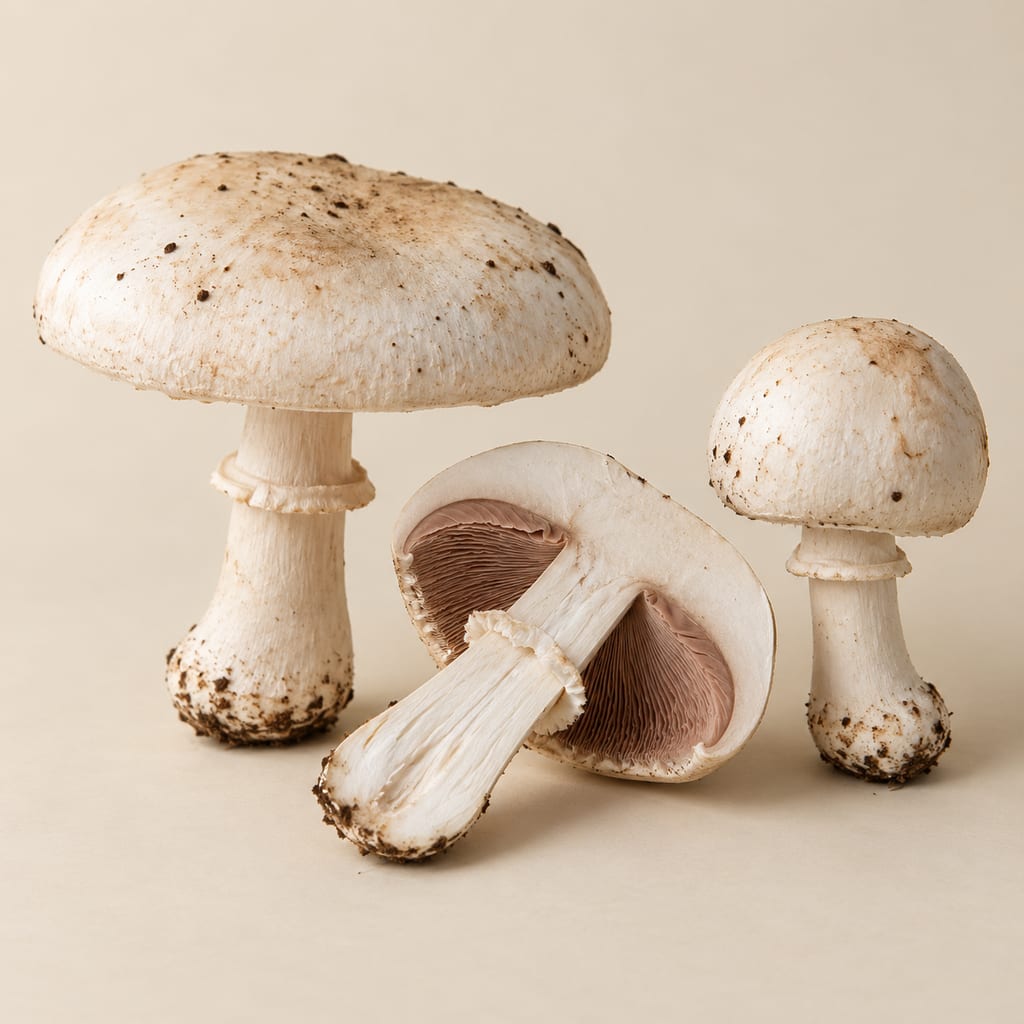
Identity and naming
Agaricus sylvicola is a mushroom of the genus Agaricus. The catalogue uses the spelling sylvicola and records the older spelling Agaricus silvicola as a search alias, since older sources use that form. The common name wood mushroom is used in the catalogue and in the guides read for this page.
The catalogue describes the species as an aromatic woodland mushroom and a forest-litter decomposer. The name is not reconciled against a current authority on this page.
Sources for this section
Ecology and habitat
The catalogue records the species as a forest-litter decomposer, feeding on dead plant material on the woodland floor. Its supply is recorded as wild gathering, and the catalogue places it in Europe.
Guides describe the wood mushroom as a woodland species, and the Nordic assessment recorded in the catalogue highlights cadmium in it.
Sources for this section
Use
Foraging sources agree that the wood mushroom is edible, and the catalogue records it as an aromatic woodland mushroom in food use. Its smell is anise or almond-like, which is the main feature that separates it from the yellow stainer.
The guides read for this page do not give a cooking method. One guide says it is not recommended to beginners for the table, so this page gives no preparation.
Sources for this section
Look-alikes and identification
The main look-alike is Agaricus xanthodermus, the yellow stainer, which is toxic and often causes gastrointestinal symptoms. The yellow stainer has a phenolic smell, and cutting the base of its stem gives an immediate, intense bright yellow reaction that is stronger than the wood mushroom's reaction.
Other look-alikes named in the sources are Agaricus albolutescens, which is more robust and has a stronger smell and brighter yellow staining, and the horse mushroom, Agaricus arvensis, which is edible. The sources also name the white form of the death cap as a more serious risk for an inexperienced forager.
Sources for this section
Safety
Safety wording: this page describes what the sources record. It is not an identification guide and it gives no verdict that a wild Agaricus is safe to eat. The catalogue's supplied Nordic assessment highlights cadmium in the species, and one guide says that because the group can accumulate cadmium, it should not be eaten too often.
Some people have reported allergic reactions. Because the yellow stainer is toxic and the death cap is deadly, a specimen must be identified by a qualified expert before anyone eats it.
Places
Europe
Documented use · Region evidenceRegional record in the catalogue; no locality given.
Community
No community contributions have been published for this entry yet.
Share what you made
Sign in to contribute. Published comments and photos are free to read.
Sources
Nordic report, suppliedUse · Safety
Nordic edible fungi report (supplied catalogue source)Food-use record; cadmium flag for the species
Cited in: Ecology and habitat; Safety
WikipediaIdentification
Agaricus silvicolaSpecies name and spelling
Cited in: Identity and naming; Use
California FungiIdentification
Agaricus sylvicolaSpecies record
Cited in: Identity and naming; Ecology and habitat
Foraging Course CompanyIdentification · Safety
Wood mushroom (Agaricus silvicola) identificationAnise or almond odour; cadmium note; not recommended to beginners
Cited in: Use; Safety
WikipediaSafety
Agaricus xanthodermusYellow stainer look-alike, toxic, phenolic smell
Cited in: Look-alikes and identification
Burke HerbariumIdentification
Agaricus silvicola, Burke Herbarium Image CollectionName record
Cited in: Look-alikes and identification