
Mushrooms
Beefsteak fungus
Beefsteak fungus (Fistulina hepatica) is a wild bracket fungus of oak and sweet chestnut wood. Its sour, meat-like flesh is eaten in parts of Europe, but only after cooking, and sources advise care with older specimens.
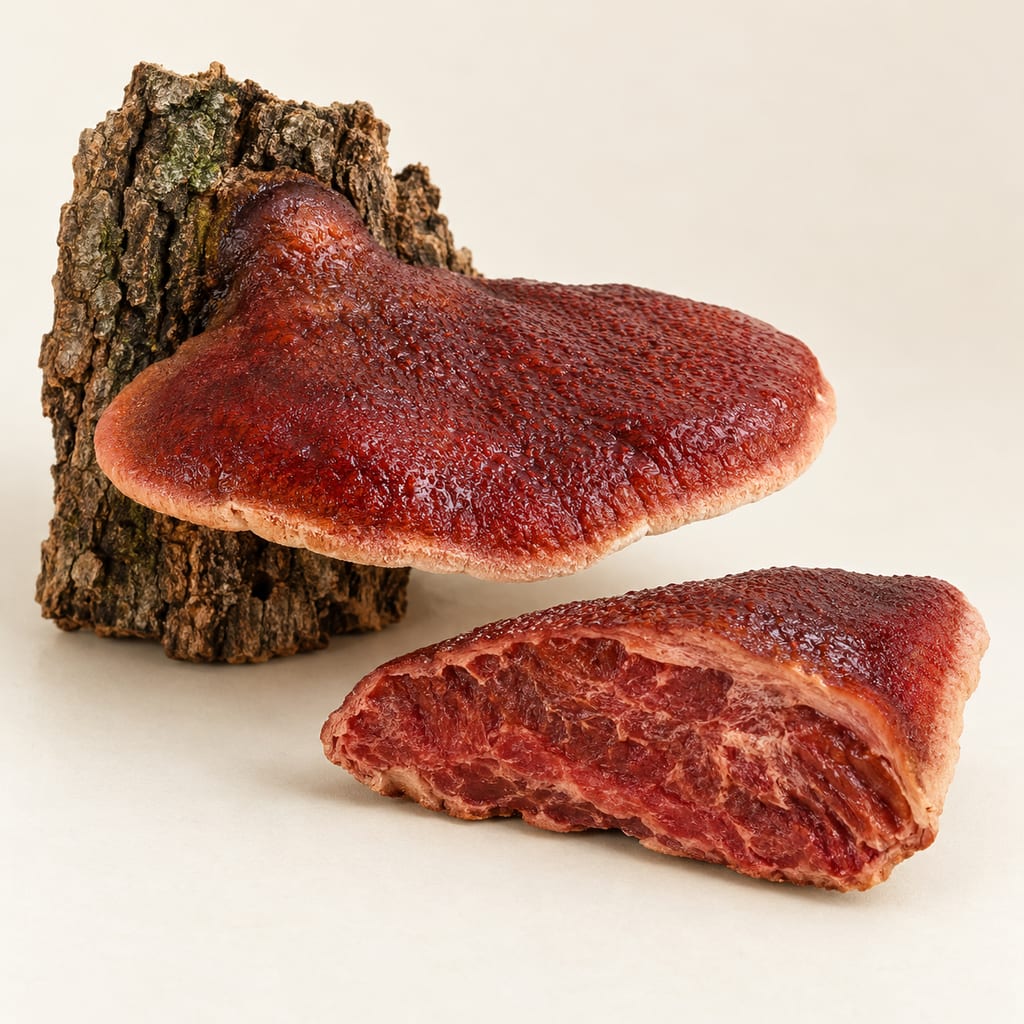
A bracket that looks and bleeds like meat
Fistulina hepatica grows as a tongue-shaped bracket on the trunks of living or dead trees. The cap is 7 to 30 centimetres wide and 2 to 6 centimetres thick, with a rough surface. It is pinkish red when young and darkens to reddish brown as it ages. The underside is creamy white, and the spores and spore print are pink.
The flesh is what gives the fungus its names. Cut, it looks like meat and bleeds a dull red juice that can stain clothing and hands. Many writers describe its texture as reminiscent of raw meat. The name beefsteak fungus, and the older name Fistulina hepatica, which refers to the liver, both come from this appearance.
Sources for this section
Taste, texture and how it is eaten
The flesh tastes sour. Field guides that cover it as food describe a fleshy, acidic mushroom that is best collected young. Some suggest serving it with creamy sauces or with milder mushrooms to balance the acidity. Other accounts are less enthusiastic and describe a strong sourness that limits its appeal.
The fungus does not keep well, so it is normally cooked soon after it is gathered. Foragers who write about it recommend cooking it thoroughly and for a long time, because older flesh is tougher. The catalogue records its food use in Europe. The accounts consulted here describe that use only in general terms, so no quantities, portions or cooking times are given on this page.
Sources for this section
Preparation and the warnings about older specimens
The most specific statement on preparation comes from the reference description of the species: it is edible when cooked, although older specimens may need special preparation. That description adds that older specimens should be soaked overnight, because their juice can cause gastric upset. The same description notes that the flesh does not preserve well.
The sources consulted describe cooking as the safe approach and give no basis for eating the fungus raw. No safe quantity, shelf life or storage time is established by these sources, and none is given here. A reader who wants to eat it should check the preparation advice in a regional field guide and confirm the identification with an experienced local forager before eating any wild fungus.
Sources for this section
Habitat and its effect on trees
Beefsteak fungus grows mainly on oak and sweet chestnut, on living or dead wood. In Britain and Europe it is usually recorded from July to October. Its fruiting bodies cause a brown rot in the trees they infect. The rot tends to stain oak heartwood reddish brown, which can make the timber more desirable to some buyers. The fungus is also recorded from North America, Australia and parts of Africa, where it grows from wounds on Eucalyptus trees in Australia.
Sources for this section
Names, lookalikes and identification
The species was described as Fistulina hepatica (Schaeff.) With. in 1792. Earlier names include Boletus hepaticus Schaeff. (1774) and Fistulina buglossoides Bull. (1790), and both appear in older literature. The name in the catalogue is a research label. Its current accepted status has not been confirmed on this page.
Several bracket fungi are confused with it, including Pseudofistulina radicata, Amylocystis lapponica, Ischnoderma resinosum, Leptoporus mollis and Rhodofomes cajanderi. A red juice and a sour taste do not establish identity on their own. Identification should be confirmed by looking at the habitat, the flesh and the spore print, and checked with a local expert before any fungus is eaten.
Sources for this section
Open questions
The catalogue names Europe as the place of food use, and the sources consulted do not add a documented food tradition by country. Historical records beyond Europe are not established here. The sources do not give a yield, a flavour profile for cooked dishes, or a dated food tradition, and this page does not supply them.
Sources for this section
Places
Europe
Documented use · Region evidenceRegional food-use record from the catalogue. The fungus is recorded across Britain and Europe; no country-level food tradition is established here.
Community
No community contributions have been published for this entry yet.
Share what you made
Sign in to contribute. Published comments and photos are free to read.
Sources
WikipediaMethod · Safety · History
Fistulina hepaticaEdible when cooked; older specimens may need special preparation and soaking overnight because their juice can cause gastric upset.
Sour taste; texture reminiscent of raw meat; cut flesh bleeds a dull red juice.
Grows on oaks and sweet chestnut on living or dead wood; causes a brown rot; stains oak heartwood.
Lookalikes and synonyms.
Cited in: A bracket that looks and bleeds like meat; Taste, texture and how it is eaten; Preparation and the warnings about older specimens; Habitat and its effect on trees; Names, lookalikes and identification; Open questions
Wild Food UKMethod · Safety
Beefsteak fungus (Fistulina hepatica)Sour taste; best collected young; long cooking for tough flesh; pair with creamy sauces or milder mushrooms.
Less favourable accounts describe a strong sourness.
Cited in: Taste, texture and how it is eaten; Habitat and its effect on trees