
Mushrooms
Blonde morel
Blonde morel, Morchella tridentina, is a wild true morel recorded as gathered and traded in Patagonia. Morels are eaten only after thorough cooking.
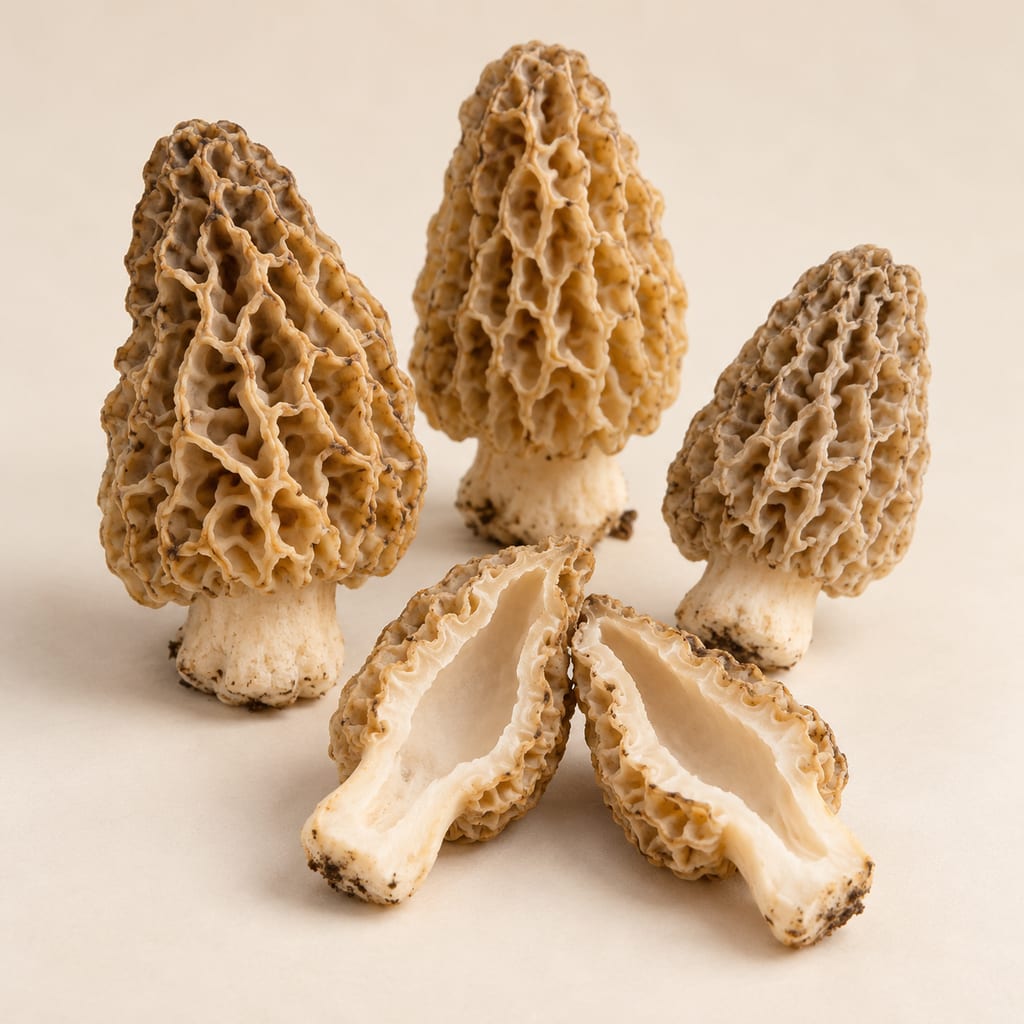
What it is
Blonde morel is the common name the catalogue uses for Morchella tridentina, a wild true morel. True morels have a sponge-like cap of pits and ridges on a hollow stem, and the cap is attached to the stem at its base. The catalogue records the scientific name as a research label rather than a reconciled accepted name, so a collection named this way should be checked against current taxonomy before it is identified as this species.
Morphology alone may not settle which morel a collection is. Several Morchella species look alike in the field, and the catalogue notes that the species name needs confirmation for individual records.
Sources for this section
Where it is gathered
The catalogue places the food-use record in Patagonia and describes the fungus as wild-harvested and traded regionally. It grows in forest, and the catalogue notes that its ecology varies between lineages of the genus.
The sources do not give local names, seasons, quantities or prices for this species, so the page does not state them.
Sources for this section
Safety when eating morels
Morels must be cooked before eating and must not be eaten raw. In a 2023 outbreak in Bozeman, Montana, 51 people reported gastrointestinal illness after eating a sushi roll containing morels, and three were hospitalized; two deaths are reported. Investigators identified morels as the likely source. The species in that outbreak was Morchella sextelata, not M. tridentina, but the report is the basis for the cooking advice here.
The report found that raw morels were more strongly associated with illness than cooked or partially cooked morels, and that more morels eaten were linked to higher odds of illness. It states that cooking is likely to reduce toxin levels, but it does not say cooking removes all risk, and the toxin involved was not confirmed. A cooked morel is therefore not guaranteed safe.
Sources for this section
Notes and gaps
The Patagonian record establishes a food use and a regional trade for the species, but the sources here do not describe a local preparation, a sale point or a dish for this species. Those points are left open rather than filled from other morels.
Sources for this section
Places
Patagonia
Documented use · Region evidenceThe catalogue records food use with wild harvest and regional trade in Patagonia. Its precise area and season are not given.
Community
No community contributions have been published for this entry yet.
Share what you made
Sign in to contribute. Published comments and photos are free to read.
Sources
Food Science and Technology (CSIC)Reference
Supplied catalogue source for Morchella tridentina (Patagonia food-use record)Food-use context for Morchella tridentina in Patagonia
Wild harvest and regional trade recorded
Cited in: What it is; Where it is gathered; Notes and gaps
Centers for Disease Control and PreventionSafety
Morel mushroom-associated gastrointestinal illness outbreak, Montana, 2023 (MMWR)51 people reported gastrointestinal illness; 3 hospitalized; 2 deaths
Raw morels associated more strongly with illness than cooked or partially cooked morels
Morels should be cooked before eating; cooking is not stated to guarantee safety
Cited in: Safety when eating morels