
Mushrooms
Boletus loosii
Boletus loosii, the African bolete, is a miombo woodland bolete recorded in four central and southern African countries. The species page read here makes no food or toxicity statement.
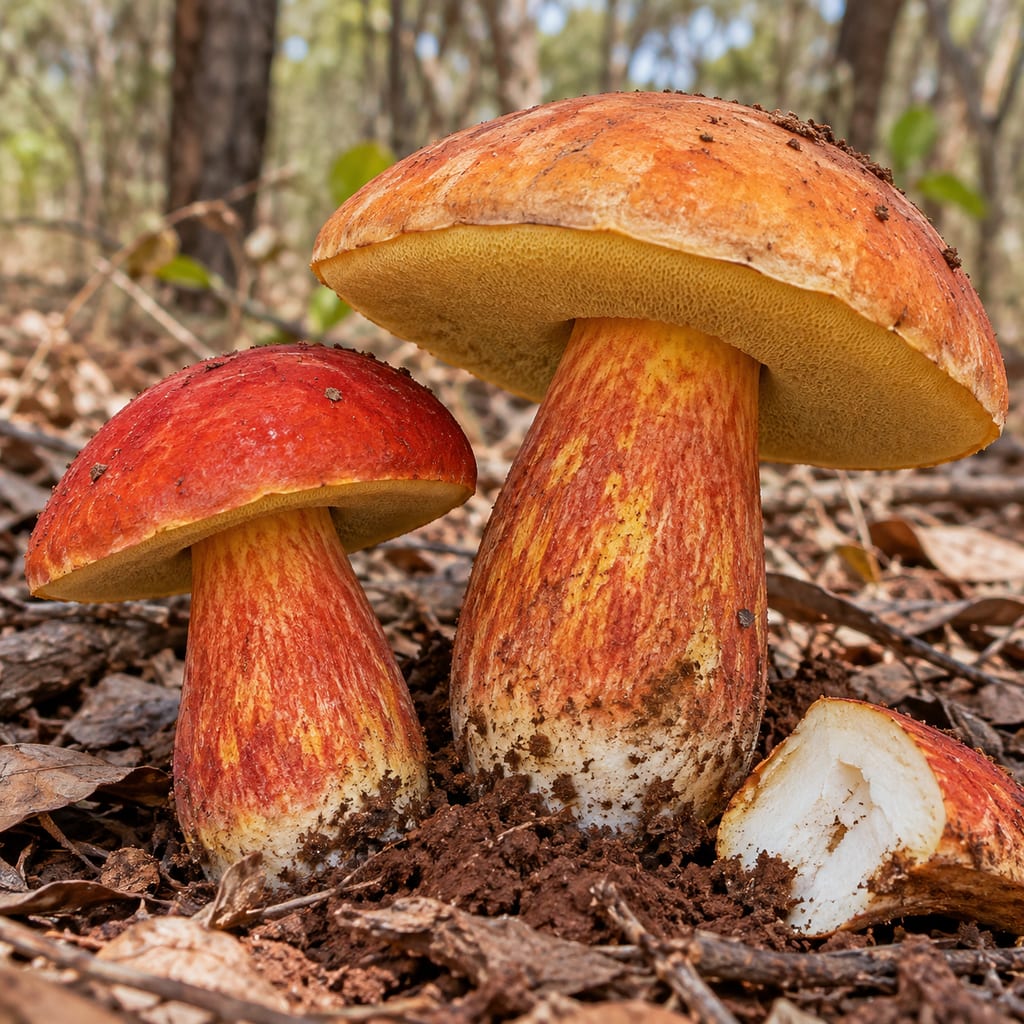
What it is
The African bolete is the common name the catalogue gives to Boletus loosii, a bolete described by Heinemann in 1964. The synonym Boletus spectabilissimus, described by Watling in 2003, is still used in some records.
The species page notes that some illustrations published under the name by Harkonen and colleagues in 2015 appear to show a new species. The catalogue adds that older identifications as B. spectabilissimus and B. loosei can conceal different taxa, so a record under either name may not be the same fungus.
Sources for this section
Where it grows
The species is ectomycorrhizal and grows in miombo woodland. The EFTA page lists it with Marquesia macroura, Julbernardia species, Brachystegia spiciformis and B. boehmii. The catalogue places it in Burundi, DR Congo, Tanzania and Zimbabwe.
Sources for this section
Taste and use
The EFTA page describes the taste as weak and the odour as weak and pleasant. It makes no statement on whether the species is eaten, how it is prepared, or what it is used for. The catalogue calls it a regional edible bolete, a label the species page does not confirm.
Sources for this section
Safety and identification
No edibility verdict is given here. Because the older names can cover different taxa, a collection should be named by a specialist before any use is recorded, and no toxicity or preparation is established by the sources read for this page.
Sources for this section
Notes and gaps
The catalogue's statement that the species is eaten in the region needs a primary food-use source. Until one is read, the page records only the identity and habitat.
Sources for this section
Places
Burundi, DR Congo, Tanzania and Zimbabwe
Documented use · Region evidenceRegions as listed on the EFTA species page; the catalogue records the species as a regional edible bolete.
Community
No community contributions have been published for this entry yet.
Share what you made
Sign in to contribute. Published comments and photos are free to read.
Sources
European Fungi Tradition Association (EFTA)Identification · Habitat
Boletus loosii (EFTA edible species page)Boletus loosii Heinem. (1964); synonym Boletus spectabilissimus Watling (2003); regions Burundi, DR Congo, Tanzania, Zimbabwe; ectomycorrhizal in miombo; weak taste and weak, pleasant odour; no edibility or toxicity statement; identification caution about 2015 illustrations
Cited in: What it is; Where it grows; Taste and use; Safety and identification; Notes and gaps