
Mushrooms
Charbonnier
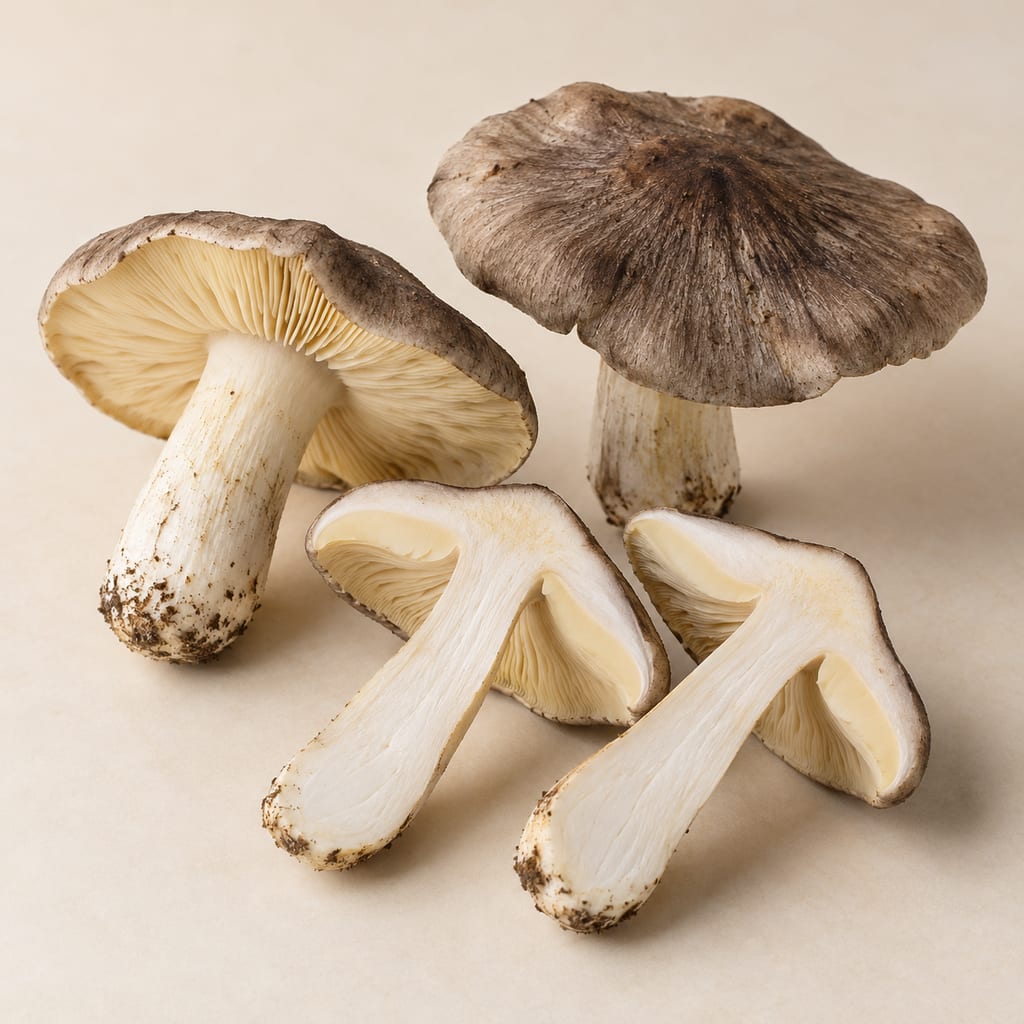
Charbonnier, Tricholoma portentosum, is a wild tree-associated mushroom of Europe that is sold as a seasonal market mushroom. Spanish law permits fresh sale of the species, and other grey Tricholoma species must not be assumed edible.
Identity and names
Charbonnier is the common name used for Tricholoma portentosum, a mushroom of the genus Tricholoma. The supplied catalogue also gives the English name sooty head and records the species as a grey-capped member of a genus that contains several species with very different safety records.
The species grows on the ground in association with trees, as a mycorrhizal partner of its host trees. The catalogue gives the ecology as tree-associated and the supply as wild.
Market use in Europe
The supplied catalogue records charbonnier as a cooked seasonal mushroom sold in European markets. The catalogue gives no preparation, recipe or method for it, and it does not describe the regional names or the seasons in which it is sold.
Spain's 2009 decree on the sanitary conditions for marketing mushrooms lists Tricholoma portentosum among wild species that may be sold fresh. The decree requires wild fresh mushrooms to be sold whole, unwashed and not mixed for the consumer, so the legal sale of the species is governed by those conditions.
Safety within the genus
The same Spanish decree bans several other Tricholoma species in any form, including T. equestre, so the genus cannot be treated as uniformly safe. The catalogue states that its edibility conclusion does not extend to other grey Tricholoma species.
Tricholoma equestre has been linked with rhabdomyolysis in a 2001 case series, and the scientific sources disagree about its safety. That finding concerns a different species, and the sources read here give no toxicity profile or poisoning record for T. portentosum. Identification to species should be confirmed by a regional expert before any wild Tricholoma is eaten.
Open questions
The sources read here do not give the traditional names of the species beyond charbonnier and sooty head, the season of collection or any preparation. Those are the next items to confirm from a European food source.
Places
Europe
Documented use · Region evidenceThe catalogue records a European market use. Spain's 2009 decree lists the species among wild fresh mushrooms that may be marketed. The country-level sources do not give a locality.
Community
No community contributions have been published for this entry yet.
Share what you made
Sign in to contribute. Published comments and photos are free to read.
Sources
Boletín Oficial del EstadoMethod · Safety · History
Real Decreto 30/2009, de 16 de enero, sobre condiciones sanitarias de comercialización de setas para consumo alimentarioTricholoma portentosum is listed in Part A, wild species that may be sold fresh; wild fresh mushrooms must be sold whole and unwashed
Tricholoma auratum, equestre, filamentosum, flavovirens, josserandii, pardinum, sulfureum, scioides, sejunctum and virgatum are banned in any form in Spain
Cited in: Market use in Europe; Safety within the genus
Nordic research repository (via supplied fungi catalogue)Identity · Food use
Supplied Nordic research document on Tricholoma portentosum (charbonnier), via supplied fungi catalogueCatalogue entry: charbonnier (sooty head), a tree-associated mycorrhizal fungus; cooked seasonal market mushroom in Europe; wild
Cited in: Identity and names; Market use in Europe; Open questions
PubMed CentralSafety
The Yellow Knight Fights Back: Toxicological, Epidemiological, and Survey Studies Defend Edibility of Tricholoma equestreContext only: Tricholoma equestre, a different species of the genus, has been linked with rhabdomyolysis in a 2001 case series; the sources disagree on its safety
Cited in: Safety within the genus