
Mushrooms
Coral tooth
Hericium coralloides, the coral tooth, is a wild fungus of dead hardwood. Its young, white, branching fruit bodies are eaten; older ones turn brittle, yellow-brown and bitter.
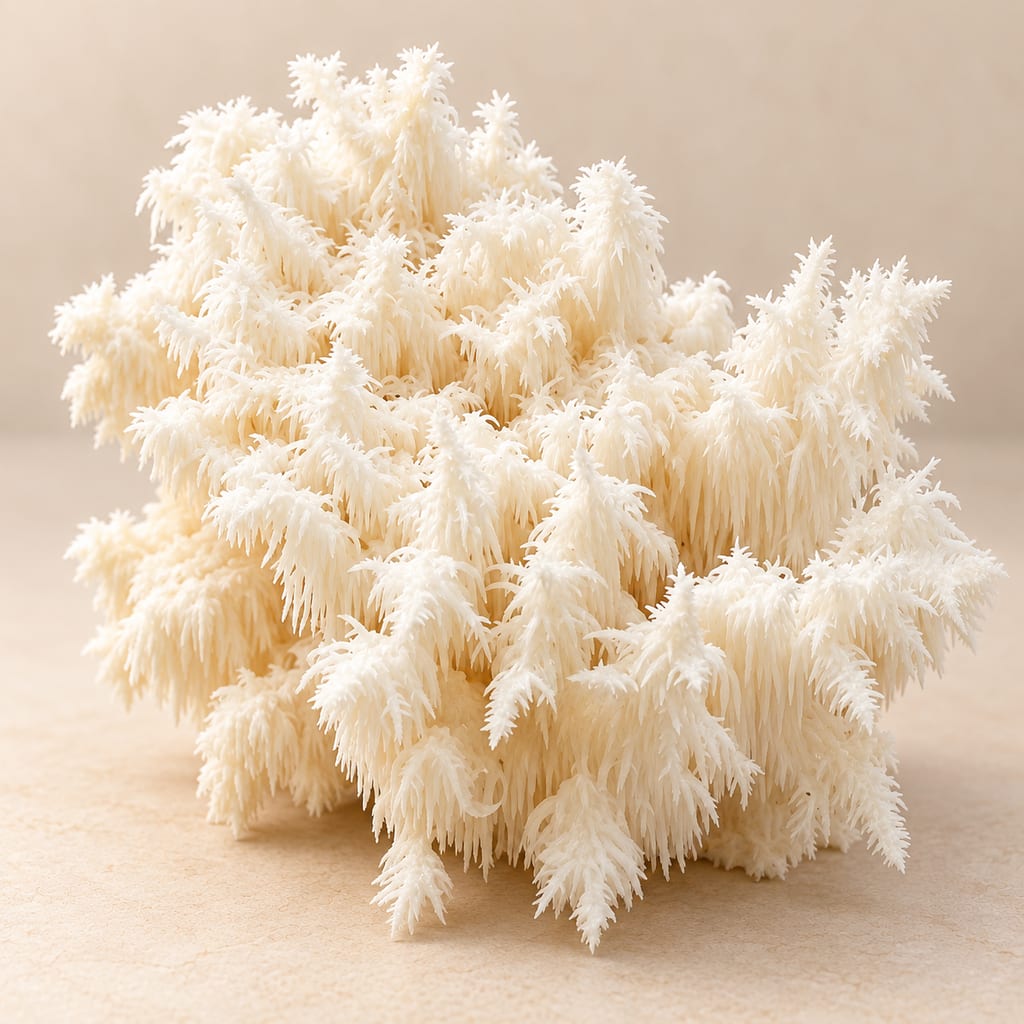
What it is
The coral tooth is a tooth fungus: its fertile surface is a mass of hanging spines rather than gills or pores. The fruit body branches into coral-like forms, and it grows from dead hardwood. Field guides describe it as white when fresh.
The name Hericium ramosum appears as a search alias in the catalogue. Taxonomic names in this group have been revised, so the record keeps the name used by the sources it cites.
Sources for this section
Eating it young
The Missouri Department of Conservation describes the coral tooth as tasty only when it is young, fresh and white. As it matures it becomes sour and bitter and turns tan. Wikipedia says the branches and hanging spines become brittle and light yellowish brown with age.
Mykoweb rates the species edible and excellent. The sources agree on the central point: the quality depends on the age of the fruit body, and older specimens are not the ones to pick.
Sources for this section
Look-alikes
The bearded tooth, Hericium erinaceus, is the species most often confused with it. The Missouri guide describes that species as an unbranched, beard-like mass of long hanging spines that fruits in wounds on living trees. Mykoweb separates the two by the unbranched, cushion-shaped base of the bearded tooth.
The catalogue also notes that New Zealand material once called this species may be Hericium novae-zealandiae, so a name from one region does not settle identity in another.
Sources for this section
Conservation
North Macedonia's national Red List rates the coral tooth as Endangered and names increased interest in harvesting its fruit bodies for food as a possible direct threat.
The UK guide Wild Food UK recommends photographing the fungus rather than picking it. It is not a protected species there.
Sources for this section
Safety
This record is not a guide to identifying wild mushrooms. Confirm any identification with an experienced local mycologist before eating, and try a small amount first, as the Missouri guide advises for any wild mushroom eaten for the first time.
Older fruit bodies are not recommended, for the taste reasons above, and the sources do not give a safe preparation method beyond cooking.
Sources for this section
Places
Europe
Documented use · Region evidenceRegion-level record. The sources place the fungus in Europe; the catalogue records food use in Europe and temperate Northern Hemisphere.
North America
Documented use · Region evidenceRegion-level record from the Missouri field guide. Use is described for young fruit bodies only.
Community
No community contributions have been published for this entry yet.
Share what you made
Sign in to contribute. Published comments and photos are free to read.
Sources
WikipediaHistory · Identity
Hericium coralloidesEdible when young; brittle and yellowish brown with age
Cited in: What it is; Eating it young
Missouri Department of ConservationIdentity · Safety
Comb ToothTasty only when young, fresh and white; bitter when mature; bearded tooth look-alike; try a small amount first
Cited in: What it is; Eating it young; Look-alikes; Safety
MykowebIdentity · Food
Hericium coralloidesRated edible; distinguishes the unbranched cushion-shaped base of H. erinaceus
Cited in: Eating it young; Look-alikes
National Red List of North MacedoniaConservation
Coral tooth fungusEndangered; harvesting for food named as a threat
Cited in: Conservation
Wild Food UKConservation
Coral toothRecommends photographing rather than picking; not protected in the UK
Cited in: Conservation