
Mushrooms
Crimson waxcap
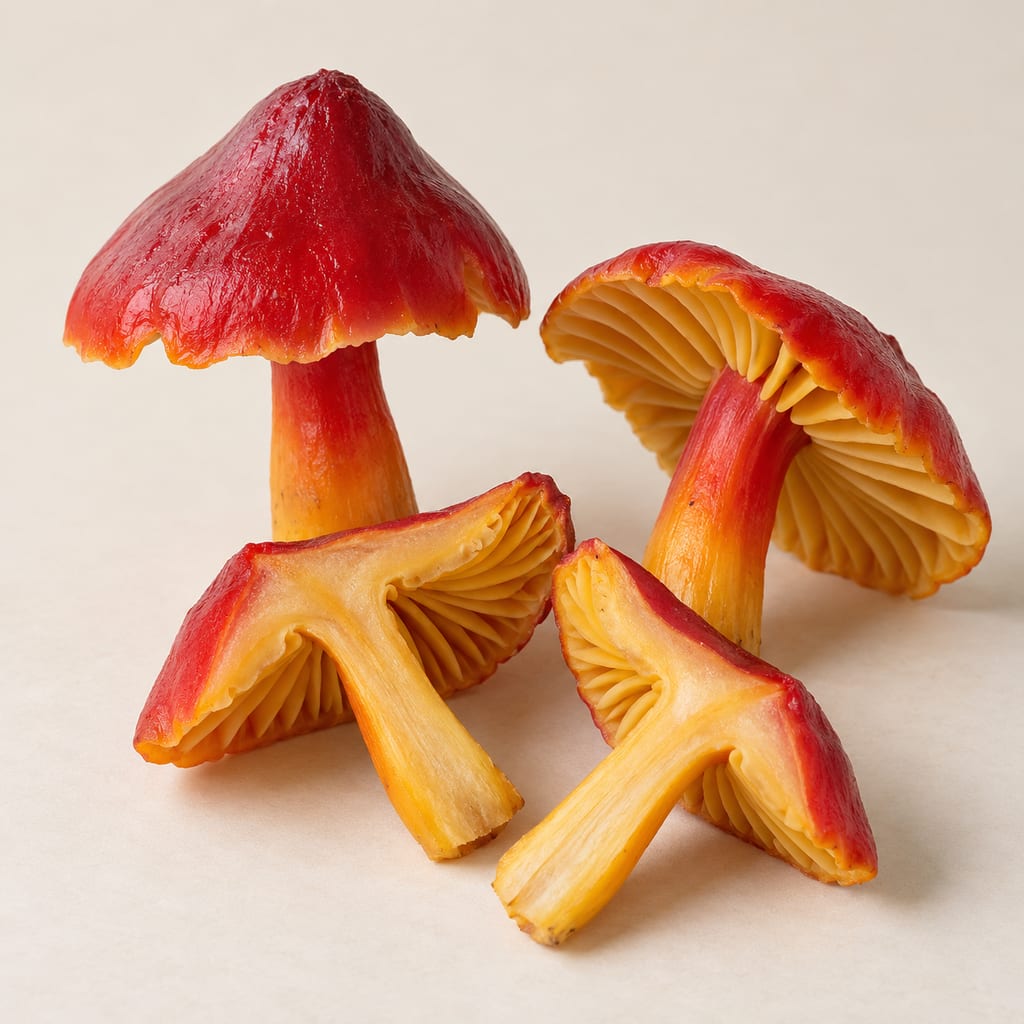
The crimson waxcap, Hygrocybe punicea, is a red grassland mushroom of old, unfertilised pasture. It is rare and protected in several European countries, and sources disagree on whether it is edible.
What it is
Hygrocybe punicea is a waxcap, a gilled mushroom of short grassland with a waxy, brightly coloured cap. It grows in unimproved grassland, and the catalogue describes it as a grassland fungus whose nutritional ecology is complex.
Its habitat is old, agriculturally unimproved short-sward grassland. It cannot persist on fertilised grassland, and its decline in Europe is tied to changes in agricultural practice. Occasional woodland records exist, and North American records need study to confirm they are the same species.
Sources for this section
Rarity and protection
The species is rare and threatened across Europe. Latvia classes it as Critically Endangered, North Macedonia's national Red List rates it Endangered at two sites, and Croatia treats it as strictly protected. Several other countries, including Bulgaria, the Czech Republic, Denmark, Estonia, Germany and Sweden, list it on national red lists of threatened fungi. A Wild Food UK guide gives its global IUCN status as Vulnerable with a decreasing population.
Food status and safety
The catalogue records a traditional cooked mushroom. The sources disagree. Svampguiden lists it as edible with a mild taste, best mixed with stronger mushrooms. A Latvian conservation page notes that some countries list it as edible but advises against eating it, because waxcaps can accumulate cadmium. Wild Food UK calls it edible but says it is better admired and photographed unless found in large numbers, and it records North American reports of gastric upset, with none yet from Europe. Wikipedia-derived listings mark it not recommended.
Given its rarity and these conflicting statements, this page does not recommend eating the species, and it does not establish that any collection is safe. Because it is protected in several countries, the legal position of picking it also needs checking locally.
Places
Europe
Traditional use · Region evidenceCatalogue records a traditional cooked mushroom in Europe. The sources read describe it as threatened and largely absent from fertilised grassland.
Community
No community contributions have been published for this entry yet.
Share what you made
Sign in to contribute. Published comments and photos are free to read.
Sources
SvampguidenIdentity · Food · Habitat
Crimson waxcap (grassland waxcaps)Edible with mild taste; grassland habitat
Cited in: What it is; Food status and safety
University of LatviaConservation · Safety
Protected species of the month: the crimson waxcapLatvia Critically Endangered; cadmium accumulation caution
Cited in: Rarity and protection; Food status and safety
Ministry of Environment and Physical Planning, North MacedoniaConservation
National Red List of North MacedoniaEndangered; two sites
Cited in: Rarity and protection
Wild Food UKFood · Conservation
Crimson wax capEdible but better admired; IUCN Vulnerable, decreasing; gastric upset reports in North America
Cited in: What it is; Rarity and protection; Food status and safety
DiVA PortalCatalogue
Nordic edible fungi report (supplied catalogue source)Catalogue: traditional cooked mushroom in Europe
Cited in: Food status and safety