
Mushrooms
Herald of winter
Herald of winter, Hygrophorus hypothejus, is an olive-brown, slimy waxy cap of coniferous woods that fruits in late autumn. Sources call it edible but of variable quality, and advise thorough cooking and removing the slime.
Overview
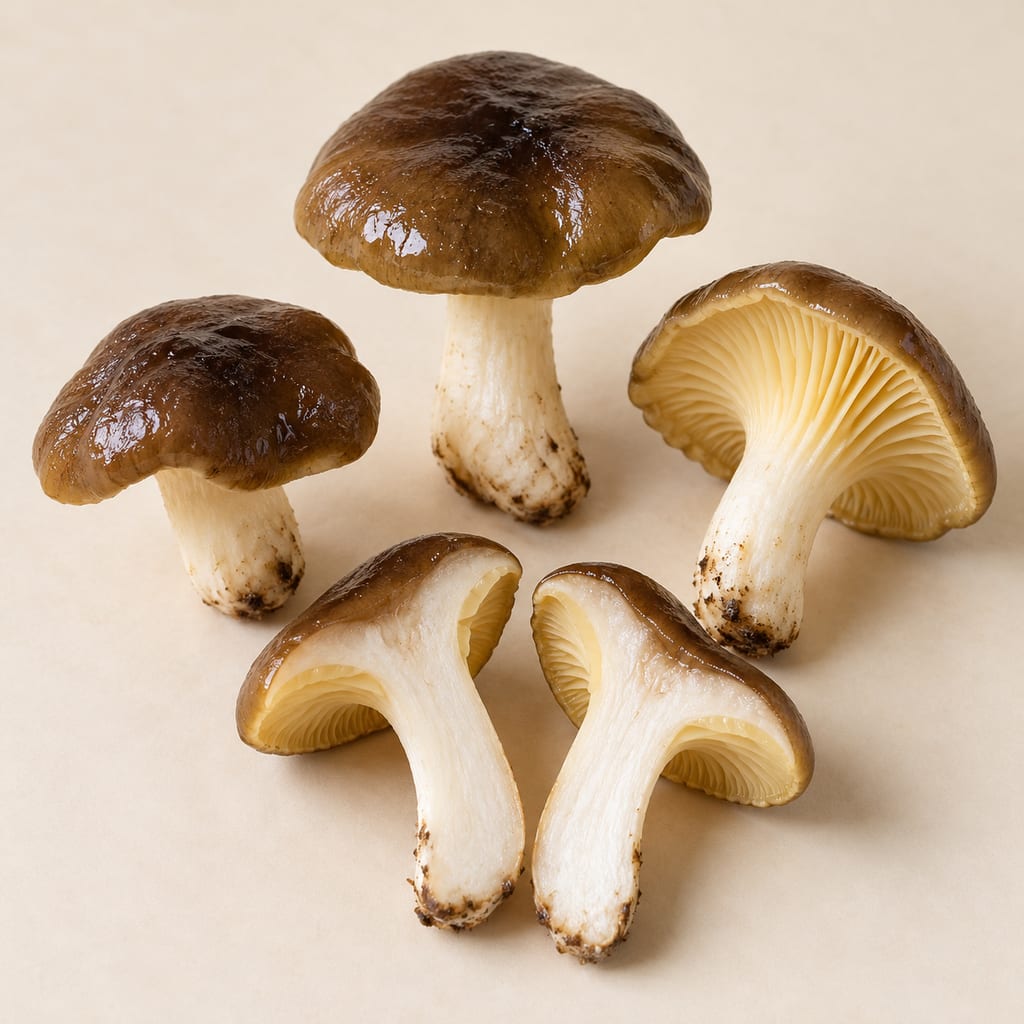
Herald of winter, Hygrophorus hypothejus, is a waxy-capped agaric of the Hygrophoraceae. Its cap is olive-brown to yellowish with a darker centre and a slimy surface, its gills are yellow and run down the stem, and its spore print is white. It grows in coniferous woods in late autumn, often after the first frosts, and is sometimes called the late fall waxy cap or yellow-gilled waxcap.
The species is recorded as edible, but its quality is variable and some specimens are slimy. Foraging guides advise thorough cooking and removing the slime before eating.
Sources for this section
Taxonomy and names
Elias Magnus Fries described the species in 1821 as Agaricus hypothejus. It was placed in Hygrophorus in 1838, and the authority is recorded as Fr., 1838. Synonyms include Hygrophorus aureus and Limacium aureum. The specific name refers to yellow underneath the cap. The English name herald of winter refers to its late appearance, and it is also called late fall waxy cap in the United States and yellow-gilled waxcap.
Sources for this section
Description
The cap is 3 to 6 cm across, starts with a rolled margin and becomes flatter and more funnel-shaped with age. It is slimy and yellowish to olive-brown with a darker centre. The gills are yellow and decurrent, and the flesh is pale yellow, turning orange-red when bruised. The stipe is slender, 4 to 7 cm tall and 0.7 to 1.4 cm wide, and bare; its colour can intensify with frost. Spores are oval, 7 to 9 by 4 to 5 micrometres, and the spore print is white.
Sources for this section
Habitat and season
The fungus grows in coniferous forests and is hard to see among pine needles, though it often occurs in large groups. It appears in October and November and occasionally in December, often with the first frosts. One source describes it as mycorrhizal with pines on poor, sandy soil; the Wikipedia article does not name host trees.
Sources for this section
Distribution and conservation
The species is native to Europe and is also reported from North America. The IUCN Red List assesses it as Least Concern and describes it as a common and widespread edible ectomycorrhizal mushroom in northern Europe and North America.
Sources for this section
Look-alikes
Hygrophorus speciosus is similar. Gomphidius glutinosus, the slimy spike cap, can be confused with it, but its gills separate readily from the cap, which is the main difference the sources give.
Sources for this section
Preparation and quality
Sources describe the flavour as mild or unremarkable, and some cooks find it unappealing. A forager's guide advises that it must be thoroughly cooked. Because slime on mushrooms is associated with stomach upset, the same guide recommends removing the slime before cooking. One Scandinavian guide rates it as good to eat and notes that it is easiest to pick in dry weather, when it is less slimy.
Sources for this section
Safety
Thorough cooking and slime removal are the preparation advice in the sources. The forager's guide also advises trying a small amount first, because allergies are possible, and gives the rule that if in doubt, leave it out. No safe quantity or toxicity data appears in the sources reviewed.
Appearance, smell and taste do not establish that a mushroom is safe to eat. Identify it with a qualified expert, check against look-alikes, and follow official food safety advice before eating any wild mushroom.
Sources for this section
Open questions
The sources do not give a dated record of food use, a list of host trees, or a regional cooking tradition for the species. These are unknown, not negative findings.
Sources for this section
Places
Europe
Documented use · Region evidenceNative to Europe; a Scandinavian guide rates it as good to eat. Use is recorded as an edible wild mushroom, not as a market crop.
North America
Documented use · Region evidenceWikipedia cites North American records; it is listed there as the late fall waxy cap.
Community
No community contributions have been published for this entry yet.
Share what you made
Sign in to contribute. Published comments and photos are free to read.
Sources
WikipediaTaxonomy · Description · Habitat · Distribution · Edibility
Hygrophorus hypothejusDescribed by Fries as Agaricus hypothejus in 1821, placed in Hygrophorus in 1838; synonyms Hygrophorus aureus and Limacium aureum
Cap 3 to 6 cm, yellowish to olive-brown, slimy; gills yellow and decurrent; stipe 4 to 7 cm; spore print white
Grows in coniferous forests in October and November, often with the first frosts; native to Europe with North American records
Edible but of variable quality, as some specimens may be slimy
Look-alikes H. speciosus and Gomphidius glutinosus
Cited in: Overview; Taxonomy and names; Description; Habitat and season; Distribution and conservation; Look-alikes; Preparation and quality; Safety; Open questions
Foraging Course CompanyMethod · Safety
Foraging guide: herald of winterMust be thoroughly cooked
Slime is associated with gastric upset; removing the slime before eating is recommended
Try a small amount first; allergies are possible
If in doubt, leave it out; be 100 percent sure of identification
Cited in: Habitat and season; Preparation and quality; Safety