
Substrates
Three-cornered leek greens
Allium triquetrum is a Mediterranean bulbous allium with a three-angled flowering stalk. An Australian gardening handout reports culinary uses for its leaves, bulbs and flowers, while separate sources document invasive spread and jurisdiction-specific restrictions.
Species and visible features
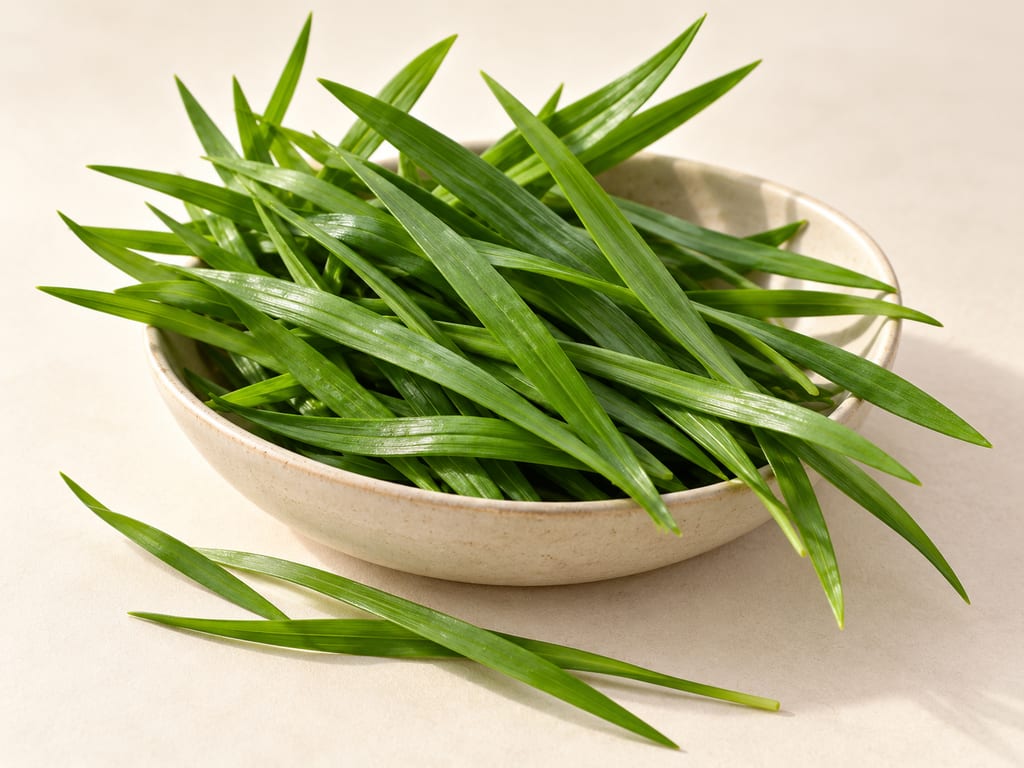
Kew accepts Allium triquetrum L. and places its native range in the western and central Mediterranean. RHS describes a bulbous perennial with narrow leaves, a three-angled flowering stalk and drooping white flowers marked by a green midvein. RHS compares it with crow garlic, whose foliage is hollow and whose flowerheads are dominated by bulbils. These descriptions help explain the source distinction but are not a field key.
A common name, onion-like odor or visual resemblance cannot establish the identity of a gathered plant. The sources do not provide a complete key for toxic lookalikes or a validated foraging method.
What the food-use note says
Sustainable Gardening Australia’s 2020 weeds handout says that leaves, bulbs and flowers are eaten, describes a subtle onion-and-garlic taste, and compares their use with spring onions or chives. It says the parts are best eaten raw because cooking makes them lose flavour and become fibrous. This is a brief food-use note in a gardening handout, not an independently validated food-safety recommendation.
The handout gives no quantities, ordered preparation, cleaning method, yield or storage instructions. It does not establish that a particular specimen is correctly identified, gathered from a suitable site or safe to eat. The comparison with spring onion is culinary context, not a complete recipe.
Sources for this section
Growing, spread and regional rules
RHS assigns H5 in the UK hardiness scheme, whose H5 band is −15 to −10°C; that band describes a category, not an experimental species-specific frost cutoff. The profile lists full sun or partial shade, sheltered exposure, chalk, clay, loam or sand, moist but well-drained conditions, and acid, alkaline or neutral pH categories. These garden-profile details are not a food-crop protocol, yield estimate or container design. VicFlora records the species as introduced and naturalised in Victoria, including moist, shaded bushland, garden and roadside settings.
In England and Wales, Schedule 9 Part II includes A. triquetrum, and section 14(2) concerns planting or otherwise causing a listed plant to grow in the wild. Scotland has separate section 14 wording concerning a plant grown in the wild outwith its native range; the Scottish provision is not a Schedule 9 listing. Victoria’s 2017 Gazette consolidation lists the species as restricted statewide, and Agriculture Victoria defines that category as prohibiting trade in the weed and its propagules. These sources do not determine the legal status of every garden or container scenario; this article makes no legal determination or planting recommendation.
Sources for this section
Research boundaries
The inspected food account is Australian and brief; no Mediterranean household food-history account or complete recipe batch was verified in this review. No source here gives a safe identification procedure, measured growing limits, crop harvest schedule, household storage interval or food-safety endpoint.
Research gaps
The single inspected food-use note does not supply quantities, ordered steps, cleaning controls, yield or storage limits; no executable recipe is provided.
No complete identification key or toxic-lookalike assessment was established. Smell, common names and this article cannot identify a gathered specimen.
RHS descriptors and VicFlora habitat records do not establish a productive cultivation system, container protocol, greenhouse regime, yield, harvest interval or universal climate tolerance.
The UK statutory provisions have geographically distinct wording: Schedule 9 Part II applies to the England-and-Wales provision, while Scotland has separate wording about growth in the wild outwith native range. Victoria’s species schedule is a 2017 Gazette consolidation and its Restricted category definition concerns trade in weeds and propagules. The legal status of a particular garden or container scenario is not determined here.
Sources for this section
- Allium triquetrum L. | Plants of the World Online →
- Allium triquetrum | RHS Plant Profile →
- Wildlife and Countryside Act 1981, Schedule 9 Part II →
- Wildlife and Countryside Act 1981, section 14 →
- Victorian noxious weeds list by scientific name (2017 Gazette consolidation) →
- Invasive plant classifications →
- Weeds: gardening handout, page 8 →
- Wild garlic and crow garlic →
- Allium triquetrum | VicFlora →
Research status
The underlying plant account received a partial source review. Its review scope is described in the original plant article.
Sources for this section
Places
Unknown
Relationship not established · Place not establishedThe available research does not establish a single origin for this ingredient.
Community
No community contributions have been published for this entry yet.
Share what you made
Sign in to contribute. Published comments and photos are free to read.
Sources
Royal Botanic Gardens, KewIngredient research
Allium triquetrum L. | Plants of the World OnlineCited in: Species and visible features; Research boundaries; Research gaps
Royal Horticultural SocietyIngredient research
Allium triquetrum | RHS Plant ProfileCited in: Species and visible features; Growing, spread and regional rules; Research boundaries; Research gaps
The National Archives / legislation.gov.ukIngredient research
Wildlife and Countryside Act 1981, Schedule 9 Part IICited in: Growing, spread and regional rules; Research gaps
The National Archives / legislation.gov.ukIngredient research
Wildlife and Countryside Act 1981, section 14Cited in: Growing, spread and regional rules; Research gaps
Agriculture VictoriaIngredient research
Victorian noxious weeds list by scientific name (2017 Gazette consolidation)Cited in: Growing, spread and regional rules; Research gaps
Agriculture VictoriaIngredient research
Invasive plant classificationsCited in: Growing, spread and regional rules; Research gaps
Sustainable Gardening AustraliaIngredient research
Weeds: gardening handout, page 8Cited in: What the food-use note says; Research boundaries; Research gaps
Royal Horticultural Society AdviceIngredient research
Wild garlic and crow garlicCited in: Species and visible features; Research gaps
Royal Botanic Gardens VictoriaIngredient research
Allium triquetrum | VicFloraCited in: Growing, spread and regional rules; Research gaps
FermenteaResearch provenance
Three-cornered leek: a reported food use and legal limits: original plant researchCited in: Research status