
Spices and aromatics
Lemon myrtle leaves
A lemon-scented Queensland shrub or tree with culinary leaf uses and source-specific guidance for sheltered gardens and containers.
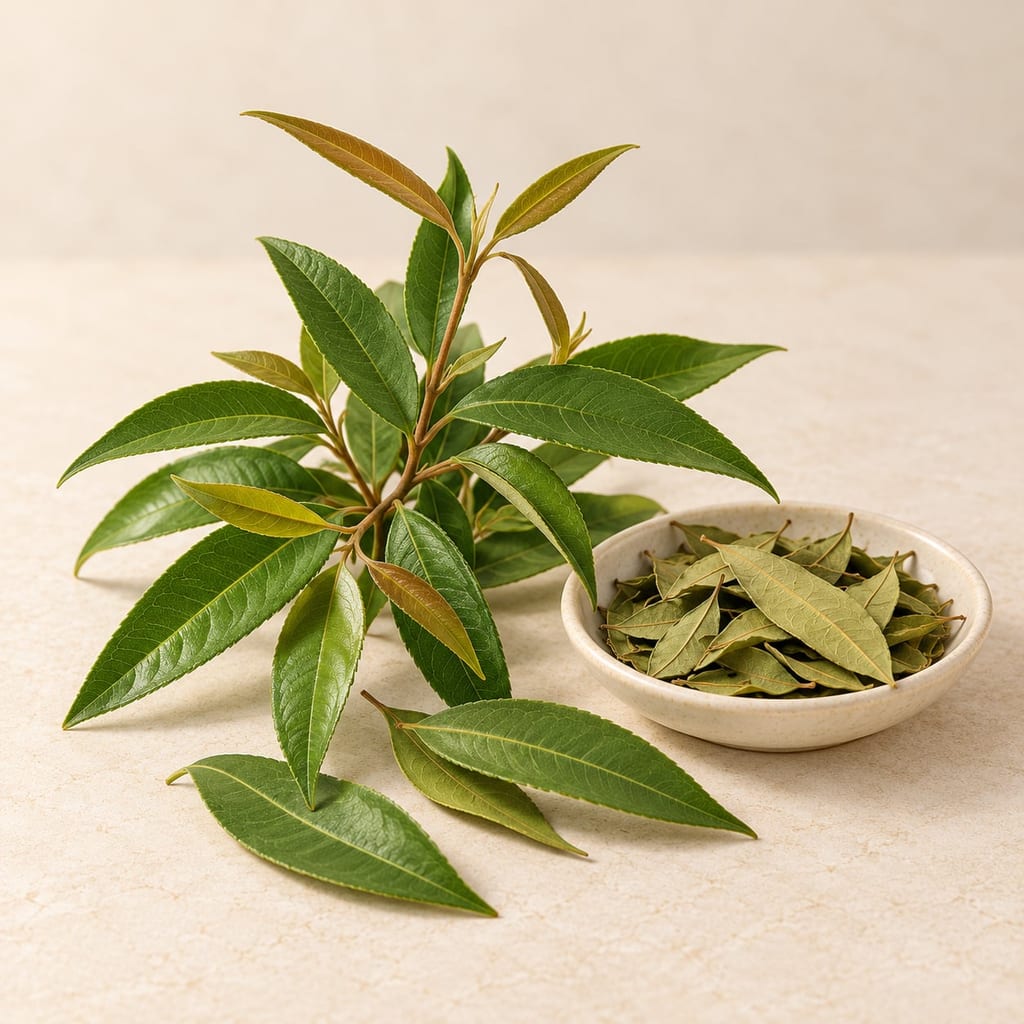
Name and Queensland range
Kew accepts Backhousia citriodora F.Muell. and records Queensland as its native range. ANBG and ANPSA describe coastal Queensland occurrence and use names including lemon-scented myrtle and lemon ironwood. ANPSA notes that “lemon ironwood” is an older forestry name and distinguishes lemon ironbark, Eucalyptus staigeriana; common names do not establish a specimen identity. Kew’s biome label is not a cultivation tolerance.
Food and flavouring
The South Australian landscape-board sheet lists fresh or dried leaves for teas, syrups, glazes, cakes, biscuits, sauces and dressings. A separate information sheet by Andrew Pengelly says no parts are edible fresh and describes dried, ground leaves as a cooking spice, but provides no evidence on that page for its categorical fresh-leaf statement. These reports differ on preparation; neither establishes raw whole-leaf safety or a toxicity rule. Essential-oil and extract findings concern different materials and do not settle culinary-leaf safety. The sheet gives no complete measured recipe or validated food process.
Sources for this section
Outdoor growing
The Australian National Botanic Gardens describes Queensland coastal-forest occurrence and recommends rich, moist, mulched, well-composted soil. Its cultivation account notes young plants are slightly frost-tender and describes sheltered semi-shade in frosty areas. The South Australian sheet lists full sun; these are separate garden contexts, not one universal light prescription.
Sources for this section
Reading frost observations
ANBG reports thriving specimens under protective canopy and shrubbery, in a garden section where winter temperatures down to −8°C were recorded. This is a site observation. It does not establish the individual plants’ exposure, an experimental survival threshold or a safe temperature for young plants.
Sources for this section
Propagation and containers
ANBG describes tip cuttings taken in March in its Australian setting and notes that low branches can root where they touch soil. It also describes indoor container use. Pot volume, indoor light requirements and a heated or unheated greenhouse production regime are not specified.
Sources for this section
Research gaps
Numeric heat/humidity limits, productive watering schedules and cultivar-specific frost responses remain unestablished.
Food quantities, measured drying endpoints and household storage life remain unresolved.
No qualified specimen or cultivar determination is recorded.
Research status
The underlying plant account received a partial source review. Its review scope is described in the original plant article.
Sources for this section
Places
Unknown
Relationship not established · Place not establishedThe available research does not establish a single origin for this ingredient.
Community
No community contributions have been published for this entry yet.
Share what you made
Sign in to contribute. Published comments and photos are free to read.
Sources
Murraylands and Riverland Landscape Board, South AustraliaIngredient research
Native food plants for gardens: Lemon myrtleCited in: Food and flavouring; Outdoor growing; Research gaps
Australian National Botanic Gardens; text by Effie Mullins (1989)Ingredient research
Backhousia citriodora: Growing Native PlantsCited in: Name and Queensland range; Outdoor growing; Reading frost observations; Propagation and containers; Research gaps
Royal Botanic Gardens, Kew, Plants of the World OnlineIngredient research
Backhousia citriodora F.Muell.Cited in: Name and Queensland range; Research gaps
Australian Native Plants Society (Australia)Ingredient research
Backhousia citriodoraCited in: Name and Queensland range; Research gaps
Andrew Pengelly, Indigenous Plants for Health, Inc.; posted 1 October 2024, updated 8 June 2026Ingredient research
Backhousia citriodora – Information SheetCited in: Food and flavouring; Research gaps