
Substrates
Shepherd’s purse greens
Capsella bursa-pastoris appears in Shanghai botanical notes, Korean 냉이 crop and dish records, a Japanese Seven Herbs custom, and a Dulong wild-edible comparison. These sources describe different regional contexts and do not supply a complete household pickle method or identification guide.
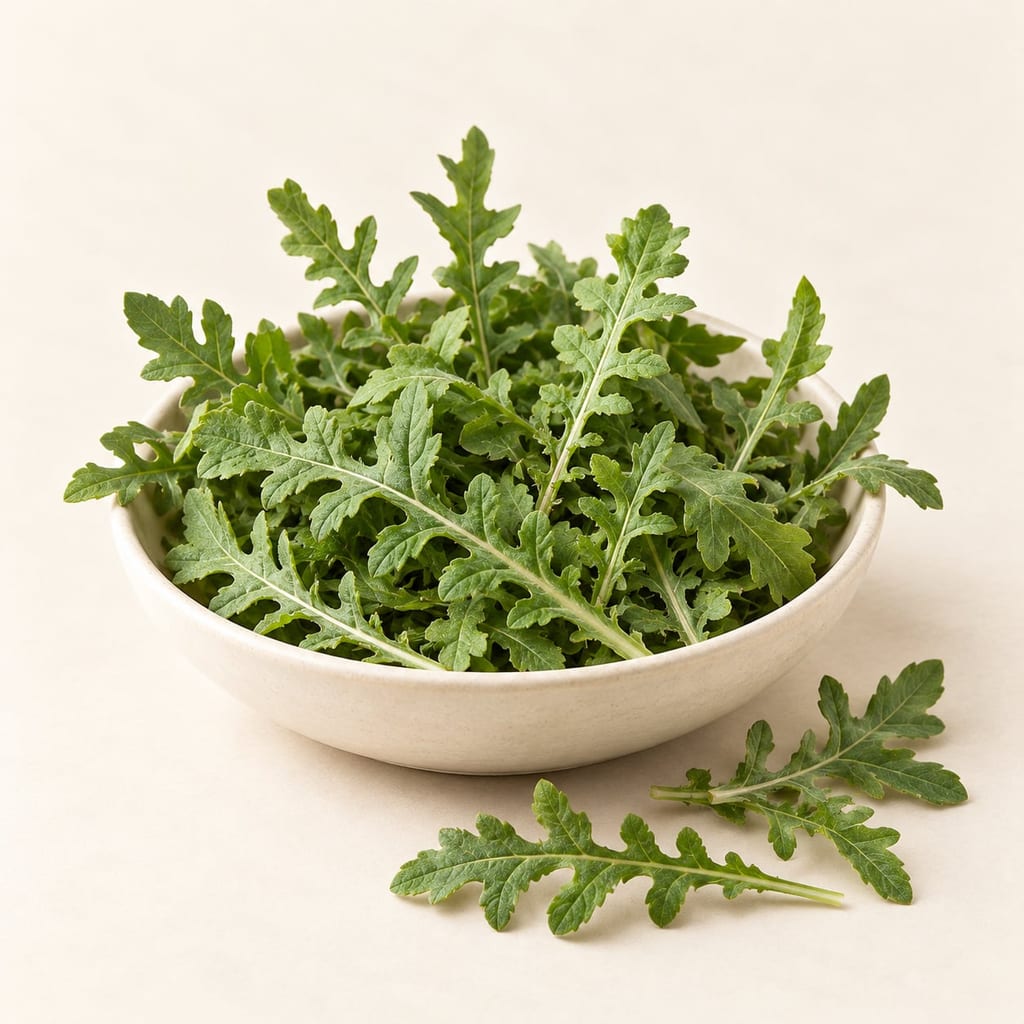
Names identify different regional records
Kew accepts Capsella bursa-pastoris (L.) Medik. The Shanghai Digital Flora labels this species 荠 (jì) and describes its basal rosette, white flowers and heart-shaped pods. The Jeju crop guide uses 냉이 (naengi), while the Japanese Pharmaceutical Society labels ナズナ (nazuna) as Capsella bursa-pastoris. Jeju also lists other plants under similar 냉이 names, so the vernacular label alone does not identify a specimen.
These records are not one interchangeable tradition. Shanghai’s flora describes local occurrence and vegetable use; Jeju gives a Korean crop and dish context; the Japanese page describes a New Year custom. The Dulong paper mentions Capsella only in a comparison of shared wild-edible species, without a species-specific preparation in that passage.
Dishes and seasonal customs
Jeju’s guide names spring 냉이 soup, seasoned greens, porridge, pancakes, fried preparations and pickling. Shanghai’s flora reports stems and leaves eaten as vegetables. The Japanese Society describes nazuna as one of the spring Seven Herbs and part of 七草粥, eaten on January 7. These are documented dish and calendar descriptions; they do not provide one shared formula or a complete household recipe.
The Jeju mention of pickling supplies no complete ingredient batch, salt amount, fermentation time, temperature, acidity endpoint or storage guidance. It is a food-use lead, not a process to reproduce. No source-batched Capsella recipe with an ordered method and storage evidence was established.
Korean crop guidance is regional
Nongsaro’s Korean work calendar recommends early-September broadcast sowing without covering the seed, thinning plants to 3–4 cm and harvesting from November through April. The page describes a cold-tolerant crop, lists 20°C as its germination optimum and 15–25°C as its growing optimum, and favors sunny, well-drained fertile sandy loam. Those are values and conditions in a Korean production guide, not global survival limits or a household yield promise.
The same calendar distinguishes open-field production from protected forcing: it places greenhouse or tunnel setup in late October and gives a later winter harvest window. It says excessive moisture or dryness reduces emergence, high temperature can impair germination, and waterlogging harms below-ground growth. It gives no household pot dimensions, greenhouse setpoint, measured photoperiod requirement or food-storage method.
Sources for this section
Limits before cooking or gathering
A familiar name, photograph or garden occurrence is not an identification. The Jeju guide records overlap among local 냉이 names, and no field-identification method is offered here. Use a verified, labelled food source rather than treating a roadside plant as edible based on appearance or name.
The inspected sources do not establish a safe foraging procedure, a complete preservation control, or a validated storage duration. This record does not convert named dishes or the pickling reference into executable instructions.
Sources for this section
Research gaps
The Jeju chapter’s full printed page could not be reopened during this pass; dish and crop details remain dependent on the prior dossier inspection.
The Shanghai flora timed out and Kew’s page body did not render in this pass; those source-specific claims need a fresh direct review.
No complete regional household recipe or pickle method with ordered steps, quantities, endpoint and storage evidence was established.
No identification guide, food-safety validation, universal growing limits or household container and protected-crop protocol was established.
Sources for this section
Research status
The underlying plant account received a partial source review. Its review scope is described in the original plant article.
Sources for this section
Places
Unknown
Relationship not established · Place not establishedThe available research does not establish a single origin for this ingredient.
Community
No community contributions have been published for this entry yet.
Share what you made
Sign in to contribute. Published comments and photos are free to read.
Sources
Royal Botanic Gardens, KewIngredient research
Capsella bursa-pastoris (L.) Medik. | Plants of the World OnlineCited in: Names identify different regional records; Research gaps
Digital Flora of ShanghaiIngredient research
荠 Capsella bursa-pastoris (L.) Medik. | Digital Flora of ShanghaiCited in: Names identify different regional records; Dishes and seasonal customs; Research gaps
Jeju Special Self-Governing Province Agricultural Research and Extension ServicesIngredient research
135 주요작물 핵심재배기술지도요강, 냉이 chapterCited in: Names identify different regional records; Dishes and seasonal customs; Limits before cooking or gathering; Research gaps
Rural Development Administration of Korea, NongsaroIngredient research
냉이 | Crop work calendarCited in: Korean crop guidance is regional; Research gaps
Pharmaceutical Society of JapanIngredient research
生薬の花: ナズナCited in: Names identify different regional records; Dishes and seasonal customs; Limits before cooking or gathering; Research gaps
Journal of Ethnobiology and EthnomedicineIngredient research
Ethnobotanical study on wild edible plants used by Dulong people in northwestern Yunnan, ChinaCited in: Names identify different regional records; Research gaps
FermenteaResearch provenance
Shepherd’s purse in East Asian food and cultivation records: original plant researchCited in: Research status