
Substrates
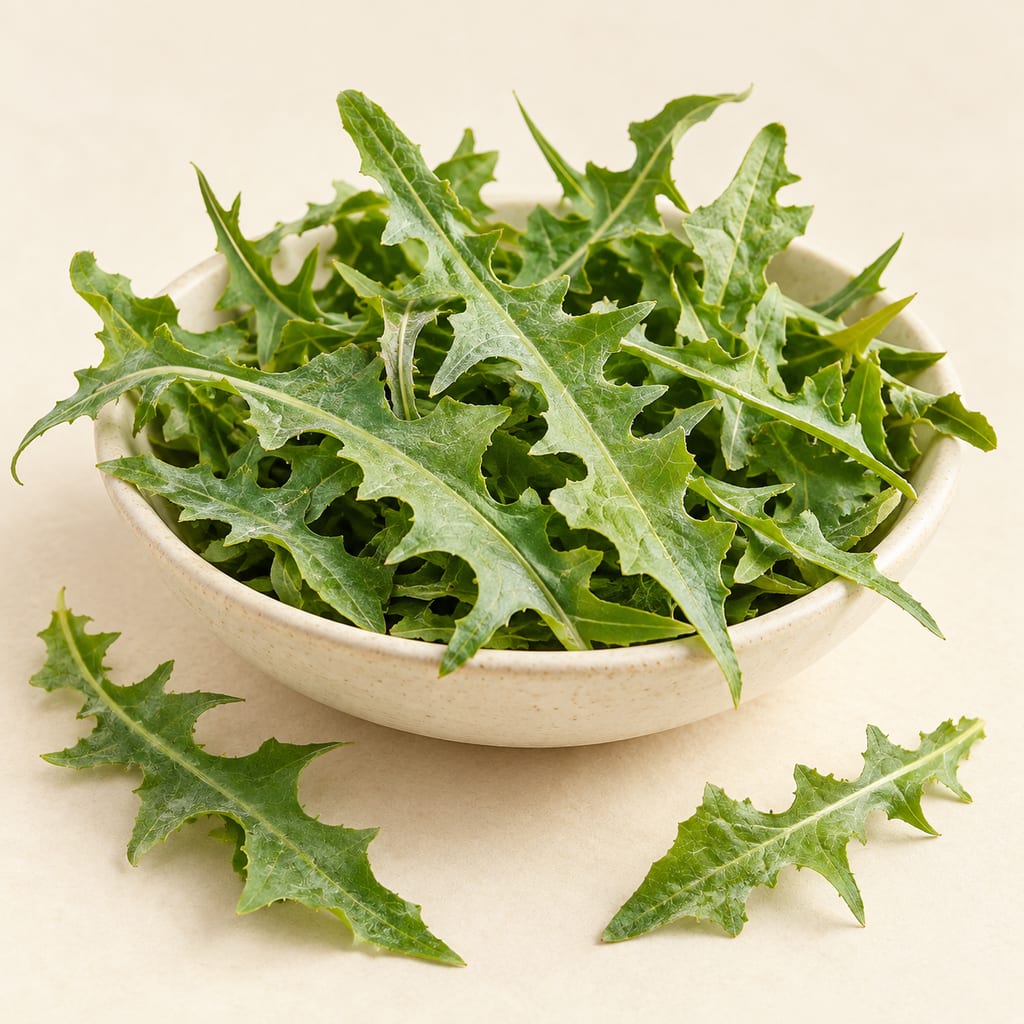
Chondrilla juncea greens
One 2017 Mostaganem thesis reports young leaves, later shoot tips and capitula as food. The Algerian food attribution is provisional: the entry has no inspected voucher or informant-level record, and no independent Algerian food source was found.
Name and provisional status
Kew accepts Chondrilla juncea L. and describes it as a perennial. The Algerian illustrated flora lists the species as Chondrille à tige de jonc and Qassab el djenkia, and describes it as present in the Tell. These botanical records establish a named Algerian taxon, not a food tradition.
The Algerian food association rests on one species-named entry in a 2017 Mostaganem master’s thesis. The entry does not identify a voucher or an informant-level report. Treat the food claim as provisional, not as established regional practice.
What the Algerian thesis reports
The thesis places the plant in fields, sandy sites, paths and uncultivated ground in the Tell. It describes young basal leaves as salad greens and says that, later in development, tender shoot tips at stem ends were eaten raw or steamed; it also calls the capitula edible. The source provides no recipe quantities, harvest record, specimen voucher or interview quotation for this entry.
These are claims in one regional dissertation rather than an independently replicated or voucher-confirmed food record. They should not be used as instructions for gathering or eating a wild plant.
Sources for this section
Algerian names, habitat and appearance
The Algerian flora guide uses Qassab el djenkia and describes fields, sand and paths in the Tell. The thesis describes lower leaves in a rosette that usually disappears around flowering, narrow leaves higher on the stems, and white latex when the plant is broken. These are source descriptions, not a field identification key; a name, habitat, latex or general leaf shape cannot establish species identity.
Growing evidence and its limits
The Algerian sources describe spontaneous habitat occurrence, not cultivation. The thesis gives no sowing, propagation, soil pH, irrigation, harvest-yield or container directions. The flora guide’s sandy-site and field observations are ecological context, not a substrate recommendation or evidence of crop performance.
Kew labels the species perennial and gives a broad temperate-biome classification. Neither statement establishes an Algerian frost threshold, heat tolerance, irrigation need or growing calendar. Weed-risk and invasive reports from North America concern introduced populations and cannot be transferred into Algerian crop guidance or current local legal status.
Lookalikes and use boundaries
The thesis describes plant features but does not provide a diagnostic key or tested identification procedure. An indexed excerpt from a French INRAE weed profile names Lactuca serriola as a confusion risk in that source context; it does not resolve any Algerian specimen. Do not infer edibility from a common name or resemblance.
No source establishes safe raw consumption, cleaning controls, a cooking endpoint, storage life or a household growing method. The reported “raw or steamed” use is a historical descriptive report, not an endorsed preparation.
Evidence still needed
An independent Algerian food-use record and a voucher-backed connection between local names and specimens would materially change confidence in the food attribution. A measured food batch and local cultivation study are also absent. Until then, the article records a limited report rather than a practical foraging or growing guide.
Research gaps
The only Algerian food-use account inspected is a 2017 thesis entry without voucher number or informant-level detail.
No independent Algerian ethnographic or specimen-backed food record was found.
No complete recipe, measured batch, food-safety evaluation, safe raw-consumption evidence or storage guidance was established.
No productive Algerian growing guidance for propagation, soil pH, water, containers, greenhouse, pests or harvest yield was found.
The French INRAE profile was available only as an indexed excerpt and cannot establish Algerian practice or identify a specimen.
Research status
The underlying plant account received a partial source review. Its review scope is described in the original plant article.
Sources for this section
Places
Unknown
Relationship not established · Place not establishedThe available research does not establish a single origin for this ingredient.
Community
No community contributions have been published for this entry yet.
Share what you made
Sign in to contribute. Published comments and photos are free to read.
Sources
Royal Botanic Gardens, KewIngredient research
Chondrilla juncea L. | Plants of the World OnlineCited in: Name and provisional status; Growing evidence and its limits; Research gaps
Elhazati Mostefa, Université Abdelhamid Ibn Badis de Mostaganem, master’s thesis (2017)Ingredient research
Valorisation des plantes sauvages comestibles de l’ouest d’AlgérieCited in: Name and provisional status; What the Algerian thesis reports; Algerian names, habitat and appearance; Growing evidence and its limits; Lookalikes and use boundaries; Evidence still needed; Research gaps
Mairie de Paris, with support of the French Ministry of Foreign and European AffairsIngredient research
Guide illustré de la flore algérienne: Wilaya d’AlgerCited in: Name and provisional status; Algerian names, habitat and appearance; Growing evidence and its limits; Evidence still needed; Research gaps
USDA Animal and Plant Health Inspection Service (2016)Ingredient research
Weed Risk Assessment for Chondrilla junceaCited in: Growing evidence and its limits; Research gaps
INRAE, Unité de Malherbologie & AgronomieIngredient research
Chondrilla juncea: Hyppa weed profileCited in: Lookalikes and use boundaries; Evidence still needed; Research gaps
FermenteaResearch provenance
Chondrilla juncea: a provisional Algerian food report: original plant researchCited in: Research status