
Substrates
Chicory greens and roots
Cichorium intybus is grown for several distinct foods: bitter leaves, headed chicory, winter-forced chicons and roasted-root coffee substitutes. The crop type and source region matter.
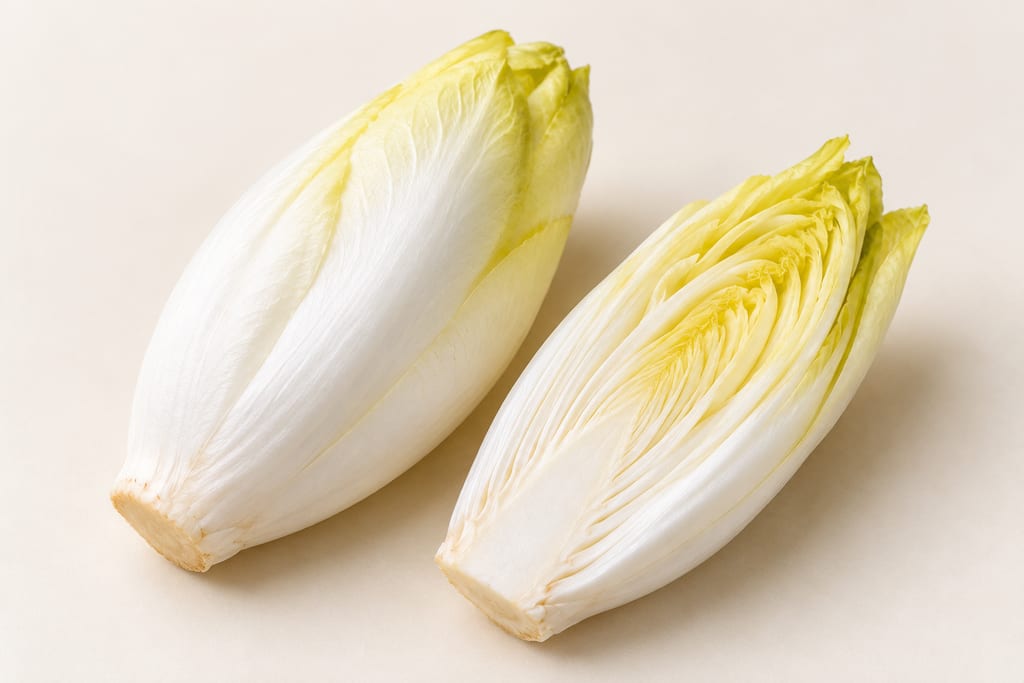
One species, several crop types
Kew accepts Cichorium intybus L. as a perennial native across temperate Europe to Central Asia and the western Himalaya, and from Macaronesia to northwest Africa. The everyday name “chicory” can also be applied to Cichorium endivia, which Wisconsin Extension treats separately. A crop label or market name alone therefore does not establish the species.
RHS groups cultivated C. intybus food crops as forcing or Belgian chicory, radicchio and sugarloaf. They are not interchangeable harvests: witloof is grown for roots that produce winter chicons; radicchio makes red heads; sugarloaf makes green, hearted heads. RHS also describes non-heading leaves and the bitter leaves of the ornamental species form. These distinctions matter when comparing recipes or growing advice.
Food uses and European history
The inspected horticultural sources describe young chicory leaves for salads, mature radicchio and sugarloaf heads as vegetables, and pale chicons as a winter crop. RHS says radicchio can be roasted or grilled and that covering leaves from light makes growth paler and milder. These are culinary descriptions, not a safety process.
A modern historical review traces chicory-root food references in ancient and later European writing, while noting that early texts often do not identify the plant part clearly. It documents roasted root as a coffee substitute or blend in parts of Europe by the late eighteenth century. The review is a secondary historical account; it does not show that every drink sold as chicory coffee uses this species or provide a household roasting and storage method.
Growing context
RHS and Utah State Extension describe chicory as a cool-season crop for sunny ground with fertile, well-drained soil. Both warn that cold spells or drought can encourage bolting or bitterness. Utah’s guide recommends regular, even moisture in its local conditions. Its sowing and spacing advice is regional rather than a universal climate calendar.
For the UK, RHS gives separate sowing windows for forcing and non-forcing crops, and describes late-autumn or winter forcing of dormant roots in a pot under an opaque cover. Its guide also says salad chicory may be grown in containers at least 30 cm wide, and describes late-summer sowings grown in a greenhouse for winter leaves. This cultivation account does not set a universal greenhouse temperature or guarantee a crop in other climates.
Sources for this section
Roots, forcing and food storage are different questions
Witloof roots are lifted for forcing; darkness then blanches the new leaves into chicons. RHS describes potting dormant roots in moist compost and excluding light. Utah State gives a separate local example of storing trimmed roots at 32–34°F for three to seven weeks before forcing. That is a horticultural pre-forcing instruction, not a household food-storage limit for leaves, roots prepared for eating or roasted coffee substitute.
Root forcing is not fermentation. The sources describe a plant-growth technique and do not provide a complete, tested recipe for chicory leaves, chicons or a root drink. A full home recipe would need an identified crop type and source-batched ingredients, steps, yield and storage evidence.
Sources for this section
Research gaps
No inspected source supplies a complete home recipe with ingredient quantities, ordered preparation, yield and storage guidance for a named chicory type.
The historical root-coffee account does not provide a source-batched roasting, grinding, brewing or storage method.
RHS and Utah State Extension give region-specific cultivation advice; universal frost, heat, pH, photoperiod and greenhouse requirements were not established.
No permission or contamination-screening guidance for gathering roadside or treated-site plants was established.
Research status
The underlying plant account received a source review. Its review scope is described in the original plant article.
Sources for this section
Places
Unknown
Relationship not established · Place not establishedThe available research does not establish a single origin for this ingredient.
Community
No community contributions have been published for this entry yet.
Share what you made
Sign in to contribute. Published comments and photos are free to read.
Sources
Royal Botanic Gardens, KewIngredient research
Cichorium intybus L. | Plants of the World OnlineCited in: One species, several crop types; Research gaps
Royal Horticultural SocietyIngredient research
How to Grow ChicoryCited in: One species, several crop types; Food uses and European history; Growing context; Roots, forcing and food storage are different questions; Research gaps
University of Wisconsin–Madison Division of ExtensionIngredient research
Chicory, Cichorium intybusCited in: One species, several crop types; Research gaps
Advances in Nutrition via PubMed CentralIngredient research
Back to the Roots: Revisiting the Use of the Fiber-Rich Cichorium intybus L. TaprootsCited in: Food uses and European history; Research gaps
Utah State University ExtensionIngredient research
How to Grow Chicory in Your GardenCited in: Growing context; Roots, forcing and food storage are different questions; Research gaps
FermenteaResearch provenance
Chicory: leaves, heads, chicons and roots: original plant researchCited in: Research status