
Substrates
Spider plant greens
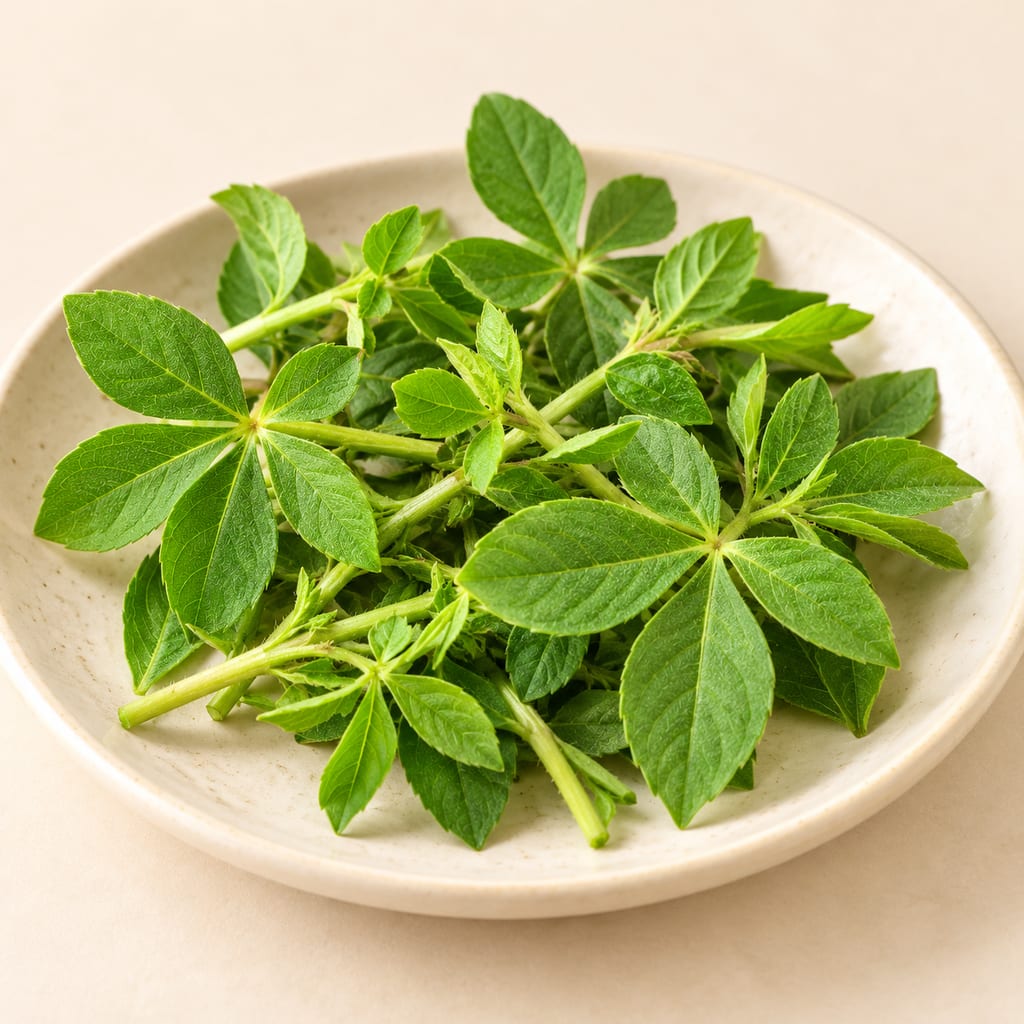
Cleome gynandra is documented in Kenyan growing guides and regional food and crop records from Zambia, Malawi and Zimbabwe. Zimbabwe sources add local leaf uses, seasonal observations and one Marondera manure trial whose published spacing and plant-density figures conflict. These records remain tied to their settings and do not establish a universal recipe or home-production prescription.
Name and regional context
Kew’s Plants of the World Online accepts Cleome gynandra L. and lists Gynandropsis gynandra as a homotypic synonym. ITIS retains the genus placement Gynandropsis under a different taxonomic treatment, so both names appear in research and older crop materials for this subject. South Africa’s Agricultural Research Council lists Cleome gynandra as spider plant; the stable subject here follows Kew’s accepted placement.
The BvAT guide records names including Mwangani (Swahili), Thageti (Kikuyu), Tsisaka (Luhya), Alot-dek (Luo), Saget (Kalenjin), Chinsaga (Kisii) and Mwianzo (Kamba). The HORTINLEA manual records several of the same names with different spellings and additional forms. These are community- and source-specific names; a common name alone does not identify a gathered plant.
Zambian sources use several names for this species. Nguni and Mwila’s 2007 survey records Shungwa and Luyuni-yuni as Tonga names, Lubanga as Lenje, and Suntha as Nyanja in three named community sites. The 2007 National Food and Nutrition Commission report instead assigns Lubanga to Bemba; the difference is left unresolved. The 2023 Zambia row lists lubanga and suntha without a language or district. A shared spelling does not establish one national or community-wide mapping.
The central Malawi study lists C. gynandra among indigenous vegetables grown and names “Cats’ whiskers (Luni)” in its stakeholder-promotion text. A separate Table 2 row gives Luni without a scientific name, and the authors say some vernacular-only identities remain under follow-up. A UNDP Small Grants Programme summary separately associates C. gynandra with Luni but does not name a language. An indexed excerpt from the B4FN report also associates Luni with C. gynandra and gives “Chechewa” and herb leaves, but the linked report could not be inspected directly. These records do not establish one crosswalk for every Luni entry. [S13, S17, S18, S19]
In Zimbabwe, Flora of Zimbabwe lists Bangara, Nyevhe, Rudhe, Runi and Tsuna as Shona names and Ulude as Ndebele. The title of a Zimbabwe horticulture paper spells Nyeve and assigns it to Shona; Honde Valley Table 2 records a Cleome leaf-and-relish entry as RuniC, with M and voucher ITM044. These source spellings and study labels are not interchangeable name mappings. [S21, S22, S23]
Sources for this section
- Cleome gynandra L., Plants of the World Online →
- Indigenous / Traditional African Leafy Vegetables →
- Spider Plant Growing Guide →
- Production and Marketing of African Indigenous Leafy Vegetables: Training Manual for Extension Officers and Practitioners →
- ITIS Report: Cleome gynandra (TSN 22616) →
- Opportunities for increased production, utilization and income generation from African leafy vegetables in Zambia →
- The Common Zambian Foodstuff, Ethenicity, Preparation and Nutrient Composition of Selected Foods Research Report (title as printed on 2007 cover) →
- One hundred local food plants to improve nutrition: Species botany, local knowledge, and nutritional qualities →
- Leveraging on Indigenous Vegetables for Climate Change Adaptation in Central Malawi: Exploring Opportunities and Challenges →
- Conservation and Sustainable Utilization of Two Indigenous Leafy Vegetables (Amaranthus species and Cleome gynandra) in Central Malawi →
- Assessment on Availability of African Indigenous Leafy Vegetables in Malawi and Zambia →
- Assessment on Availability of African Indigenous Leafy Vegetables in Malawi and Zambia — Supplementary Table 2 excerpt →
- Flora of Zimbabwe: Species information: Cleome gynandra →
- Agronomic and nutrition studies of two indigenous vegetables in Zimbabwe: Cleome gynandra and Corchorus tridens →
- Consumption of Wild-Growing Vegetables in the Honde Valley, Zimbabwe →
Food uses described in sources
The HORTINLEA manual describes leaves, young shoots and flowers boiled or stewed, including with amaranth, milk, groundnut paste, or tomato and oil. The BvAT guide says fresh leaves and shoots are cooked alone or mixed with other vegetables, and notes that leaves may be mixed with milk. These accounts document uses; they do not give a single standardized recipe.
PROSEA describes the leaves as bitter and reports that cooking and fermentation reduce bitterness; it also records pot-herb and sauce-flavouring uses in East and West Africa and salted leaves used as pickles. Its entry does not provide household process controls. The BvAT guide’s reported sour-milk marination for two to three days omits quantities, temperature, acidity, vessel and endpoint, so it is not a preservation instruction. Medicinal claims in source material are outside this article’s food-use scope.
The 2007 survey interviewed 280 households in Hoffmeyer (Nyimba District), Subcentre (Siavonga District), and Chikumbi (Chibombo District). In those communities, respondents most often reported harvesting leaves (64%); 21% reported leaves with stems and 6% leaves with flowers. The paper places leafy vegetables in relishes eaten with nshima, but its general relish description is not a Cleome-only formula. The NFNC report’s Cat’s whiskers entry names Cleome gynandra and says to boil until cooked, then add groundnuts; it gives no quantities or measured endpoint. The CTDT/Oxfam Zambia row identifies leaves and lists boiled and dried preparation categories. These are records of reported practice, not a standardized method.
Jinazali and colleagues sampled young tip leaves from uncultivated C. gynandra plants growing around homes and in the wild in Dedza, Lilongwe and Salima during February–March 2014. They collected 1,500 g of fresh material per district for food-composition analysis. The paper’s introduction mentions relish use through earlier references; its study was not a new household-use survey or cooking report. Maseko and colleagues’ four-village Zomba study lists C. gynandra and C. monophylla as separate wild-food entries, without assigning either row a plant part, preparation, local name or linked voucher. [S14, S20]
Zimbabwe food records describe leaves rather than a complete recipe. Flora of Zimbabwe says the leaves are locally eaten. In a two-village Honde Valley study, the table lists C. gynandra leaves as relish. A separate Shurugwi study across seven communities reports the species among edible weeds and records local rainy/harvest-period and dry-season availability. These observations describe those study settings, not national prevalence or a standardized dish. [S21, S23, S24]
Sources for this section
- Indigenous / Traditional African Leafy Vegetables →
- Spider Plant Growing Guide →
- Cleome gynandra L., PROSEA Handbook 8: Vegetables, Record 2161 →
- Production and Marketing of African Indigenous Leafy Vegetables: Training Manual for Extension Officers and Practitioners →
- Opportunities for increased production, utilization and income generation from African leafy vegetables in Zambia →
- The Common Zambian Foodstuff, Ethenicity, Preparation and Nutrient Composition of Selected Foods Research Report (title as printed on 2007 cover) →
- One hundred local food plants to improve nutrition: Species botany, local knowledge, and nutritional qualities →
- Children and Wild Foods in the Context of Deforestation in Rural Malawi →
- Nutrient composition of cat’s whiskers (Cleome gynandra L.) from different agro ecological zones in Malawi →
- Flora of Zimbabwe: Species information: Cleome gynandra →
- Consumption of Wild-Growing Vegetables in the Honde Valley, Zimbabwe →
- Use of weeds as traditional vegetables in Shurugwi District, Zimbabwe →
Growing conditions in the available guides
The BvAT guide describes a warm-season crop in East and Southern Africa, commonly found during rainy seasons. It reports sensitivity to cold, poor performance below 15°C, better growth in sunlight than shade, and preference for sandy loam over wet, marshy or heavy clay soils. It advises sowing with the rains and watering during vegetative growth when rainfall is inadequate. These are guide statements, not universal thresholds for every cultivar or location.
The same guide reports short-term drought tolerance but also says drought can hasten flowering and lower yield. PROSEA similarly describes full-sun growth, sensitivity to waterlogging and relative drought resistance, while noting its account is Southeast Asian in geographic framing. Its agronomy describes seed propagation, nursery or direct sowing, thinning, and leaf harvest from the second month onward. Different regions and production systems are represented; the sources do not establish one global calendar or a container/greenhouse regimen.
Zambia evidence describes practice rather than a measured crop response. In Nguni and Mwila’s survey, direct broadcasting was the most commonly reported planting method for Cleome (76%); priority leafy vegetables were generally planted in the warm, wet season from late November to early April. Those figures describe the sampled communities and are not a Cleome-specific sowing rate or climate limit. A later Eastern and Southern Province household study recorded Cleome collection, preservation, and cultivation in its current-season table; its authors identify voucher 22265 for Cleome and report 3% cultivated among 157 respondents. The CTDT/Oxfam country table lists agricultural fields and home gardens among settings where the species occurs. None of these is a controlled yield trial.
The 2026 participatory study covered 84 farming households in Dedza and Nkhotakota and lists C. gynandra among vegetables grown. Across indigenous vegetables, it reports that 66.6% of farmers grew them in the rainy season without additional irrigation and 11.0% used irrigation; these are aggregate practices, not a Cleome calendar or yield result. A UNDP project summary for central Malawi reports outreach, seed multiplication and one season of farmer growing and selling, but no plot-level design or species-specific yield. Jinazali’s paper gives altitude, rainfall and temperature descriptions for its three sampling zones, attributed to a 2003 ministry guide; these describe collection locations, not plant tolerance. The study sampled uncultivated weeds and did not test production, propagation, water treatments, containers or protected growing. [S13, S17, S20]
A Zimbabwe field paper reports a single outdoor randomized-block trial at the Horticultural Research Centre near Marondera using a green-stem landrace, seven animal-manure treatments and three replicates. The paper reports 32.68 tonnes per hectare of fresh leaves under its 50-tonnes-per-hectare goat-manure treatment and 4.94 tonnes per hectare in the control. Those are results from one site and trial management, not home rates or universal yield expectations. The institute page describes the HRC at 1,630 m, with mean annual rainfall of 873 mm and monthly mean maximum temperatures of 19.5–24.6°C; these are station descriptors, not crop limits. [S25, S26]
The trial reports 0.3 × 0.15 m spacing and a 1.62 m² net plot, then states a thinning density of 22,000 plants per hectare. Uniformly applying that density to 1.62 m² gives about 3.56 plants; the stated spacing implies about 222,222 plants per hectare. The paper does not explain timing or layout, so the inconsistency remains unresolved and neither figure is selected as the error. The article abstract for an older Zimbabwe study says production of both C. gynandra and C. tridens was examined in two natural regions under fertilizer treatments, but provides no methods or results; its linked full text could not be retrieved in this pass. [S25, S22]
Sources for this section
- Indigenous / Traditional African Leafy Vegetables →
- Spider Plant Growing Guide →
- Cleome gynandra L., PROSEA Handbook 8: Vegetables, Record 2161 →
- Opportunities for increased production, utilization and income generation from African leafy vegetables in Zambia →
- Edible weeds and food and nutrition security in the face of the herbicide revolution. A case study from Zambia (author-uploaded preprint) →
- One hundred local food plants to improve nutrition: Species botany, local knowledge, and nutritional qualities →
- Leveraging on Indigenous Vegetables for Climate Change Adaptation in Central Malawi: Exploring Opportunities and Challenges →
- Conservation and Sustainable Utilization of Two Indigenous Leafy Vegetables (Amaranthus species and Cleome gynandra) in Central Malawi →
- Nutrient composition of cat’s whiskers (Cleome gynandra L.) from different agro ecological zones in Malawi →
- Response of Cleome Gynandra to Animal Manure →
- Horticultural Research Institute →
- Agronomic and nutrition studies of two indigenous vegetables in Zimbabwe: Cleome gynandra and Corchorus tridens →
Harvest, handling and open questions
The BvAT guide describes repeated shoot harvests influenced by soil fertility and moisture, followed by allowing plants to flower and set seed. Its overnight bagging and next-morning water-dipping passage is market-handling advice from that guide, not a validated household storage life. PROSEA says leaves may be dried, a practice it describes as common in Africa, but does not specify a safe moisture target or storage conditions.
The ARC page places Cleome gynandra within its South African indigenous-crop research programme and describes ongoing work on planting dates, planting methods, water and fertilizer; this is programme context rather than a complete home-growing manual. The sources reviewed leave unresolved locally calibrated frost and heat responses, container and protected-culture performance, food storage limits, and safe household fermentation controls.
The 2007 survey reports that about 60% of respondents who preserved Cleome leaves blanched them before sun-drying; the paper also describes varied drying and storage practices. The Hohenheim study separately reports some respondents blanching edible weeds, including Cleome, before drying. These survey accounts do not validate a preservation control or storage duration. A 2024 COLEAD notice says the Zambia Agriculture Research Institute was setting up field trials involving Cleome in crop systems, but publishes no results. Zambia-specific soil response, crop yield, container performance, protected growing, and food-storage endpoints remain open.
Jinazali and colleagues oven-dried remaining samples for one day at 60°C after laboratory moisture testing. That was analytical sample preparation, not a household drying or preservation method. The Malawi material therefore adds no validated drying endpoint, storage duration, or food-safety control. The 2017 Maseko correction page remains a subscription preview; the full 2018 correction states corrected funding information and the article’s later open-access licence, and does not report a change to its food table. [S15, S16, S20]
Zimbabwe sources add no measured frost-survival threshold, species response curve, irrigation treatment, mature-container crop or greenhouse production method. The HRI page mentions a production manual for Nyevhe, but that manual was not inspected here. No household food-storage or preparation endpoint is established by the field trial or visible Acta abstract. [S25, S26, S22]
Sources for this section
- Indigenous / Traditional African Leafy Vegetables →
- Spider Plant Growing Guide →
- Cleome gynandra L., PROSEA Handbook 8: Vegetables, Record 2161 →
- Opportunities for increased production, utilization and income generation from African leafy vegetables in Zambia →
- Edible weeds and food and nutrition security in the face of the herbicide revolution. A case study from Zambia (author-uploaded preprint) →
- Edible weeds and food and nutrition security in the face of the herbicide revolution. A case study from Zambia →
- Zambia: Innovative COLEAD-GART partnership to improve soil fertility and increase the economic value of crops →
- Correction to: Children and Wild Foods in the Context of Deforestation in Rural Malawi →
- Correction to: Children and Wild Foods in the Context of Deforestation in Rural Malawi →
- Nutrient composition of cat’s whiskers (Cleome gynandra L.) from different agro ecological zones in Malawi →
- Response of Cleome Gynandra to Animal Manure →
- Horticultural Research Institute →
- Agronomic and nutrition studies of two indigenous vegetables in Zimbabwe: Cleome gynandra and Corchorus tridens →
Research gaps
No reviewed source establishes a universal frost/heat threshold, container scale, or greenhouse growing regime.
The reported sour-milk marination and fermentation accounts lack process parameters and safety endpoints; they are descriptive rather than executable.
No household fresh-leaf storage duration or safe preservation endpoint was established.
The broad Kew use category 'poison' lacks part, dose and context in the inspected profile and is not interpreted here as a food hazard determination.
The 2022 final journal article could not be reopened in full; detailed table and method statements here rely on the full 2021 author-uploaded preprint.
The Zambian household percentages describe sampled respondents, not yield, national prevalence, or a recommended cultivation method.
The NFNC report and Nguni–Mwila survey assign Lubanga to different languages; the sources do not resolve the difference.
No Zambia-specific controlled soil, irrigation, container, protected-crop, or yield trial was found in the inspected sources.
The reported blanching and drying practices do not establish validated household storage or food-safety limits.
Malawi’s Luni and Denje vernacular rows are not binomial-linked in the central Malawi chapter; the B4FN table remains indexed-only and does not resolve every local-name use.
The Malawi crop survey reports aggregate indigenous-vegetable practice, not a Cleome-specific growing calendar, yield, irrigation response or container/protected-culture trial.
The Jinazali article reports a food-composition sample, not a household preparation or cultivation study; its cited agro-ecological ranges are site context, not plant tolerances, and laboratory drying is not a preservation endpoint.
The 2017 Maseko correction text remains inaccessible; the full 2018 correction concerns funding and licensing and does not report a change to the food table.
Zimbabwe food accounts describe leaves and local dishes but do not provide a complete source-specific recipe with quantities and an endpoint.
The Marondera trial reports spacing, plot area and thinning density that do not reconcile; its timing and layout are not explained.
The Acta Horticulturae abstract names two Zimbabwe natural regions but not their locations, trial methods or results; the linked PDF was blocked by a JavaScript challenge.
No Zimbabwe source in this amendment establishes a frost limit, irrigation response, mature productive container, greenhouse method, or household storage and food-safety endpoint.
Sources for this section
- Cleome gynandra L., Plants of the World Online →
- Indigenous / Traditional African Leafy Vegetables →
- Spider Plant Growing Guide →
- Cleome gynandra L., PROSEA Handbook 8: Vegetables, Record 2161 →
- Production and Marketing of African Indigenous Leafy Vegetables: Training Manual for Extension Officers and Practitioners →
- ITIS Report: Cleome gynandra (TSN 22616) →
- Opportunities for increased production, utilization and income generation from African leafy vegetables in Zambia →
- Edible weeds and food and nutrition security in the face of the herbicide revolution. A case study from Zambia (author-uploaded preprint) →
- Edible weeds and food and nutrition security in the face of the herbicide revolution. A case study from Zambia →
- The Common Zambian Foodstuff, Ethenicity, Preparation and Nutrient Composition of Selected Foods Research Report (title as printed on 2007 cover) →
- One hundred local food plants to improve nutrition: Species botany, local knowledge, and nutritional qualities →
- Zambia: Innovative COLEAD-GART partnership to improve soil fertility and increase the economic value of crops →
- Leveraging on Indigenous Vegetables for Climate Change Adaptation in Central Malawi: Exploring Opportunities and Challenges →
- Children and Wild Foods in the Context of Deforestation in Rural Malawi →
- Correction to: Children and Wild Foods in the Context of Deforestation in Rural Malawi →
- Correction to: Children and Wild Foods in the Context of Deforestation in Rural Malawi →
- Conservation and Sustainable Utilization of Two Indigenous Leafy Vegetables (Amaranthus species and Cleome gynandra) in Central Malawi →
- Assessment on Availability of African Indigenous Leafy Vegetables in Malawi and Zambia →
- Assessment on Availability of African Indigenous Leafy Vegetables in Malawi and Zambia — Supplementary Table 2 excerpt →
- Nutrient composition of cat’s whiskers (Cleome gynandra L.) from different agro ecological zones in Malawi →
- Flora of Zimbabwe: Species information: Cleome gynandra →
- Agronomic and nutrition studies of two indigenous vegetables in Zimbabwe: Cleome gynandra and Corchorus tridens →
- Consumption of Wild-Growing Vegetables in the Honde Valley, Zimbabwe →
- Use of weeds as traditional vegetables in Shurugwi District, Zimbabwe →
- Response of Cleome Gynandra to Animal Manure →
- Horticultural Research Institute →
Research status
The underlying plant account received a partial source review. Its review scope is described in the original plant article.
Sources for this section
Places
Unknown
Relationship not established · Place not establishedThe available research does not establish a single origin for this ingredient.
Community
No community contributions have been published for this entry yet.
Share what you made
Sign in to contribute. Published comments and photos are free to read.
Sources
Royal Botanic Gardens, KewIngredient research
Cleome gynandra L., Plants of the World OnlineCited in: Name and regional context; Research gaps
Agricultural Research Council, South AfricaIngredient research
Indigenous / Traditional African Leafy VegetablesCited in: Name and regional context; Food uses described in sources; Growing conditions in the available guides; Harvest, handling and open questions; Research gaps
Biovision Africa Trust and Ecological Organic Agriculture InitiativeIngredient research
Spider Plant Growing GuideCited in: Name and regional context; Food uses described in sources; Growing conditions in the available guides; Harvest, handling and open questions; Research gaps
PROSEA FoundationIngredient research
Cleome gynandra L., PROSEA Handbook 8: Vegetables, Record 2161Cited in: Food uses described in sources; Growing conditions in the available guides; Harvest, handling and open questions; Research gaps
Judith Henze, Mary Abukutsa-Onyango and Arnold Opiyo; Seminar für Ländliche Entwicklung, Humboldt-Universität zu Berlin; hosted by Egerton UniversityIngredient research
Production and Marketing of African Indigenous Leafy Vegetables: Training Manual for Extension Officers and PractitionersCited in: Name and regional context; Food uses described in sources; Research gaps
Integrated Taxonomic Information SystemIngredient research
ITIS Report: Cleome gynandra (TSN 22616)Cited in: Name and regional context; Research gaps
African Journal of Food, Agriculture, Nutrition and DevelopmentIngredient research
Opportunities for increased production, utilization and income generation from African leafy vegetables in ZambiaCited in: Name and regional context; Food uses described in sources; Growing conditions in the available guides; Harvest, handling and open questions; Research gaps
Author-uploaded preprint hosted by ResearchGateIngredient research
Edible weeds and food and nutrition security in the face of the herbicide revolution. A case study from Zambia (author-uploaded preprint)Cited in: Growing conditions in the available guides; Harvest, handling and open questions; Research gaps
International Journal of Agricultural Sustainability, Taylor & FrancisIngredient research
Edible weeds and food and nutrition security in the face of the herbicide revolution. A case study from ZambiaCited in: Harvest, handling and open questions; Research gaps
National Food and Nutrition Commission, Ministry of Health, and University of Zambia, School of Agricultural SciencesIngredient research
The Common Zambian Foodstuff, Ethenicity, Preparation and Nutrient Composition of Selected Foods Research Report (title as printed on 2007 cover)Cited in: Name and regional context; Food uses described in sources; Research gaps
Oxfam Novib; Zambia row compiled with Community Technology Development TrustIngredient research
One hundred local food plants to improve nutrition: Species botany, local knowledge, and nutritional qualitiesCited in: Name and regional context; Food uses described in sources; Growing conditions in the available guides; Research gaps
COLEADIngredient research
Zambia: Innovative COLEAD-GART partnership to improve soil fertility and increase the economic value of cropsCited in: Harvest, handling and open questions; Research gaps
Springer NatureIngredient research
Leveraging on Indigenous Vegetables for Climate Change Adaptation in Central Malawi: Exploring Opportunities and ChallengesCited in: Name and regional context; Growing conditions in the available guides; Research gaps
Springer Nature, Human EcologyIngredient research
Children and Wild Foods in the Context of Deforestation in Rural MalawiCited in: Food uses described in sources; Research gaps
Springer Nature, Human EcologyIngredient research
Correction to: Children and Wild Foods in the Context of Deforestation in Rural MalawiCited in: Harvest, handling and open questions; Research gaps
Springer Nature, Human EcologyIngredient research
Correction to: Children and Wild Foods in the Context of Deforestation in Rural MalawiCited in: Harvest, handling and open questions; Research gaps
UNDP Small Grants ProgrammeIngredient research
Conservation and Sustainable Utilization of Two Indigenous Leafy Vegetables (Amaranthus species and Cleome gynandra) in Central MalawiCited in: Name and regional context; Growing conditions in the available guides; Research gaps
Catholic Relief Services, Southern Africa Regional Office; Biodiversity for Food and NutritionIngredient research
Assessment on Availability of African Indigenous Leafy Vegetables in Malawi and ZambiaCited in: Name and regional context; Research gaps
Catholic Relief Services, Southern Africa Regional Office; Biodiversity for Food and NutritionIngredient research
Assessment on Availability of African Indigenous Leafy Vegetables in Malawi and Zambia — Supplementary Table 2 excerptCited in: Name and regional context; Research gaps
Harris Jinazali, Beatrice Mtimuni and Eric Chilembwe; African Journal of Food Science 11(1), 24–29 (January 2017), DOI 10.5897/AJFS2016.1478Ingredient research
Nutrient composition of cat’s whiskers (Cleome gynandra L.) from different agro ecological zones in MalawiCited in: Food uses described in sources; Growing conditions in the available guides; Harvest, handling and open questions; Research gaps
Flora of ZimbabweIngredient research
Flora of Zimbabwe: Species information: Cleome gynandraCited in: Name and regional context; Food uses described in sources; Research gaps
Acta HorticulturaeIngredient research
Agronomic and nutrition studies of two indigenous vegetables in Zimbabwe: Cleome gynandra and Corchorus tridensCited in: Name and regional context; Growing conditions in the available guides; Harvest, handling and open questions; Research gaps
Economic Botany; Springer NatureIngredient research
Consumption of Wild-Growing Vegetables in the Honde Valley, ZimbabweCited in: Name and regional context; Food uses described in sources; Research gaps
Journal of Ethnobiology and Ethnomedicine; Springer NatureIngredient research
Use of weeds as traditional vegetables in Shurugwi District, ZimbabweCited in: Food uses described in sources; Research gaps
Asian Journal of Agriculture and Food SciencesIngredient research
Response of Cleome Gynandra to Animal ManureCited in: Growing conditions in the available guides; Harvest, handling and open questions; Research gaps
Department of Research and Specialist Services, Zimbabwe Ministry of AgricultureIngredient research
Horticultural Research InstituteCited in: Growing conditions in the available guides; Harvest, handling and open questions; Research gaps
FermenteaResearch provenance
Spider plant: regional food and growing evidence: original plant researchCited in: Research status