
Substrates
Çiriş (Eremurus spectabilis)
A source-bounded account of reported young-leaf uses in Ağrı and separate Turkish seed and laboratory studies. The evidence does not establish a home-growing method or identify a plant gathered under a shared local name.
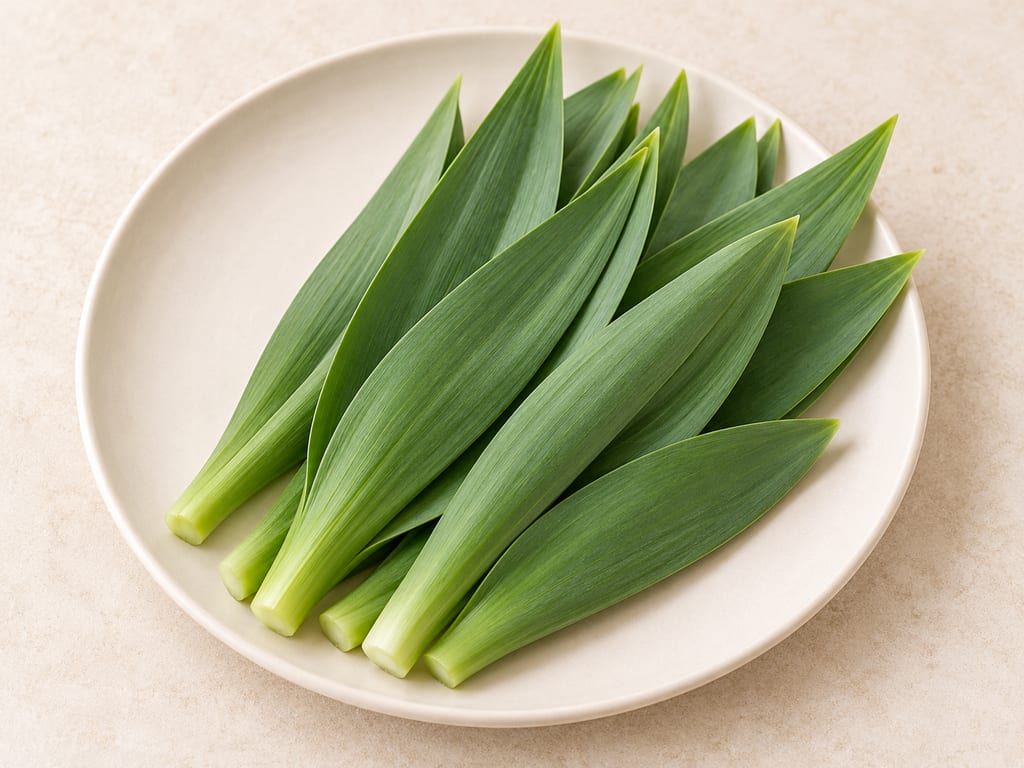
Name and scope
Kew accepts Eremurus spectabilis M.Bieb. in the family Asphodelaceae. Two Turkish laboratory papers published in 2020 use the older family placement Liliaceae for the same named species. In the Ağrı study, the row for E. spectabilis lists “Çiriş, gülük, kiris” under “Turkish common name”; the discussion specifically calls çiriş a Turkish name but does not assign a language to each word. A shared name is not enough to identify an unexamined plant.
Sources for this section
- Eremurus spectabilis M.Bieb. | Plants of the World Online →
- Wild edible plant species used in the Ağrı province, eastern Turkey →
- Effects of Moist-Cold Stratification and Gibberellic Acid Applications on Breaking Seed Dormancy in Foxtail Lily (Eremurus spectabilis M.Bieb.) →
- In vitro germination and bulblet and shoot propagation for wild edible Eremurus spectabilis M.Bieb. →
Ağrı food account
An Ağrı field study reports 350 interviews in seven districts and 35 villages from April 2016 through October 2017. Its E. spectabilis row records young plants, dishes and pies, a May–June use period, and voucher 24-18. The article says two specimens per taxon were deposited at the Turkey Seed Gene Bank and Erzincan Horticultural Research Institute. Its discussion describes young leaves in stews and as dolma filling. The row and prose differ in how they name the plant parts, so they should not be collapsed into one standardized harvest description.
Sources for this section
What the growing studies show
A 2002 thesis abstract describes field and seed work from 1997 to 2000 at Erzincan Horticultural Research Institute and named localities in Erzincan and İspir, Erzurum. The full thesis was not retrieved, so its methods and results cannot be assessed here. A separate seed experiment used mature material collected at Gürpınar, Van; it tested gibberellic acid and moist cold stratification, then assessed germination in darkness at 12–13°C. A distinct paper tested combined pretreatments. These are seed experiments, not outdoor temperature limits or a sowing guide.
Sources for this section
- Yabani olarak tüketilen bazı bitkilerin kültüre alınma olanaklarının araştırılması →
- Effects of Moist-Cold Stratification and Gibberellic Acid Applications on Breaking Seed Dormancy in Foxtail Lily (Eremurus spectabilis M.Bieb.) →
- Effects of combined pretreatments on germination and emergence of wild Eremurus spectabilis M.Bieb. seeds →
Propagation research is not a home method
A 2020 in-vitro study reports germination and bulblet or shoot propagation using sterile culture media and controlled laboratory conditions. It reports 57.5% germination on B5 medium and notes that further rooting work was needed. That result belongs to the paper's tissue-culture setup; it does not describe container culture, a garden bed, or a household propagation method.
What remains unknown
The sources reviewed here do not establish a named hardiness rating, frost or heat tolerance, soil or pH, irrigation, drainage, outdoor crop schedule, container dimensions, protected-crop method, pest management, or managed harvest and regrowth. The Ağrı May–June period refers to reported food use, not a planting calendar. The food account does not give one complete batch with quantities, ordered stages, yield, endpoint, and storage conditions, so it cannot support an executable recipe.
Sources for this section
- Wild edible plant species used in the Ağrı province, eastern Turkey →
- Yabani olarak tüketilen bazı bitkilerin kültüre alınma olanaklarının araştırılması →
- Effects of Moist-Cold Stratification and Gibberellic Acid Applications on Breaking Seed Dormancy in Foxtail Lily (Eremurus spectabilis M.Bieb.) →
- In vitro germination and bulblet and shoot propagation for wild edible Eremurus spectabilis M.Bieb. →
Research gaps
Retrieve and inspect the full 2002 Güngör thesis to evaluate its field and seed methods.
Find a Turkish source that documents productive cultivation conditions rather than laboratory seed work or a field-study mention.
Find attributed regional food descriptions that provide a complete source-specific batch and clarify the reported plant parts.
Term-specific language and voucher re-determination are not established for the Ağrı names.
Sources for this section
- Eremurus spectabilis M.Bieb. | Plants of the World Online →
- Wild edible plant species used in the Ağrı province, eastern Turkey →
- Yabani olarak tüketilen bazı bitkilerin kültüre alınma olanaklarının araştırılması →
- Effects of Moist-Cold Stratification and Gibberellic Acid Applications on Breaking Seed Dormancy in Foxtail Lily (Eremurus spectabilis M.Bieb.) →
- Effects of combined pretreatments on germination and emergence of wild Eremurus spectabilis M.Bieb. seeds →
- In vitro germination and bulblet and shoot propagation for wild edible Eremurus spectabilis M.Bieb. →
Research status
The underlying plant account received a partial source review. Its review scope is described in the original plant article.
Sources for this section
Places
Unknown
Relationship not established · Place not establishedThe available research does not establish a single origin for this ingredient.
Community
No community contributions have been published for this entry yet.
Share what you made
Sign in to contribute. Published comments and photos are free to read.
Sources
Royal Botanic Gardens, KewIngredient research
Eremurus spectabilis M.Bieb. | Plants of the World OnlineCited in: Name and scope; Research gaps
Anales del Jardín Botánico de MadridIngredient research
Wild edible plant species used in the Ağrı province, eastern TurkeyCited in: Name and scope; Ağrı food account; What remains unknown; Research gaps
Yükseköğretim Kurulu Açık BilimIngredient research
Yabani olarak tüketilen bazı bitkilerin kültüre alınma olanaklarının araştırılmasıCited in: What the growing studies show; What remains unknown; Research gaps
Türkiye Tarımsal Araştırmalar Dergisi (Turkish Journal of Agricultural Research)Ingredient research
Effects of Moist-Cold Stratification and Gibberellic Acid Applications on Breaking Seed Dormancy in Foxtail Lily (Eremurus spectabilis M.Bieb.)Cited in: Name and scope; What the growing studies show; What remains unknown; Research gaps
Notulae Botanicae Horti Agrobotanici Cluj-NapocaIngredient research
Effects of combined pretreatments on germination and emergence of wild Eremurus spectabilis M.Bieb. seedsCited in: What the growing studies show; Research gaps
Notulae Botanicae Horti Agrobotanici Cluj-NapocaIngredient research
In vitro germination and bulblet and shoot propagation for wild edible Eremurus spectabilis M.Bieb.Cited in: Name and scope; Propagation research is not a home method; What remains unknown; Research gaps
FermenteaResearch provenance
Eremurus spectabilis: Turkish food records and research: original plant researchCited in: Research status