
Spices and aromatics
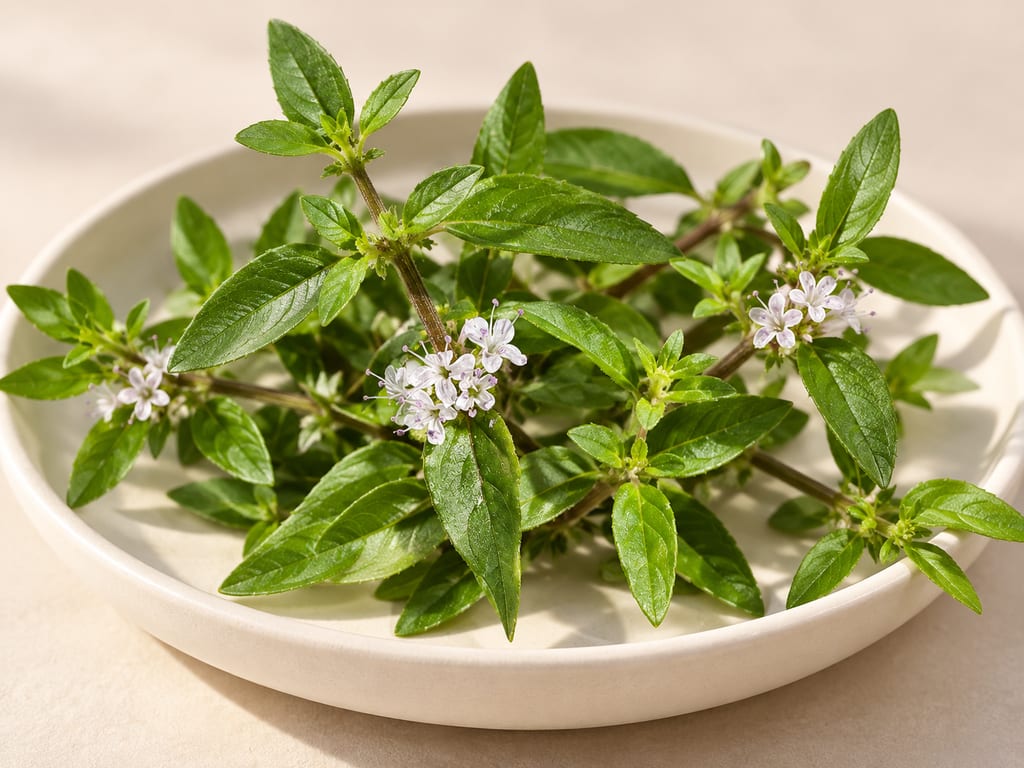
River mint leaves
An Australian culinary mint for moist garden settings, with container-growing guidance and distinct regional conservation considerations.
Food use and attribution
Kew accepts Mentha australis R.Br. and lists Micromeria australis as a synonym; it records native occurrence across six Australian states and territories. Regional pages use both River Mint and Native Mint, names that do not identify a specimen by themselves. ANPSA describes aromatic leaves with a spearmint-like flavour and culinary uses. The South Australian fact sheet lists fresh or dried leaves in sauces, salads, dressings, dips, desserts and infused water; South Australia’s Plant Selector+ describes their peppermint-like taste as a garnish for food and drinks. A Queensland health-service account reports a garden project involving Yulu-Burri-Ba Aboriginal Corporation and attributes current practical River Mint use in salads, cooking and chewing to Merv Gillespie. This is a specific contemporary local account, not a claim about all First Peoples or the earliest use of the plant.
Moist gardens and containers
ANPSA describes sunny or shady moist situations, with container growing useful for managing spread. It notes that plants can become invasive under good growing conditions and describes regular clipping. The South Australian government sheet separately describes garden beds where the plant spreads rapidly, wet soil, and a preference for shade and damp. These are regional gardening descriptions; neither gives a measured irrigation schedule, container volume or tested containment design.
Sources for this section
Propagation and seasons
ANPSA describes propagation by cuttings or transplanting small rooted divisions; seed can germinate slowly. Its summer–autumn flowering account is regional gardening information, not a nationwide calendar or quantified day-length response. No numeric frost, heat or greenhouse production limits are established here.
Sources for this section
Conservation depends on location
Tasmania’s official profile lists Mentha australis as endangered under its state act and not listed under the federal EPBC Act. It directs readers to activity and permit guidance. A wider Australian range or general garden profile does not establish permission to collect or handle a Tasmanian listed plant.
Sources for this section
Research gaps
Local identification, plant-material sourcing and activity-specific permissions need checking for the intended location.
Species-specific measured food methods, storage life and drying endpoints remain unresolved.
Greenhouse settings, productive heat/frost limits and containment performance lack sufficient evidence.
Research status
The underlying plant account received a partial source review. Its review scope is described in the original plant article.
Sources for this section
Places
Unknown
Relationship not established · Place not establishedThe available research does not establish a single origin for this ingredient.
Community
No community contributions have been published for this entry yet.
Share what you made
Sign in to contribute. Published comments and photos are free to read.
Sources
Australian Native Plants Society (Australia)Ingredient research
Mentha australisCited in: Food use and attribution; Moist gardens and containers; Propagation and seasons; Research gaps
Metro South Health, Queensland; published 26 July 2024, updated 12 August 2025Ingredient research
Bush tucker garden showcases native plantsCited in: Food use and attribution; Research gaps
Department of Natural Resources and Environment TasmaniaIngredient research
Mentha australis: Species Management ProfileCited in: Conservation depends on location; Research gaps
Royal Botanic Gardens, Kew, Plants of the World OnlineIngredient research
Mentha australis R.Br.Cited in: Food use and attribution; Research gaps
Murraylands and Riverland Landscape Board, South AustraliaIngredient research
Native food plants for gardens: River mintCited in: Food use and attribution; Moist gardens and containers; Research gaps
South Australian Plant Selector+, Botanic Gardens and State Herbarium of South AustraliaIngredient research
Mentha australis: Native MintCited in: Food use and attribution; Research gaps