
Substrates
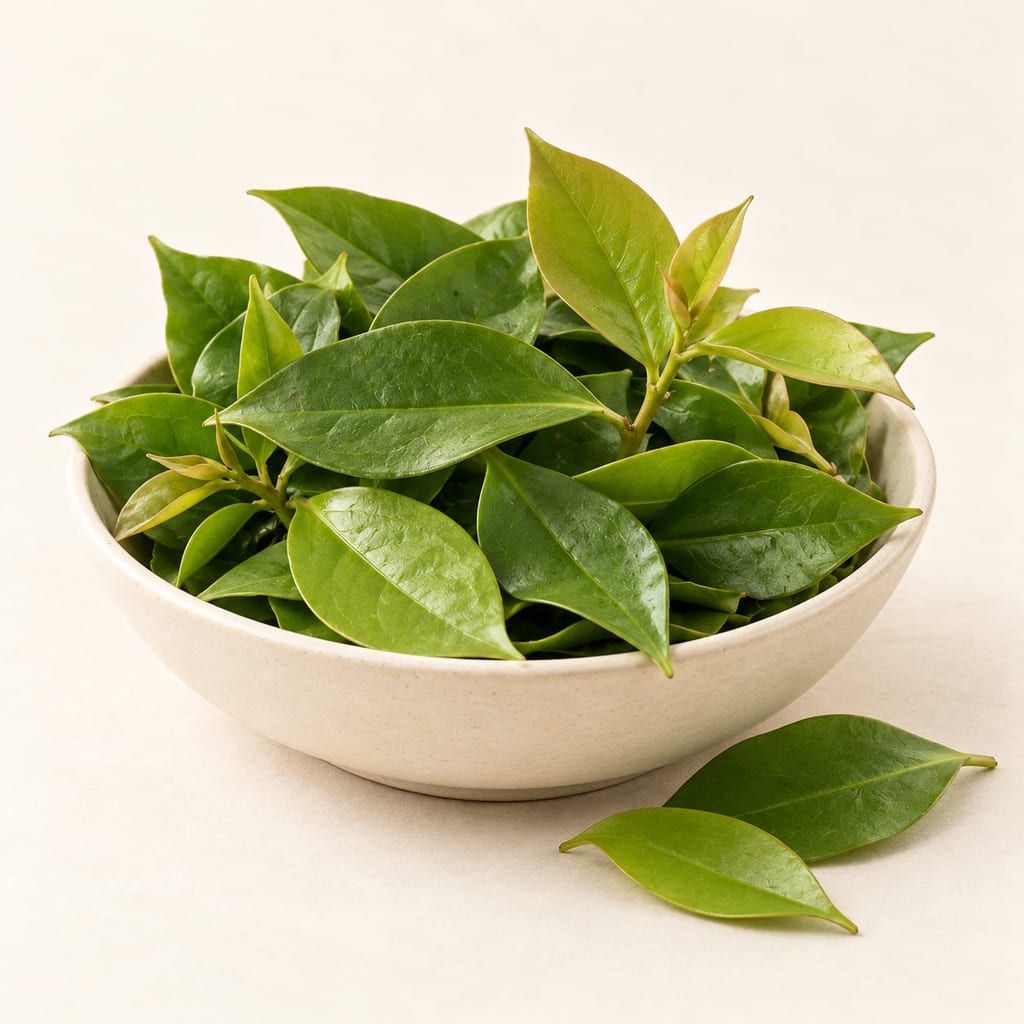
Ora-pro-nóbis leaves
Embrapa documents ora-pro-nóbis as a leafy cactus used in parts of Minas Gerais and Goiás, with species-specific planting and harvest guidance and clear gaps around climate limits and food-safety validation.
The species behind the name
Kew accepts Pereskia aculeata Mill., a leafy member of the cactus family first published in 1768, and records Cactus pereskia among its synonyms. Embrapa's 2017 leaflet identifies its ora-pro-nóbis subject as P. aculeata. Kew also accepts P. grandifolia as a separate species in the same genus; this record follows the species named by Embrapa and does not treat a common name alone as botanical identification. Kew's range entry places P. aculeata from Panama to tropical South America, including several Brazilian regions, and describes its biome as seasonally dry tropical. That range field is not a garden climate prescription.
Sources for this section
Regional food context
Embrapa describes ora-pro-nóbis as a longstanding food in parts of Minas Gerais and Goiás, especially historic colonial towns. The leaflet names leaves and shoot tips as food, often cooked with chicken or pork, and also reports their use in breads, tarts and cakes. It names the dish Frango com ora-pro-nóbis. These are source-specific regional descriptions; they do not establish one origin for the dish or uniform use across Brazil.
The leaflet reports leaf protein at 28–32% on a dry-matter basis. That figure is not a fresh-leaf percentage or a dietary recommendation. No medicinal effect is presented here.
Sources for this section
Growing and harvest notes from Embrapa
Embrapa says the plant adapts to different soils if drainage is good. It describes propagation by seed or, more commonly, rooting semi-woody stem cuttings about 15–20 cm long. Planting is recommended at the beginning of local rains, given as September to January depending on location. The leaflet's 1–2 m spacing is a field-planting recommendation; it also mentions living fences and denser commercial plantings. No hardiness zone, frost temperature, pH range, irrigation amount or light requirement is given.
For harvest, the leaflet describes taking individual leaves once they reach 10 cm, or cutting branches after about 90–120 days when they reach roughly 80 cm. It reports repeated commercial pruning every 6–10 weeks according to climate, with commercial yield estimates that are not home-garden guarantees. Container-grown substrate or enriched soil is recommended as an establishment option to improve plant take before planting in a permanent site. The source does not give mature-pot dimensions, container yield or a greenhouse method.
Sources for this section
Food preparation reports and limits
Embrapa says young leaves and shoots may be eaten raw and describes the plant more commonly cooked with meat. That is the leaflet's preparation statement, not an independently verified safety recommendation. The named chicken dish is a source-batch lead, not a complete instruction here: the leaflet leaves the amount of leaves, oil and salt to taste and gives no yield, measured poultry endpoint or storage guidance. Its approximate cooking times do not establish a food-safety endpoint.
For post-harvest quality, the leaflet reports leaves kept in plastic under refrigeration at 10 °C for up to 12 days in good condition. It does not provide a handling protocol or identify that period as a validated food-safety limit.
Sources for this section
What remains unresolved
The reviewed sources do not establish local frost or heat limits, a soil pH, container-growing schedule, greenhouse conditions, pest controls or local collection rules. The food leaflet does not give an identification key or an independent assessment of its raw-leaf statement. Its historic Minas Gerais and Goiás account should not be generalized to every Brazilian region.
Sources for this section
Research gaps
Kew's broad range and biome fields do not set garden survival or productive-crop thresholds; no numeric frost, heat, light or pH guidance was found.
Embrapa's container note concerns safer establishment before permanent planting; mature-pot dimensions, container yield and greenhouse production guidance are absent.
The Embrapa recipe does not specify the leaf quantity, yield, measured poultry endpoint or storage conditions; no independent safety review of its raw-leaf statement was found.
The 10 °C and 12-day statement is a source-reported quality observation, not a validated food-safety limit.
The documented Minas Gerais and Goiás food context is regional and does not establish uniform Brazilian use or a single culinary origin.
Sources for this section
Research status
The underlying plant account received a source review. Its review scope is described in the original plant article.
Sources for this section
Places
Unknown
Relationship not established · Place not establishedThe available research does not establish a single origin for this ingredient.
Community
No community contributions have been published for this entry yet.
Share what you made
Sign in to contribute. Published comments and photos are free to read.
Sources
Plants of the World Online, Royal Botanic Gardens, KewIngredient research
Pereskia aculeata Mill.Cited in: The species behind the name; What remains unresolved; Research gaps
Embrapa Hortaliças; Neide Botrel, Nuno Rodrigo Madeira, Raphael Augusto de Castro e Melo, and Geovani Bernardo AmaroIngredient research
Hortaliças tradicionais: ora-pro-nóbisCited in: Regional food context; Growing and harvest notes from Embrapa; Food preparation reports and limits; What remains unresolved; Research gaps
Plants of the World Online, Royal Botanic Gardens, KewIngredient research
Pereskia grandifolia Haw.Cited in: The species behind the name; Research gaps
FermenteaResearch provenance
Ora-pro-nóbis (Pereskia aculeata): original plant researchCited in: Research status