
Substrates
Small-leaved purslane greens
Small-leaved purslane is reported as a wild vegetable in Kenya and broader tropical accounts; PROTA describes it as a spreading weed and advises against cultivation.
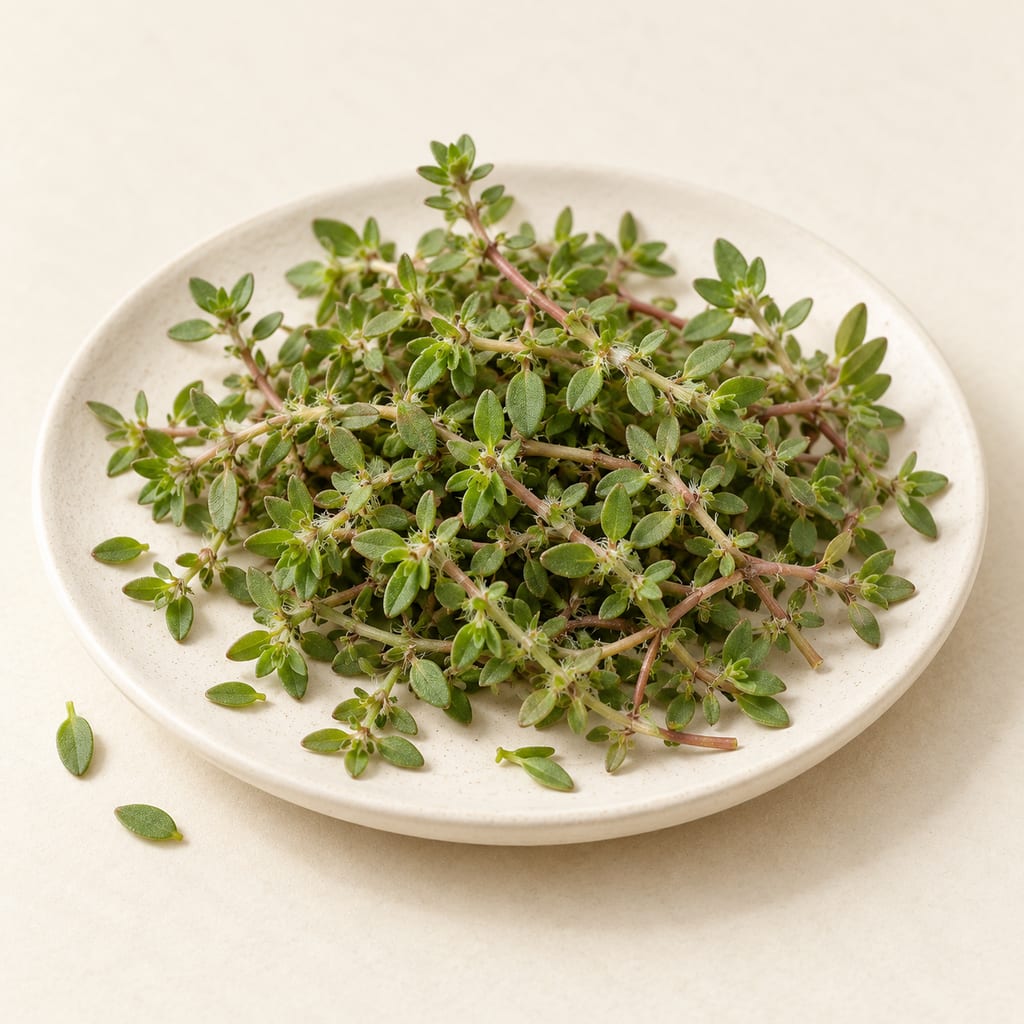
Accepted species and names
Kew accepts Portulaca quadrifida L. and lists it separately from Portulaca oleracea L.; P. oleracea does not appear in its P. quadrifida synonym list. PROTA describes P. quadrifida as a low, mat-forming plant with opposite narrow leaves and usually four petals, and contrasts it with P. pilosa, which has alternate leaves and five petals. These are source descriptions, not a field identification key. A common purslane name alone cannot identify a gathered plant.
Sources for this section
Kenya record and its limits
Mutie and colleagues’ Kitui County wild-food inventory lists a P. quadrifida row with voucher SAJIT-Mutie MU0121 at the East African Herbarium and the Kamba names Kenyinyia and kamumama. The table note explains that its use-detail entries generally refer to records from Kenya, not necessarily Kitui; an asterisk marks a plant cited as edible during field survey, while a number sign marks a Kitui use reported in literature. The P. quadrifida row is asterisked, but its source-of-information column points to reference [36] for the detailed use account. The row names leaves and seeds, says leaves and slender stems are eaten raw or cooked as a vegetable, and says seeds are ground into flour for porridge. That is not a measured recipe or proof that the field informant described each preparation.
The same table separately lists P. oleracea and gives kamumama as one name for both rows. That overlap is not evidence that the names or use reports can be merged. PROTA separately reports wild leaves and young shoots eaten raw, in salads or cooked, and an Indian account of boiled leaves mixed with sorghum or pearl millet flour for a bread-like food. It supplies no quantities or full method.
Spread and cultivation limits
Kew records P. quadrifida as native across tropical and subtropical Old World regions to the southwest Pacific, including Kenya, and introduced in parts of the Americas and islands. PROTA describes it as usually a weed and rarely cultivated in Africa. It reports occurrence in disturbed habitats, from sandy or stony ground at sea level to 2,000 m, and says sand or sandy loam is preferred. PROTA also notes that fresh seeds require light to germinate, while the light requirement disappears in older seeds. These are range and ecology observations, not garden climate, substrate or sowing instructions. The profile describes the plant as a mat-forming annual or short-lived perennial; Kew’s record describes it as an annual or subshrub.
PROTA reports that seed can spread with wind, water, crop seed and birds, and that stem fragments can root. The profile says it is difficult to control and discourages cultivation because it may behave as an aggressive weed. No container, garden, greenhouse or home propagation method is recommended here. Local weed law and containment guidance have not been checked.
Sources for this section
Food and safety evidence
PROTA reports that oxalates may occur at levels toxic to livestock and that the plant can accumulate nitrates in some soils; it advises moderate consumption. The profile supplies no measured human serving limit, source-specific test for a gathered plant, or validated washing or cooking control. The Kitui inventory records food use but is not a toxicology or food-safety study. This account gives no dose, detoxification method or safety guarantee.
What the sources do not establish
The inspected sources do not establish a complete Kenyan or Indian recipe with amounts, yield, steps, timing and storage. They also do not provide frost tolerance, watering intervals, soil pH, sowing depth, greenhouse requirements, crop yield or a controlled cultivation trial for P. quadrifida. Because PROTA explicitly warns about weed spread and discourages cultivation, this text makes no recommendation to propagate it.
Research gaps
The Kitui use table cites reference [36] for detailed food-use statements; that underlying source and its preparation detail remain to be inspected.
No fully measured Kenyan or Indian recipe batch, storage practice or food-safety endpoint was verified.
No cultivation trial, seed depth or temperature, household container method, greenhouse regime, yield or harvest schedule was found.
PROTA’s oxalate/nitrate statements do not establish a human dose or validated preparation control.
Local invasive-weed restrictions and lawful wild-collection requirements remain unchecked. No wild identification is made.
Research status
The underlying plant account received a partial source review. Its review scope is described in the original plant article.
Sources for this section
Places
Unknown
Relationship not established · Place not establishedThe available research does not establish a single origin for this ingredient.
Community
No community contributions have been published for this entry yet.
Share what you made
Sign in to contribute. Published comments and photos are free to read.
Sources
Royal Botanic Gardens, Kew, Plants of the World OnlineIngredient research
Portulaca quadrifida L.Cited in: Accepted species and names; Spread and cultivation limits; Research gaps
P.C.M. Jansen; Plant Resources of Tropical Africa; Pl@ntUseIngredient research
Portulaca quadrifida (PROTA)Cited in: Accepted species and names; Kenya record and its limits; Spread and cultivation limits; Food and safety evidence; What the sources do not establish; Research gaps
Fredrick Munyao Mutie, Peninah Cheptoo Rono, Vivian Kathambi, Guang-Wan Hu and Qing-Feng Wang; Plants 9(8), 1017 (2020)Ingredient research
Conservation of Wild Food Plants and Their Potential for Combatting Food Insecurity in Kenya as Exemplified by the Drylands of Kitui CountyCited in: Kenya record and its limits; Food and safety evidence; What the sources do not establish; Research gaps
FermenteaResearch provenance
Small-leaved purslane (Portulaca quadrifida): original plant researchCited in: Research status