
Substrates
Solanum macrocarpon leaves and fruit
A historical Ghana flora account reports leaf and fruit use, while a Cape Coast fertilizer experiment supplies one accession and one-site growing data. Its abstract and detailed yield results conflict.
Taxon and scope
Kew accepts Solanum macrocarpon L. and lists Ghana in its native range. Kew also accepts S. dasyphyllum as a separate species. The 1988 Ghana flora treated S. dasyphyllum as a synonym within a highly variable S. macrocarpon complex. The Cape Coast experiment used seed collected from farmer fields or backyards and did not report a voucher that would place its accession within today’s taxonomic boundary. Its measurements therefore should not be treated as accession-confirmed results for every current taxon or cultivar.
Sources for this section
A historical Ghana food account
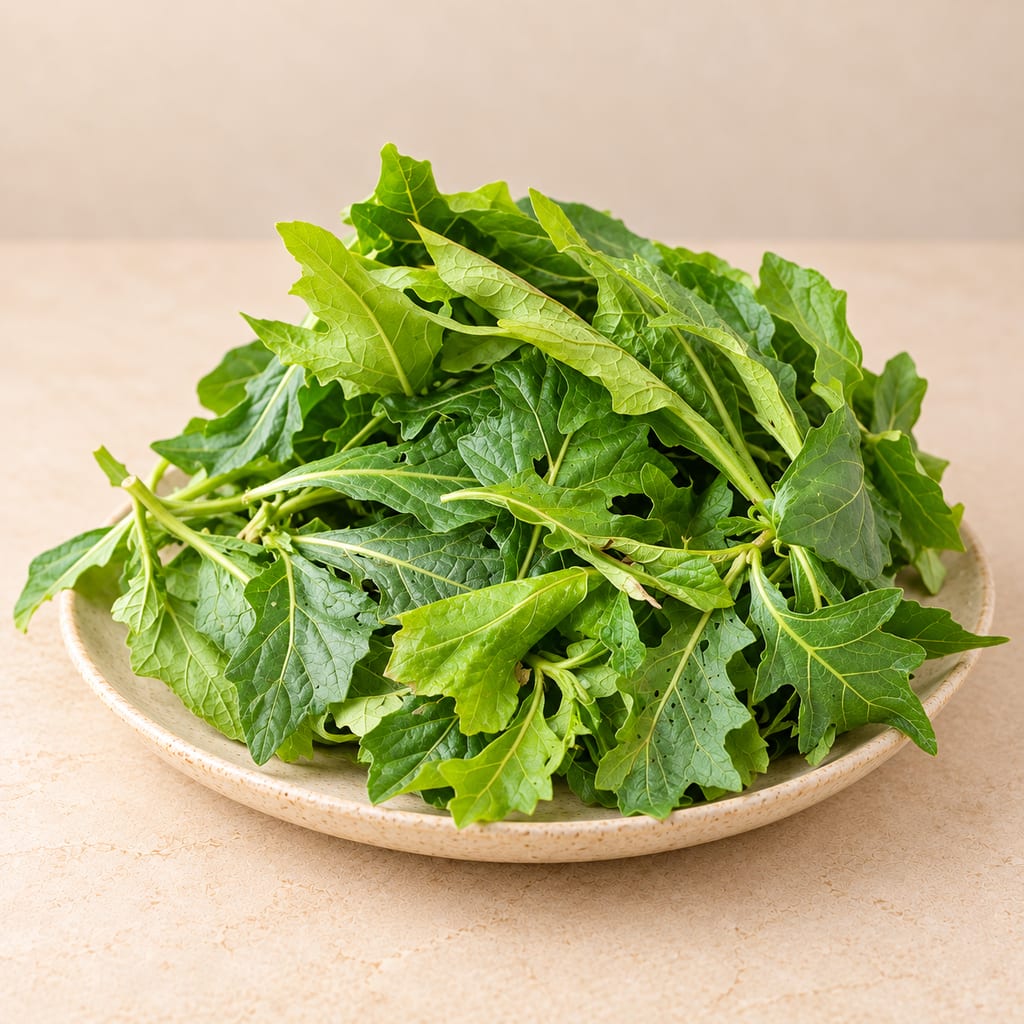
Bukenya and Hall’s 1988 flora says that the S. macrocarpon complex was cultivated in Ghana mainly for its leaves, especially forms with glabrous leaves, and that the fruits were also eaten. It records an older practice of removing prickles from prickly leaves before cooking. That short historical note gives no quantities or full method, and it does not validate a safety procedure for a present-day plant or accession. The authors report the complex from almost every region of Ghana; this is their botanical account, not a current national crop survey.
Sources for this section
What the Cape Coast experiment measured
A University of Cape Coast trial ran from February to December 2017. Researchers collected several seed accessions, then used the accession with enough seed from the same plant. The experiment used randomized blocks and measured crop response to potassium fertilizer. The published abstract says fertilizer application rate significantly affected S. macrocarpon yield. In the detailed §3.1 results, the authors report no significant rate effect on fruit fresh weight (P=0.663). The abstract and species-specific results do not agree, so the yield effect remains unresolved here. Neither statement supports a general fertilizer recommendation.
Growing conditions reported at one site
The paper describes a coastal savannah site with rainfall peaks in May–June and October, and dry harmattan months from November to February. Its soil was a haplic acrisol sandy loam with pH 6.1. Day length was reported as about 11.30 to 12.40 hours. Those figures describe the trial site and year, not species-wide requirements or limits. The paper calls the field study rain-fed, yet reports watering nursery seedlings about 50 mm daily and field irrigation of about 400 mm every 10 days when rain was absent. The wording and amounts are internally difficult to reconcile and are retained as printed, not as watering guidance. The trial does not establish frost or heat tolerance, container dimensions or greenhouse methods.
The fruit assay is not a recipe
For a potassium-retention measurement, the researchers boiled composite fruit samples for 10 minutes in 100 mL of tap water in Pyrex flasks; S. macrocarpon fruit was diced. The study measured potassium concentration before and after cooking. It did not test toxins, pathogens or a household safety endpoint, and it does not provide a complete Ghanaian dish recipe. The separate historical leaf-and-fruit account cannot fill in the missing batch quantities or steps.
Questions that remain open
No source reviewed here identifies the Cape Coast seed accession against the current S. macrocarpon and S. dasyphyllum boundary. The trial does not supply a named hardiness scheme, measured frost or heat limits, mature container or protected-crop guidance. The historical food note is not a measured recipe, and the fruit assay is not a validated preparation or storage method. The paper’s yield and irrigation reporting differences also remain unresolved.
Sources for this section
Research gaps
The Cape Coast seed accession has no reported voucher or current taxonomic determination.
The Heliyon abstract and §3.1 differ on fertilizer-rate significance for S. macrocarpon fruit yield; the paper’s rain-fed label also sits beside printed nursery and field irrigation amounts.
No complete quantity-based household recipe, validated safety endpoint, storage method, container protocol, greenhouse method, or frost/heat tolerance was established.
Sources for this section
Research status
The underlying plant account received a partial source review. Its review scope is described in the original plant article.
Sources for this section
Places
Unknown
Relationship not established · Place not establishedThe available research does not establish a single origin for this ingredient.
Community
No community contributions have been published for this entry yet.
Share what you made
Sign in to contribute. Published comments and photos are free to read.
Sources
Royal Botanic Gardens, KewIngredient research
Solanum macrocarpon L. | Plants of the World OnlineCited in: Taxon and scope; Questions that remain open; Research gaps
Royal Botanic Gardens, KewIngredient research
Solanum dasyphyllum Schumach. & Thonn. | Plants of the World OnlineCited in: Taxon and scope; Questions that remain open; Research gaps
Bothalia 18(1):79–88 (1988)Ingredient research
Solanum (Solanaceae) in GhanaCited in: Taxon and scope; A historical Ghana food account; The fruit assay is not a recipe; Questions that remain open; Research gaps
Heliyon 4(8):e00750 (2018), DOI 10.1016/j.heliyon.2018.e00750Ingredient research
Agronomic biofortification of selected underutilised solanaceae vegetables for improved dietary intake of potassium (K) in GhanaCited in: Taxon and scope; What the Cape Coast experiment measured; Growing conditions reported at one site; The fruit assay is not a recipe; Questions that remain open; Research gaps
FermenteaResearch provenance
Solanum macrocarpon in Ghana: food use and field evidence: original plant researchCited in: Research status