
Substrates
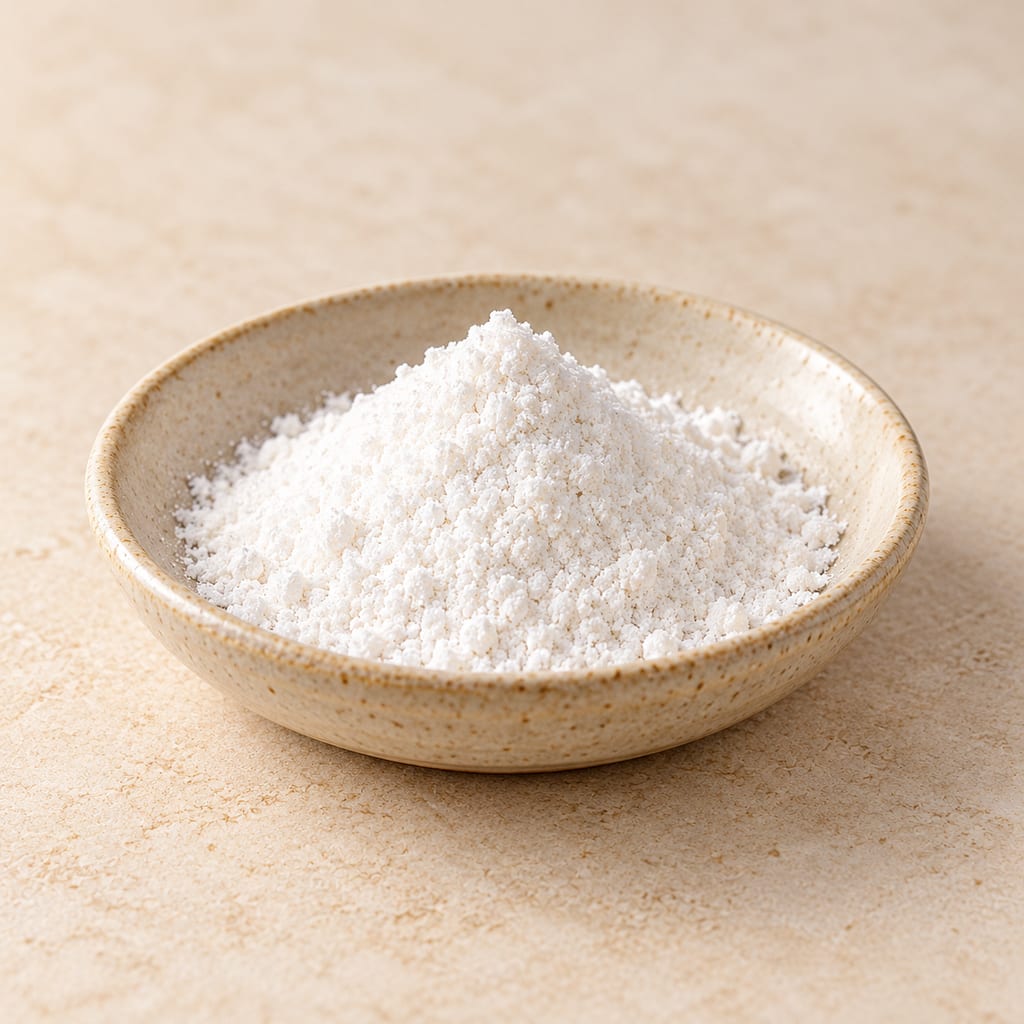
Tavolo starch
Madagascar food studies identify tavolo as Tacca leontopetaloides and describe tuber use in distinct regional settings; broader crop guidance comes from a tropical handbook.
Names and scope
Kew accepts Tacca leontopetaloides (L.) Kuntze and lists Madagascar within a broad tropical Old World-to-Pacific native range. In a 2022 study around Manombo Special Reserve, tavolo is the local name used for T. leontopetaloides tubers; a separate 2023 study uses the same name in its Farafangana survey context. These study-linked names do not identify an unexamined plant elsewhere.
Sources for this section
- Tacca leontopetaloides (L.) Kuntze | Plants of the World Online →
- Finding food in the hunger season: A mixed methods approach to understanding wild plant foods in relation to food security and dietary diversity in southeastern Madagascar →
- Strong seasonality in diets and alarming levels of food insecurity and child malnutrition in south-eastern Madagascar →
Reported food use in southeastern Madagascar
The Manombo study surveyed 328 smallholder farmers and fisherfolk in 15 villages during the main lean season and used focus groups to record food knowledge and perceptions. It treats tavolo and the aquatic aroid via as separate plants. A later seasonal-diet study reports that tavolo tubers were consumed by 29% of surveyed households in April 2022 in its Farafangana sample; the authors describe the tuber as rarely cultivated and more commonly foraged in forests or coffee plantations. These are place- and survey-specific accounts, not a national consumption estimate.
Sources for this section
Processing reports and limits
The Manombo paper documents community accounts of how tavolo is rendered edible, while PROSEA describes starch extraction and other uses across its broad tropical coverage. The accounts are not a single tested method, and the Madagascar article does not establish a complete measured household batch with quantities, sequence, yield, analytical endpoint and storage validation. This page therefore records the reported food history without turning it into preparation instructions or a safety recommendation.
Cultivation evidence
PROSEA reports propagation by seed or tuber and a broad crop description in which small secondary tubers are planted about 15 cm deep, usually near the start of the rainy season; the account also mentions weeding and partial shade. It describes digging the tubers when leaves begin to wither. These handbook values are not a Madagascar field trial or a home-container schedule. In the Menabe thesis, the species account reports tuber growth beginning in December, flowering in February, maturity in May and dormancy from June through November. This is a local phenology account, not a general calendar.
Research gaps
No complete locally sourced recipe with quantities, ordered steps, yield and validated storage endpoint was established.
The Manombo processing descriptions do not establish a verified safe endpoint or universal method.
The sources reviewed here do not establish Madagascar-specific frost or heat thresholds, numeric soil pH, productive container conditions, or heated and unheated greenhouse protocols.
No current specimen was examined; study-linked local names are not a field identification guide.
Local collection permissions and site-specific water/soil conditions were not assessed.
Sources for this section
- Tacca leontopetaloides (L.) Kuntze | Plants of the World Online →
- Finding food in the hunger season: A mixed methods approach to understanding wild plant foods in relation to food security and dietary diversity in southeastern Madagascar →
- Strong seasonality in diets and alarming levels of food insecurity and child malnutrition in south-eastern Madagascar →
- Tacca leontopetaloides (L.) O. Kuntze | PROSEA Handbook 9: Plants yielding non-seed carbohydrates →
- Inventaire et caractérisation ethnobotanique, biologique et écologique des espèces de Tacca (Dioscoreaceae) des régions du Menabe et de Sofia →
Research status
The underlying plant account received a partial source review. Its review scope is described in the original plant article.
Sources for this section
Places
Unknown
Relationship not established · Place not establishedThe available research does not establish a single origin for this ingredient.
Community
No community contributions have been published for this entry yet.
Share what you made
Sign in to contribute. Published comments and photos are free to read.
Sources
Royal Botanic Gardens, KewIngredient research
Tacca leontopetaloides (L.) Kuntze | Plants of the World OnlineCited in: Names and scope; Research gaps
Frontiers in Sustainable Food Systems (2022)Ingredient research
Finding food in the hunger season: A mixed methods approach to understanding wild plant foods in relation to food security and dietary diversity in southeastern MadagascarCited in: Names and scope; Reported food use in southeastern Madagascar; Processing reports and limits; Research gaps
Frontiers in Sustainable Food Systems (2023)Ingredient research
Strong seasonality in diets and alarming levels of food insecurity and child malnutrition in south-eastern MadagascarCited in: Names and scope; Reported food use in southeastern Madagascar; Research gaps
PROSEA FoundationIngredient research
Tacca leontopetaloides (L.) O. Kuntze | PROSEA Handbook 9: Plants yielding non-seed carbohydratesCited in: Processing reports and limits; Cultivation evidence; Research gaps
Nomentsoa Jean Emmanuel Randriamamonjy; master’s thesis, University of Antananarivo (defended 2019)Ingredient research
Inventaire et caractérisation ethnobotanique, biologique et écologique des espèces de Tacca (Dioscoreaceae) des régions du Menabe et de SofiaCited in: Cultivation evidence; Research gaps
FermenteaResearch provenance
Tavolo (Tacca leontopetaloides): original plant researchCited in: Research status