
Mushrooms
Jelly ear
Auricularia auricula-judae is the European jelly ear, a soft gelatinous wood fungus eaten cooked and dried; it is distinct from the cultivated Asian black wood ear.
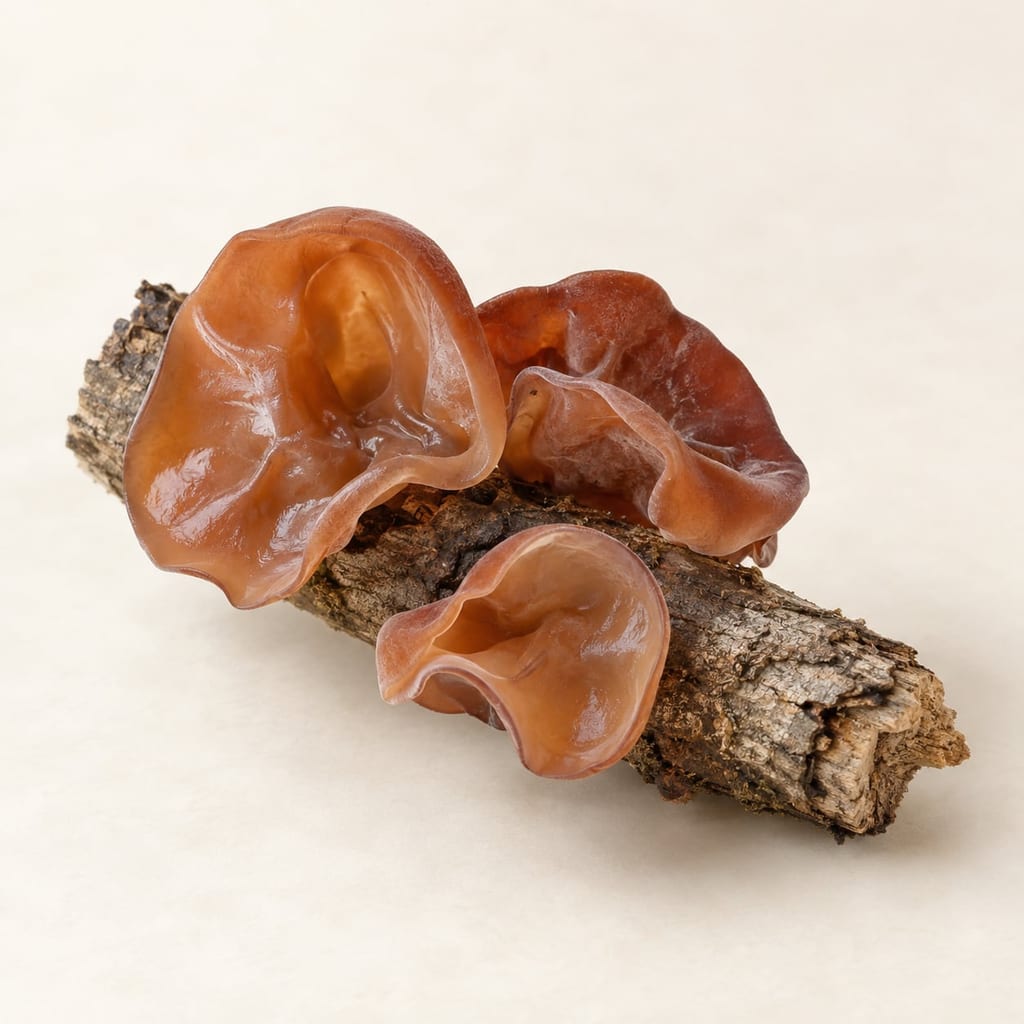
Identity and name
Auricularia auricula-judae is known as jelly ear. Its name was originally applied from a European description, and the name now refers only to the European species. Molecular work showed that the East Asian fungus sold under this name is a different species, A. heimuer (black wood ear).
Older worldwide records often used this name broadly, so a historical record of "jelly ear" in Asia may refer to another species. The catalogue lists the search alias Hirneola auricula-judae.
Habitat and ecology
Jelly ear is a wood-decomposing fungus. Sources report that it grows on deciduous wood, including elder (Sambucus nigra), and that it causes a white rot. It is widespread across Europe and is not recorded as occurring elsewhere in the sources reviewed.
Seasonal accounts differ. One source describes it as mainly seen in winter and spring, another as present throughout the year and most common in late summer and autumn. The difference is not resolved here.
Sources for this section
Food use
The catalogue records jelly ear as a gelatinous fungus used in cooked dishes and dried products, with regional cultivation. Descriptions give it as edible but not highly regarded in culinary terms, and advise that it be cooked thoroughly.
The sources do not give a standard recipe or a validated preservation method for dried jelly ear, so none is set out here.
Safety and limits
Identification and safety: a name, a photograph or one regional guide does not confirm that a wild specimen is this species. This page is not a collection key. Edibility statements refer to the named species as understood by each source, not any particular specimen. Cook thoroughly is the only handling advice the sources give. The catalogue classes the record as food, market or specialist evidence and does not treat any preservation process as validated for this species.
Places
Europe
Documented use · Region evidenceFood use and regional cultivation are recorded at continental scale; the sources do not map use country by country.
Community
No community contributions have been published for this entry yet.
Share what you made
Sign in to contribute. Published comments and photos are free to read.
Sources
WikipediaTaxonomy · Names
Auricularia auricula-judaeName restricted to the European species; cultivated East Asian product is A. heimuer.
Cited in: Identity and name; Habitat and ecology
WikipediaTaxonomy
Auricularia heimuerA. heimuer is the cultivated East Asian species once sold as A. auricula-judae.
Cited in: Identity and name
First NatureHabitat · Food use · Season
Auricularia auricula-judae species pageWood decomposer on deciduous wood including elder; white rot; edible but not highly regarded; cook thoroughly; seasonal accounts differ.
Cited in: Habitat and ecology; Food use; Safety and limits
Nordic Council of MinistersFood use · Market
Mushrooms traded as food (Nordic Council of Ministers)Catalogue entry: gelatinous fungus used in cooked dishes and dried products; regional cultivation.
Cited in: Identity and name; Food use; Safety and limits