
Mushrooms
Larch bolete
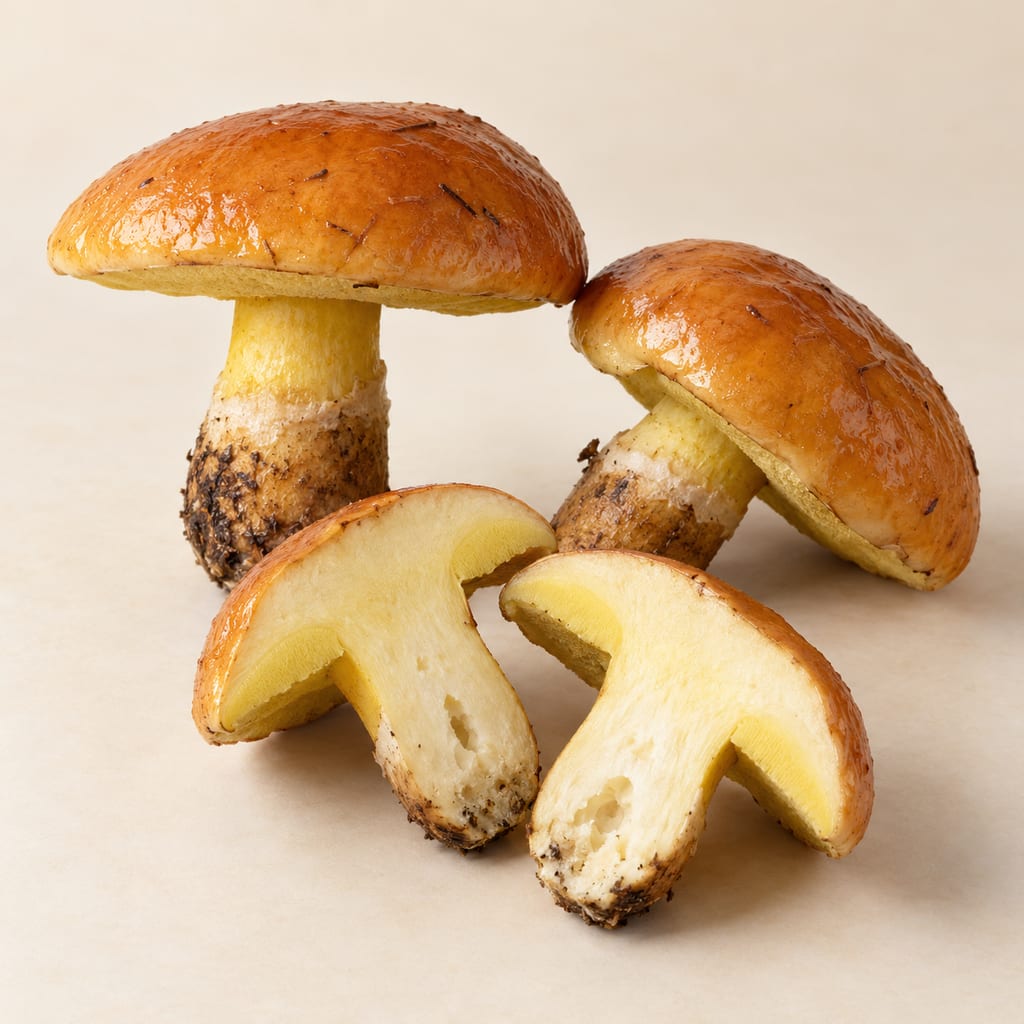
The larch bolete, Suillus grevillei, is a mycorrhizal bolete of larch woods in Europe and introduced larch plantings, eaten cooked after its slimy skin and pores are removed.
Identity and naming
Suillus grevillei is a bolete of the genus Suillus, which forms a partnership with the roots of larch trees. The catalogue uses the English name larch bolete and records no other alias for it.
Look-alikes named by the guides include the velvet bolete and the slippery jack. The catalogue's note that host information is useful for research but insufficient for identification applies here.
Sources for this section
Ecology and habitat
The larch bolete is a mycorrhizal fungus associated with larch trees, and the catalogue places it in Europe and in regions where larch has been introduced. The fruiting bodies come up in the soil under larches, and the catalogue records the supply as wild gathering.
Sources for this section
Preparation and use
Foraging guides consistently say the mushroom is edible but must be cooked. Several guides advise peeling off the slimy cap skin and removing the pore layer, because the pores are said to cause stomach upset in some people. The mushroom holds much water and guides often advise drying it first, or drying it before use.
Cooking methods named in the guides include roasting, baking, soups and stews, and frying with butter, garlic and herbs. One UK guide gives at least 15 to 20 minutes of heating and says the raw fruit body is slightly toxic. Wikipedia describes the species as edible but of little culinary interest once the slimy cuticle is removed. The mushroom softens when cooked, so guides suggest mixing it with firmer mushrooms.
The catalogue records the food use as a cooked bolete, and the supplied Nordic source lists it among food species. The amounts and timings above come from foraging guides, not from a controlled study, and they are recorded as the guides state them.
Sources for this section
Safety and identification
Safety wording: this page describes what the sources record. It is not an identification guide, and it gives no verdict that a wild bolete is safe to eat. Guides warn that some people get stomach upset or allergic-type reactions, and advise a small test portion. Anyone who eats it should stop if they feel unwell.
The catalogue marks its evidence as food and specialist evidence, which does not establish identity by itself. Look-alike boletes must be excluded by a qualified expert before anyone eats a specimen.
Sources for this section
Places
Europe
Documented use · Region evidenceRegional range as recorded in the catalogue; no locality is given.
Introduced larch regions
Documented use · Region evidenceThe catalogue names these regions without listing them; the sources do not establish each one.
Community
No community contributions have been published for this entry yet.
Share what you made
Sign in to contribute. Published comments and photos are free to read.
Sources
Nordic report, suppliedUse
Nordic edible fungi report (supplied catalogue source)Food-use record for Suillus grevillei as recorded in the catalogue
Wild Food UKMethod · Safety
Larch BoletePeel cap skin and pores; cooking required; drying before use; culinary suggestions
Cited in: Preparation and use
Charnwood ForagingMethod
Larch Bolete (Suillus grevillei)Cooking time of 15 to 20 minutes given by one UK guide
Cited in: Preparation and use
Totally WildIdentification · Safety
Larch Bolete (Suillus grevillei) IdentificationLook-alikes: velvet bolete and slippery jack
Cited in: Safety and identification
WikipediaInspiration · History
Suillus grevilleiEdible; limited culinary interest once the cuticle is removed
Cited in: Identity and naming; Ecology and habitat; Preparation and use; Safety and identification