
Mushrooms
Lenga beefsteak fungus
Lenga beefsteak fungus, Fistulina pumiliae, is a bracket fungus that grows on lenga wood in Patagonia. The catalogue records regional consumption, but other sources document edible use for related species, not for this one.
Overview
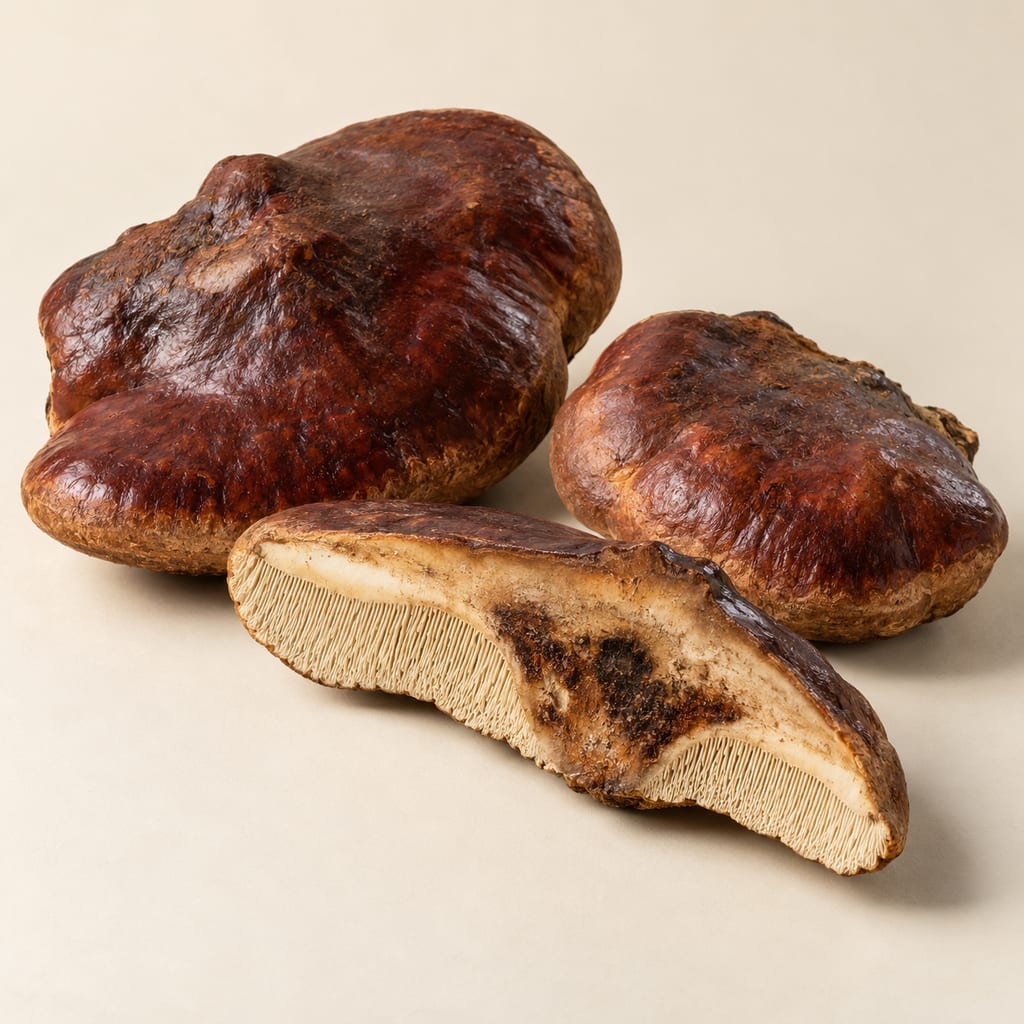
Lenga beefsteak fungus, Fistulina pumiliae, is a bracket fungus that grows on the wood of lenga, Nothofagus pumilio, in the Patagonian Andes. Its basidiomata, or fruiting bodies, are ochre to brown, and the species was described from Patagonian collections in 2021.
The catalogue lists the species as a regional consumption record and as a food fungus studied for its composition. The sources that document edible use name related species more clearly than this one.
Names and taxonomy
The catalogue records no alias and no common name besides lenga beefsteak fungus. The name is a research label, and the catalogue asks that the local species concept be verified.
The genus Fistulina contains several species that look alike, and the Chilean classification document notes possible confusion between F. antarctica, F. endoxantha and F. pumiliae.
Sources for this section
Food use
The catalogue records a regional consumption record for Patagonia and lists the species as a food fungus studied for its chemical composition. A 2022 study of wild edible mushrooms from native Nothofagus forests analysed the composition of this species for the first time.
The Patagonian review that documents edible use names two sister species, Fistulina antarctica and F. endoxantha, as edible fungi with ancestral use by the Mapuche-Tehuelche people. This page does not transfer that documented use to F. pumiliae.
Identification and safety
The catalogue states that a food-use record is not a comprehensive toxicity evaluation and that the local species concept needs verifying. No toxicity assessment for this species was found.
Fistulina species are often confused with one another. This page is not an identification guide. Do not eat a wild bracket fungus on the basis of this page. Confirm identity with an expert before eating any wild fungus.
Open questions
The catalogue's regional record and the review's list of documented edible species do not agree for this species. The record needs a check against the species concept and a local food-use source before it is treated as established.
Preparation, supply (wild or cultivated) and any traditional name in Patagonia are not recorded in the sources reviewed.
Places
Patagonia
Documented use · Region evidenceThe catalogue records a regional consumption record for Patagonia. The catalogue itself says the local species concept needs verification, so the country is not named.
Community
No community contributions have been published for this entry yet.
Share what you made
Sign in to contribute. Published comments and photos are free to read.
Sources
CONICETFood · Identification
Edible fungi for local and sustainable development in the Patagonian Andes forests of Argentina: a review (CONICET repository)Fistulina antarctica and F. endoxantha grow on living and dead wood of native Nothofagaceae in Patagonia and are recognised as edible, with ancestral use by Mapuche-Tehuelche people
Those sister species, not F. pumiliae, are the ones with documented traditional use in this review
Cited in: Overview; Food use; Identification and safety; Open questions
PubMed CentralFood · Nutrition
Nutritional composition and bioactive properties of wild edible mushrooms from native Nothofagus Patagonian forestsChemical composition of Fistulina pumiliae analysed for the first time among four Nothofagus-forest wild species; the study does not state edibility or safety for the species
Cited in: Overview; Food use
Chilean Ministry of the EnvironmentIdentification
Fistulina antarctica species classification document (Chile, 21st RCE)Fistulina antarctica may be confused with F. endoxantha and F. pumiliae
Cited in: Names and taxonomy; Identification and safety
MDPI (Foods)Food
Food-science paper on wild Patagonian fungi (catalogue source S146)Catalogue record: regional consumption; studied as a food fungus. The page returned HTTP 403 in this research pass, so the record is taken from the catalogue.
WikipediaEcology
Nothofagus pumilioLenga is the host tree of the species, Nothofagus pumilio
Cited in: Overview