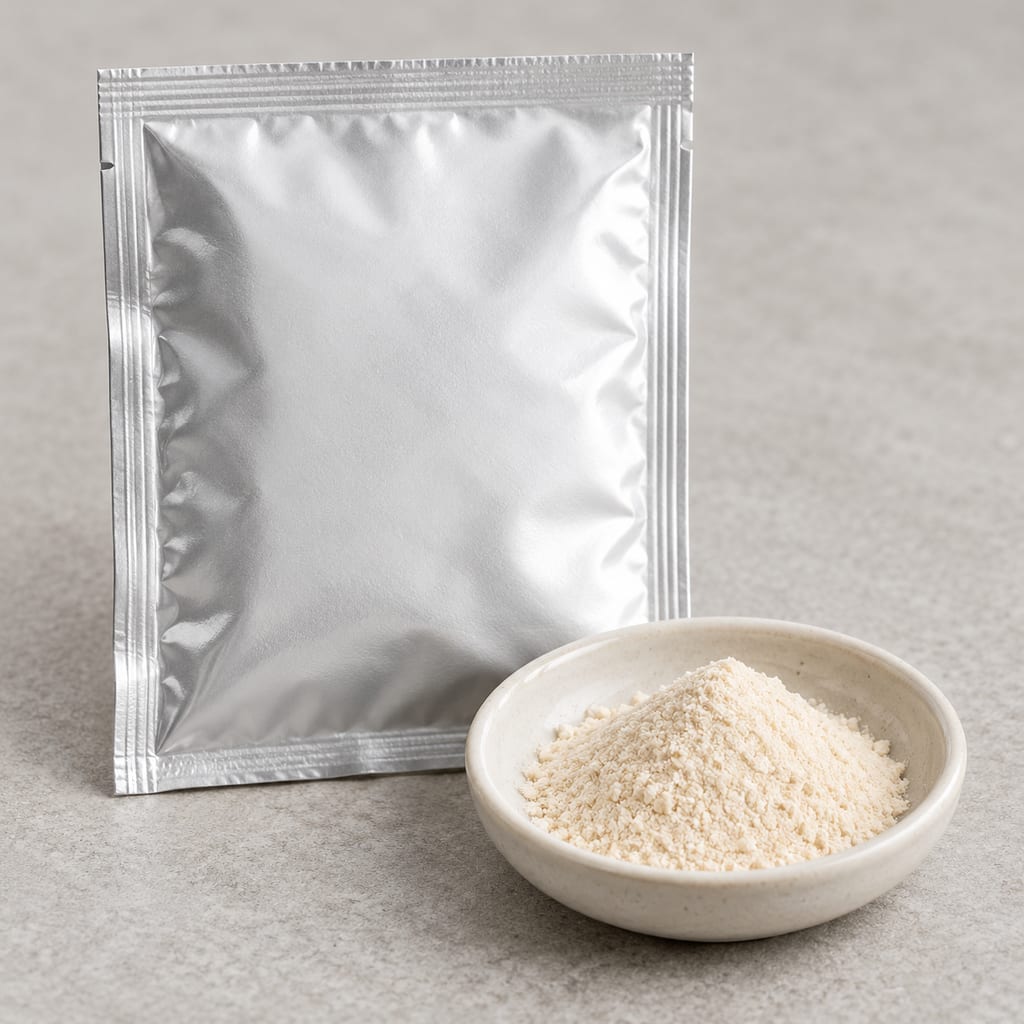
Meat colour and aroma adjunct cultures
Selected coagulase-negative staphylococci, mainly Staphylococcus carnosus and S. xylosus, are added to fermented sausage for colour and flavour, usually inside a blend with acidifying bacteria.
 FermenteaWhere food goes to change
Cultures
Meat starter cultures are blends of selected lactic acid bacteria, often with staphylococci, added to fermented sausage to drive acidification in a controlled way. Blends differ by product.
Meat acidification starters are cultures added to sausage meat so that fermentation starts at once and runs in a predictable direction, instead of waiting for whatever bacteria the meat carries. The usual organisms are food strains of lactic acid bacteria such as Latilactobacillus sakei, L. curvatus, Pediococcus pentosaceus and P. acidilactici, among others. They are used in salami, sucuk, pepperoni, summer sausage and related products.
Starter cultures can make a ferment more directed and the product more consistent. The term covers many different products and microbial blends, and a culture described for one sausage is not automatically suitable for another. Reviews credit the lactic acid bacteria with acidification and some coagulase-negative staphylococci with colour and flavour. The exact strain and product matter.
Different species and strains support different fermentation speeds. Temperature, fermentable carbohydrate, curing ingredients, acidification rate and drying all interact, so the same culture behaves differently in two recipes. A 2024 salami study reports particular cultures in a plant trial; only selected indexed passages were available for this review, and its findings do not carry over to other products or to household conditions.
Dated manufacturer sheets describe Bactoferm T-SPX and F-RM-52 as different mixed cultures with different application profiles. Those descriptions apply to the named products only. They are not current directions for other cultures and they are not independent proof that a process suits a given sausage.
Use the exact commercial blend with a validated process. USDA FSIS guidance for fermented, salt-cured and dried products addresses regulated establishments and describes safety as resting on a validated multi-hurdle process. It does not show that adding a starter alone makes a sausage safe. A household method, chamber design and product-specific monitoring plan are not established here and would need qualified review.
The sources do not give a single origin or seasonal practice for the foods grouped under meat starters. Culture use and local histories for salami, sucuk, pepperoni and summer sausage need separate study, and current handling documents should be checked for each named culture product.
Unknown: the sources cover commercial and regulatory use of starters across products and do not locate where the practice began.
Selected coagulase-negative staphylococci, mainly Staphylococcus carnosus and S. xylosus, are added to fermented sausage for colour and flavour, usually inside a blend with acidifying bacteria.
A purchased mixed meat starter associated with mild acidification and flavour and colour development. Chr. Hansen documents Pediococcus pentosaceus and Staphylococcus xylosus; the recipe packet’s strains and lot are unreported.
No community contributions have been published for this entry yet.
Sign in to contribute. Published comments and photos are free to read.
Journal of Food Quality / WileyIdentity · Function
The Use of Starter Cultures in Traditional Meat ProductsStarter cultures make fermentation more directed; lactic acid bacteria drive acidification and some coagulase-negative staphylococci contribute colour and flavour.
Cited in: What they are; Open questions
Food Science of Animal Resources / PubMed CentralFunction · Comparison
Effect of Starter Cultures on Quality of Fermented SausagesEffects of starter cultures on sausage quality; the culture and product matter.
Cited in: What they are; How the species differ; Open questions
Chr. Hansen A/SProduct
Bactoferm T-SPX Product InformationT-SPX is a named mixed culture with its own application profile.
Cited in: Commercial blends
Chr. Hansen A/SProduct
Bactoferm F-RM-52 Product InformationF-RM-52 is a named mixed culture with its own application profile.
Cited in: Commercial blends
Applied Sciences / MDPIComparison
Effect of Fermentation Technology and Storage Time on the Quality of Salami-Type SausagesA 2024 plant trial of salami-type sausages with particular cultures; reviewed through selected indexed passages.
Cited in: How the species differ
USDA Food Safety and Inspection ServiceSafety
FSIS Ready-to-Eat Fermented, Salt-Cured, and Dried Products GuidelineSafety depends on a validated multi-hurdle process in regulated establishments; a starter alone does not make a sausage safe.
Cited in: Using them safely