
Substrates
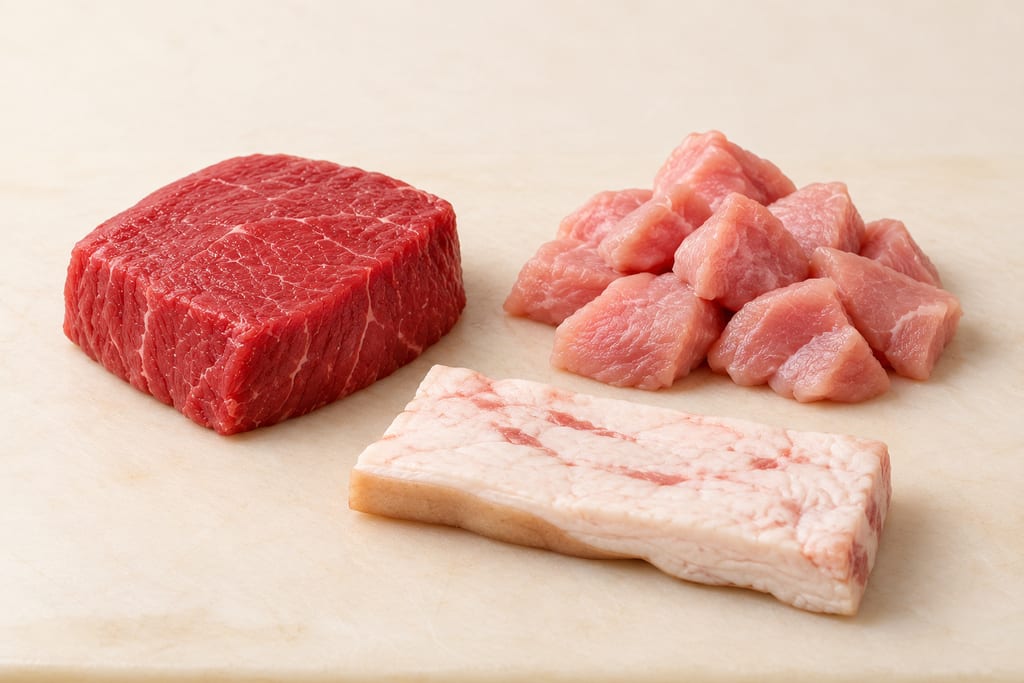
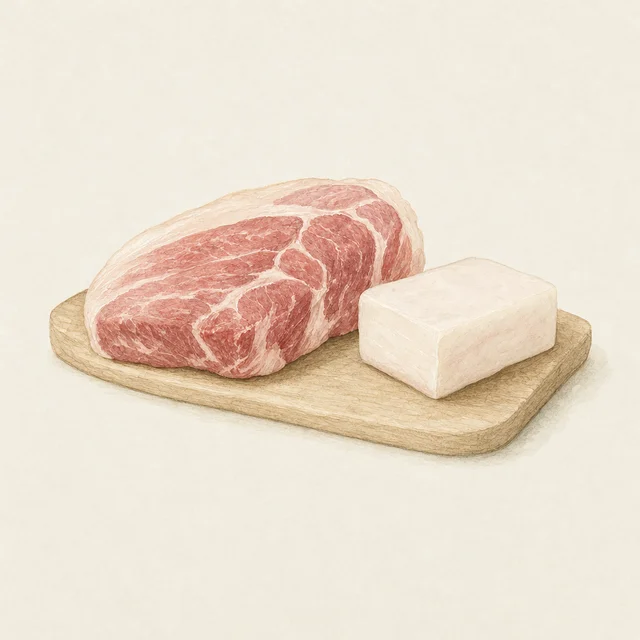
Meat and fat selection for fermented sausage
Dry sausage recipes depend on the chosen lean meat, fat source, particle size, temperature, and process. A percentage from one recipe should not be generalized to every salami.
Keep formulation source-specific
The inspected Genoa salami video transcript describes a mixture of beef, lean pork, and pork back fat and gives an 80:20 meat-to-fat formulation for that recipe. This is one creator’s specific formulation, not a universal salami ratio.
The same video emphasizes keeping meat cold while grinding and mixing. Its transcript gives process details, but the video is not an independently validated food-safety source, so its directions are not adopted as a validated formula here.
Pathogen controls are a separate question
USDA FSIS’s Ready-to-Eat Fermented, Salt-Cured, and Dried Products guideline addresses process validation for these product categories. Recipe sources alone cannot demonstrate that a fermentation, drying, or aging schedule achieves a required pathogen reduction.
Use only named cuts and quantities from a specific source. Do not treat visual drying or weight loss alone as proof of safe salami.
Allergens
milk (if milk powder is included in a formulation)
Places
Unknown
Modern adaptation · Place not establishedGenoa-style salami video recipe. Video title references Genoa salami; it does not establish a geographic production site.
Community
No community contributions have been published for this entry yet.
Share what you made
Sign in to contribute. Published comments and photos are free to read.
Sources
2 Guys & A CoolerVideo transcript · Ingredient context
Genoa Salami | Celebrate Sausage S04E06Transcript at 06:18–06:33 describes beef, lean pork, pork back fat and an 80:20 meat-to-fat formulation; transcript is a culinary source, not a safety validation.
USDA Food Safety and Inspection ServiceSafety
FSIS Ready-to-Eat Fermented, Salt-Cured, and Dried Products GuidelineAuthoritative process guidance for ready-to-eat fermented and dried meat products.