
Substrates
Melon (Cucumis melo)
Cucumis melo, a cultivated melon of the Cucurbitaceae. Its origin is still debated: a review proposes Africa, and the wild melons it discusses are described as non-edible.
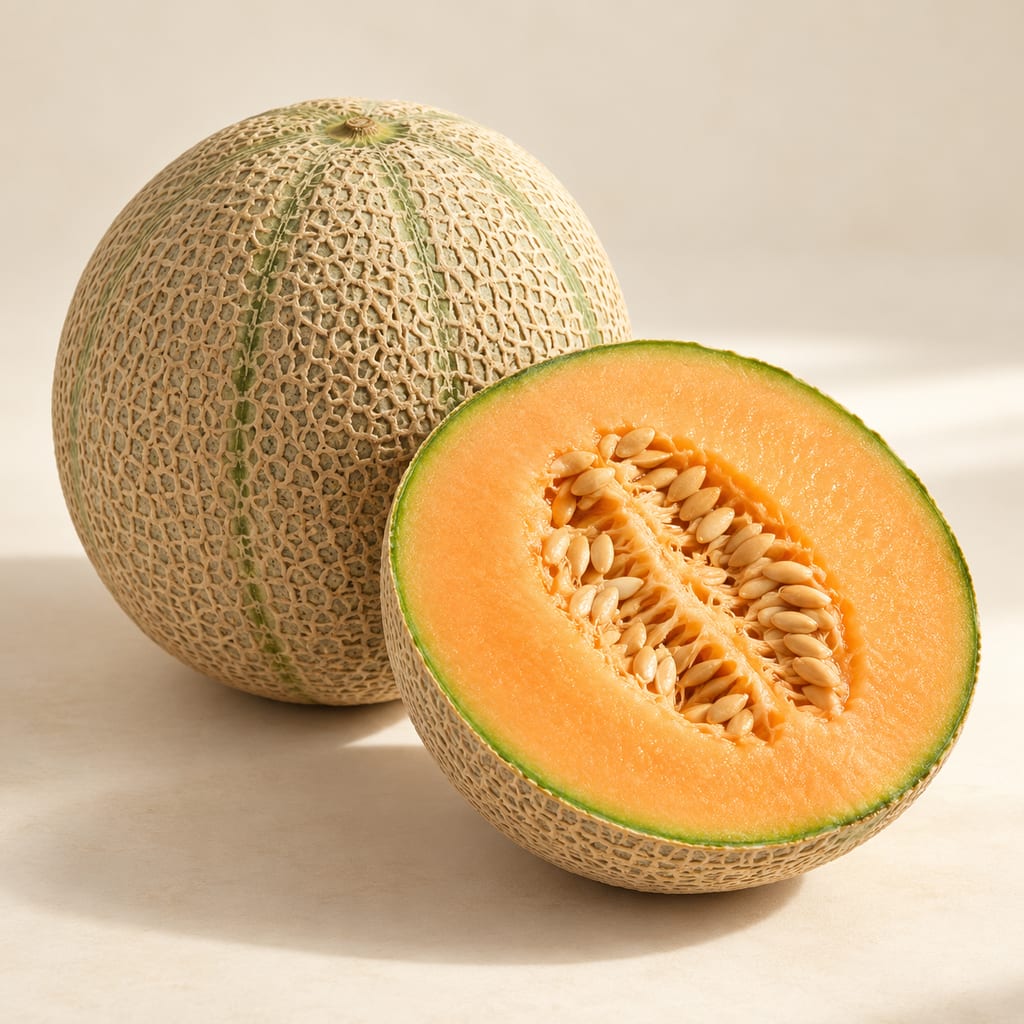
What the plant is
Cucumis melo L. is the species name used by the source record for melon, a crop the record describes as cultivated worldwide. Kew's Plants of the World Online lookup is the taxonomic reference for the name.
The record gives only the English name melon and no regional names, so this page does not cover local cultivars.
Sources for this section
Where it came from
Kerje and Grum's review of the literature on melon origin concludes that the origin 'appears to be Africa'. They link the split of the species into subspecies melo and agrestis to wild melons spread by people into Asia. The conclusion is hedged, and the authors call for study of diverse wild germplasm, especially from Africa, before the origin can be confirmed.
Sources for this section
Wild forms and domestication
The wild melons discussed in that review are non-edible. The authors suggest that today's sweet wild melon probably results from domestication and cultivation, since melons hybridise frequently in nature.
This is a taxonomic and historical account. It does not describe harvest, storage or any food preparation.
Sources for this section
Food parts and gaps
The source record gives no edible part, ripeness stage or preparation for this species. Fruit flesh and seeds need their own sources before any use is recorded here. Melon seeds are documented on a separate ingredient candidate, melon-seed-cucumis-melo, and are not covered on this page.
No cultivar, yield, storage or food-safety evidence is established by the sources used here.
Sources for this section
Identification and safety limits
Reference and research only. Fermenta cannot identify a gathered specimen or guarantee that it is safe to eat. Competent local identification is needed before eating any wild plant.
The inspected sources do not supply lookalikes or a collection rule for this species. A common name is not an identification.
Sources for this section
Places
Unknown
Relationship not established · Place not establishedThe inspected sources do not place the crop in one locality. The origin is contested and the review hedges it.
Community
No community contributions have been published for this entry yet.
Share what you made
Sign in to contribute. Published comments and photos are free to read.
Sources
Royal Botanic Gardens, Kew (POWO)Accepted name
POWO name lookup for Cucumis meloName lookup for Cucumis melo L.
Cited in: What the plant is; Food parts and gaps
T. Kerje and M. Grum, Acta Horticulturae 510 (2000), abstractOrigin · Domestication · Wild forms
The Origin of Melon, Cucumis melo: A Review of the LiteratureOrigin appears to be Africa
Subspecies melo and agrestis split linked to wild melons spread to Asia
Wild melons discussed are non-edible
Conclusion hedged; wild germplasm needs study
Cited in: Where it came from; Wild forms and domestication; Identification and safety limits