
Mushrooms
Northern milkcap
Lactarius trivialis, the northern milkcap, is a Russulaceae mushroom of Scandinavia and northern Europe, traditionally processed by salting and treated in Nordic guides as edible only after a parboiling step.
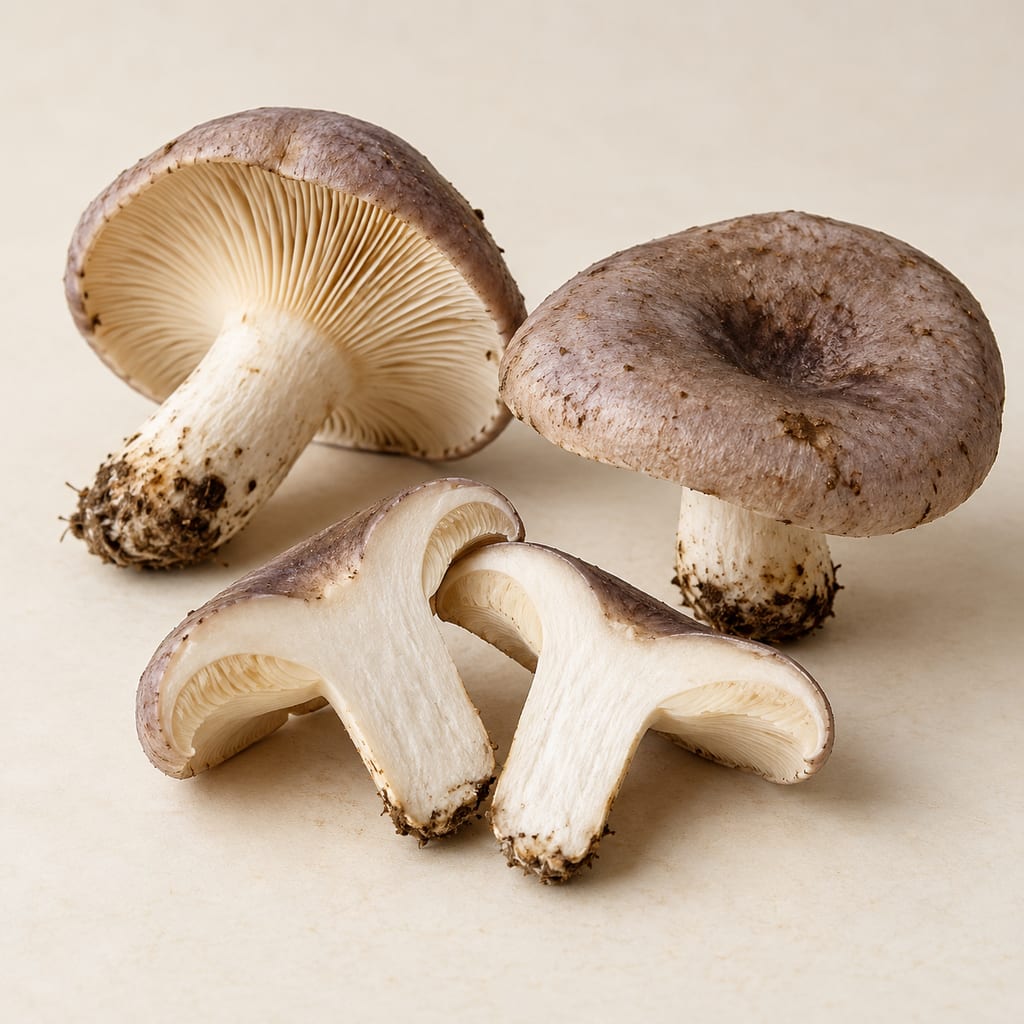
What it is
Lactarius trivialis is a milkcap, a gilled fungus of the genus Lactarius in the family Russulaceae. Its cap can range from light brown to dark purple. Elias Fries first recorded it in 1838. The species is classified in five subtaxa.
Lactarius is the genus that exudes a milky latex when the flesh is cut, and the cap colour varies with age and conditions. The name northern milkcap is used for more than one species, so it does not identify this one on its own. The Finnish source applies the same name to L. utilis.
Sources for this section
Habitat and distribution
The Wikipedia article says the fungus is most commonly found in Scandinavia. The Swedish guide describes it in moist, mossy birch and spruce forest and calls it common throughout Sweden. The Finnish source calls it one of the more popular milkcaps foraged in Finland, while warning that it is easily mixed with others.
Sources for this section
Traditional processing
The catalogue records the species as a traditional processed, salted mushroom in northern and eastern Europe, and as an acrid fungus that needs a specific regional pretreatment before use.
The Swedish guide says it must be parboiled in plenty of water, and the water thrown away before the mushrooms are cooked or prepared. The Finnish source says pre-boiled mushrooms work well in many dishes. The sources read do not explain what the parboiling removes or give times and temperatures, so no processing method is set out here.
Conflicting edibility advice
The Nordic guides treat the species as edible after parboiling. A Vienna mushroom consultation page lists it as inedible, and the reason is not stated in the result read. The advice therefore depends on the country and the guide, and the conflict is recorded rather than resolved here.
Safety
The catalogue's workbook label is CONDITIONS: inspect the individual record, and it is kept as supplied. The sources read do not establish that the mushroom is safe without the stated pretreatment, and they do not establish that the pretreatment makes it safe.
This record is not a guide to identifying wild fungi. Confirm the identity with a local expert before eating it, and follow the regional guidance where you forage.
Places
Northern and eastern Europe
Traditional preparation · Region evidenceRegion-level record. The catalogue records traditional salted processing in northern and eastern Europe; the Wikipedia article says the species is most commonly found in Scandinavia.
Community
No community contributions have been published for this entry yet.
Share what you made
Sign in to contribute. Published comments and photos are free to read.
Sources
WikipediaIdentity · Taxonomy · Ecology
Lactarius trivialisRussulaceae; cap light brown to dark purple; described by Fries in 1838; most commonly found in Scandinavia; five subtaxa; the article does not address edibility, pretreatment or lookalikes
Cited in: What it is; Habitat and distribution
SvampguidenFood · Safety · Ecology
Tacked milkcap (Svampguiden)Edible but must be parboiled in plenty of water, with the water discarded before preparation; grows in moist mossy birch and spruce forest; common in Sweden
Cited in: Habitat and distribution; Traditional processing; Conflicting edibility advice; Safety
MartatFood
Northern milkcaps (Martat)Called the slimy lead Lactarius in Finland; high-yielding, filling and versatile; excellent in various dishes when pre-boiled; the name northern milkcap is also used for other species such as L. utilis
Cited in: What it is; Habitat and distribution; Traditional processing
City of ViennaSafety
Pilzberatung: Nordischer Milchling (City of Vienna mushroom advice)Listed as ungeniessbar (inedible) on the Vienna consultation page; reason not stated in the result read
Cited in: Conflicting edibility advice; Safety
Nordic Council of Ministers (diva-portal)Food
Nordic report cited in the catalogue (PDF)Catalogue source for traditional salted processing; the PDF could not be read as text in this recovery
Cited in: Traditional processing