
Mushrooms
Pale chicken of the woods
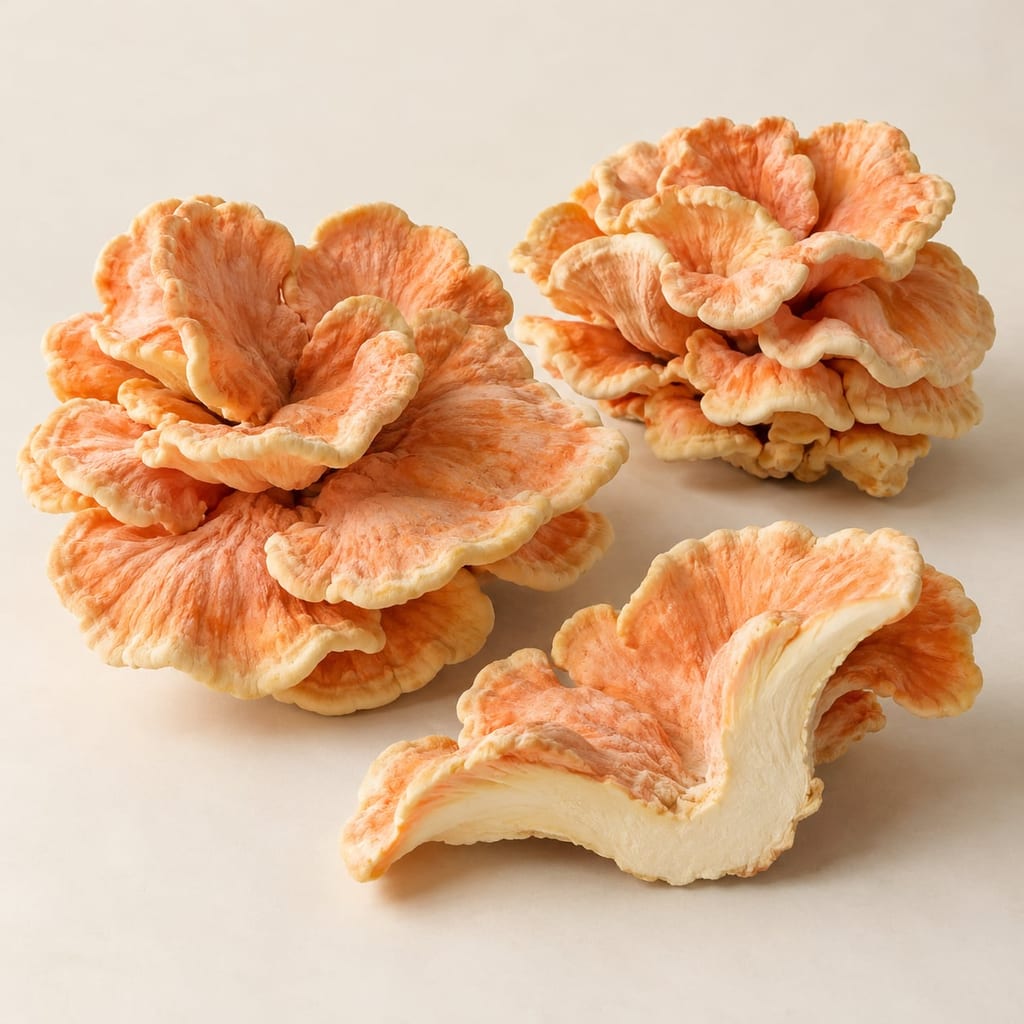
Pale chicken of the woods, Laetiporus cincinnatus, is a bracket fungus of eastern North American oak woods whose young fruiting bodies are eaten cooked, with a known risk of digestive upset.
Identity and naming
Laetiporus cincinnatus is a bracket fungus, or polypore, of the genus Laetiporus. The Missouri Department of Conservation gives its scientific name as Laetiporus cincinnatus and calls it the white-pored chicken of the woods. The catalogue's common name for it is pale chicken of the woods.
The species is distinguished from the sulfur-coloured chicken of the woods, Laetiporus sulphureus, by its underside: the pores of this species are white, not bright yellow.
Sources for this section
Ecology and habitat
The fungus grows on dead or dying deciduous trees, especially oaks, and the catalogue records hardwood roots, bases and wood as its substrate. It fruits from May to November, according to the Missouri Department of Conservation. The catalogue records the supply as wild.
Sources for this section
Food use
The Missouri Department of Conservation calls the species a choice edible and says it can take the place of chicken in dishes such as casseroles. The catalogue records young fruiting bodies used as food. Its only cooking guidance on the same page is to cook it well.
The page does not give a method for young specimens specifically, a storage method or a quantity. The page's guidance to cook the fungus thoroughly is recorded here as the only preparation advice read for this record.
Sources for this section
Safety and identification
Safety wording: this page describes what the sources record. It is not an identification guide and it gives no verdict that this fungus is safe to eat. The Missouri source reports that some people get stomach upset or swollen lips after eating it, and advises starting with a small amount. The catalogue records gastrointestinal or other adverse reactions even to correctly identified specimens.
The main look-alike named in the source is the sulfur-coloured chicken of the woods, which is told apart by its bright yellow underside. Specimens should be checked by a qualified expert before anyone eats them, and the risk of reaction applies even when the identification is right.
Sources for this section
Places
Eastern North America
Documented use · Region evidenceRegional record in the catalogue; the Missouri source describes the species in its state field guide. No locality is given.
Community
No community contributions have been published for this entry yet.
Share what you made
Sign in to contribute. Published comments and photos are free to read.
Sources
Missouri Department of ConservationIdentification · Use · Safety
Pale chicken of the woodsGrows on dead or dying deciduous trees, especially oaks; fruits May to November; choice edible, substitute for chicken; cook well; stomach upset or swollen lips; sulfur chicken look-alike with yellow underside
Cited in: Identity and naming; Ecology and habitat; Food use; Safety and identification