
Mushrooms
Pallid bolete
The pallid bolete, Imleria pallida, is a pale-capped wild bolete of oak woods in eastern North America. It is listed as edible, but its identity and its name are not settled.
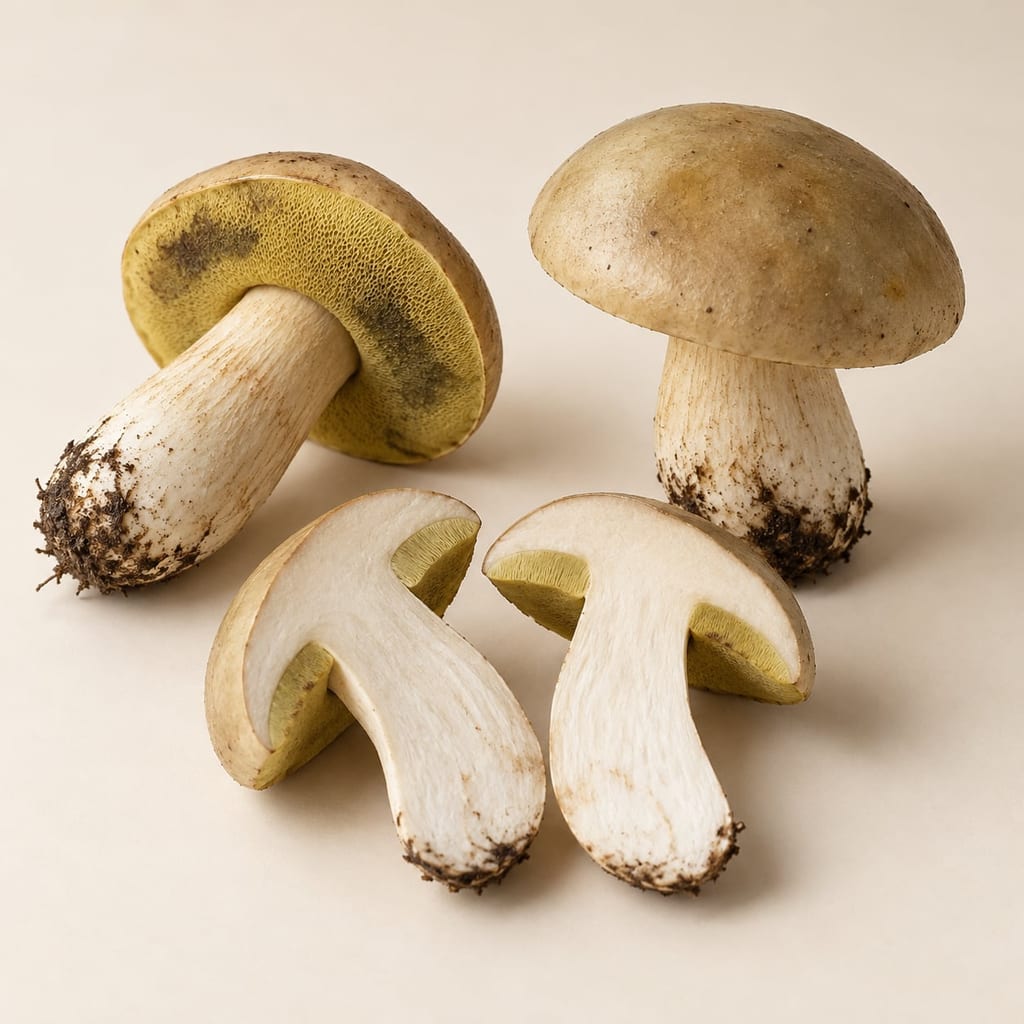
A pale bolete of oak woods
The pallid bolete is a bolete, a mushroom with a spongy pore layer under the cap rather than gills. Its cap is pale cream to buff with a dry, suede-like surface, and its pores are pale cream-yellow. The pores may bruise blue and then turn brownish. The cap is 1.5 to 6 inches across in the Missouri field guide's description.
It grows singly or in small groups on the ground in oak woods. The Missouri guide places it statewide and gives its season as June through September.
Sources for this section
Names and classification
The catalogue records the scientific name as Imleria pallida and also searches it as Boletus pallidus, under which many field guides still list it. The catalogue treats the name as a research label rather than a reconciled accepted name, and does not merge it with any other record automatically.
The name Boletus pallidus appears in the Missouri guide and in other regional guides. Readers comparing sources should check which name each one uses before treating two records as the same species.
Sources for this section
Food use and flavour
The catalogue records a culinary bolete used fresh or dried, with its supply recorded as wild and its evidence marked as documented food or specialist-flora use.
The Missouri guide lists the species as edible. It says that some foragers rate its flavour as rivalling the porcini, Boletus edulis, which does not grow in Missouri. This is a forager's comparison, not a measured one.
For cooking, the guide advises using young, firm specimens fresh and keeping older ones for drying. The sources read for this page give no quantities, times or temperatures, so none are recorded here.
Sources for this section
Identification and caution
The Missouri guide tells readers to be certain of the identification and to eat only a small amount the first time, to watch for a reaction. It names other Boletus species as the lookalikes to rule out.
The guide's own caution is that anyone eating edible mushrooms should be careful. Edibility stated in a field guide is not a substitute for a confirmed identification by someone experienced with the species, and this page does not give one.
Sources for this section
Places
Eastern North America
Documented use · Region evidenceFood-use context as the supplied catalogue records it. The Missouri field guide places the species in oak woods statewide.
Community
No community contributions have been published for this entry yet.
Share what you made
Sign in to contribute. Published comments and photos are free to read.
Sources
Missouri Department of ConservationIdentification · Method · Safety · Distribution
Pallid BoleteCap, pore and bruising description; oak woods; June to September
Listed as edible; flavour compared with porcini by some foragers
Young firm specimens fresh, older ones dried; be certain of identification; small first portion
Other Boletus species as lookalikes
Cited in: A pale bolete of oak woods; Names and classification; Food use and flavour; Identification and caution