
Mushrooms
Phlebopus sudanicus
Phlebopus sudanicus, the African giant bolete, is a tropical African bolete eaten in parts of Central and southern Africa. Sources disagree on its toxicity, and its boiling is a practice rather than a validated detoxification.
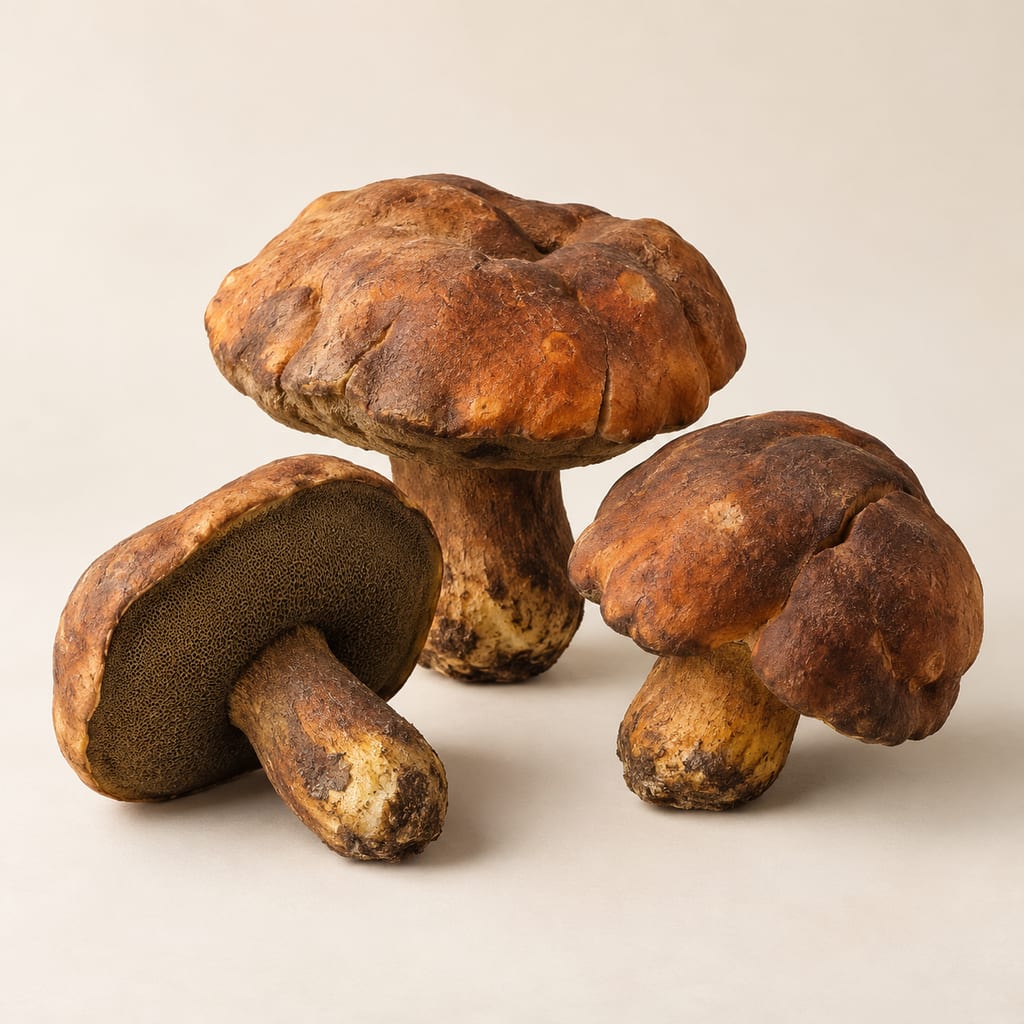
What it is
The African giant bolete is the common name the catalogue gives to Phlebopus sudanicus, a large tropical bolete first described as Boletus sudanicus. The EFTA page treats the species as Phlebopus sudanicus (Har. & Pat.) Heinem.
The species is ectomycorrhizal and grows in disturbed miombo woodland and in plantations of Acacia, Casuarina, Erythrina and Citrus, among other trees. It is known from a broad belt of tropical Africa, with records from Benin to Zambia.
Sources for this section
Food use
The EFTA page says the fungus is eaten in DR Congo, where it is highly appreciated, and in Malawi, where specimens are dried before use. It describes the taste as pleasant, strong and complex.
The catalogue records the food use as traditional, with conflicting toxicity and digestibility reports. The local preparations are not described in more detail on the page read here.
Sources for this section
Preparation and digestibility
The EFTA page says that the poor digestibility of the genus Phlebopus obliges consumers to boil the fungus, and it cites DR Congo as an example. In Malawi the fungus is dried before use. Boiling is reported as a local practice for digestibility, not as a method shown to remove toxins.
Sources for this section
Safety conflict
The EFTA page says the species is sometimes considered toxic in Africa, citing earlier reports, and that simple indigestion from large quantities or poorly prepared specimens is often treated locally as poisoning. Both food use and toxicity claims are reported, and the sources read for this page do not settle the conflict.
The catalogue marks the record as a safety conflict requiring research. Regional boiling or drying is not a validated universal method of detoxification, and no edibility verdict is given here.
Sources for this section
Notes and gaps
The earlier toxicity reports cited by the EFTA page were not read here. Local preparations, quantities and the specimens' age are not recorded in the sources read, and those points are left open.
Sources for this section
Places
Tropical Africa
Documented use · Region evidenceRecords from Benin, Burkina Faso, DR Congo, Cote d'Ivoire, Gambia, Malawi, Senegal, Sierra Leone, Togo and Zambia; food use stated for DR Congo and Malawi.
Community
No community contributions have been published for this entry yet.
Share what you made
Sign in to contribute. Published comments and photos are free to read.
Sources
European Fungi Tradition Association (EFTA)Food use · Safety · Identification
Phlebopus sudanicus (EFTA edible species page)Phlebopus sudanicus (Har. & Pat.) Heinem.; synonym Boletus sudanicus; eaten in DR Congo and dried before use in Malawi; taste strong and complex; described as sometimes considered toxic in Africa; simple indigestion from large or poorly prepared specimens often treated locally as poisoning; poor digestibility of Phlebopus obliges boiling
Cited in: What it is; Food use; Preparation and digestibility; Safety conflict; Notes and gaps