
Other
Pig's ear
Gomphus clavatus, the pig's ear or violet chanterelle, is a club-shaped wild fungus of old spruce and beech forest. It is eaten in Europe and North America, and it is red-listed in parts of Europe.
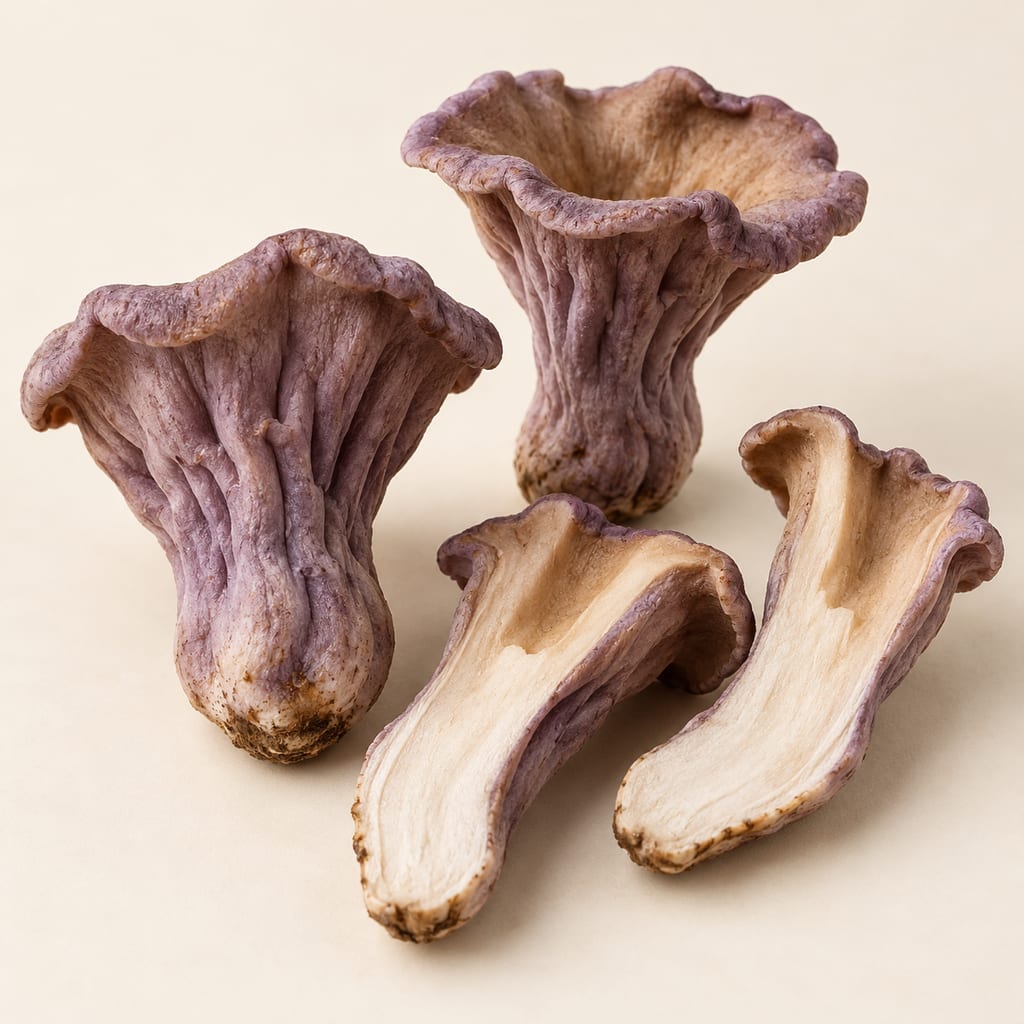
What it is
Pig's ear is a club-shaped, compact fungus with a lilac or violet tint. It is also called the violet chanterelle. Its shape and colour set it apart from the chanterelles it resembles, but its form is distinctive.
It is native to Eurasia and North America. It grows mainly in old-growth forest, with spruce, pine and beech, and in beech forest on calcareous soil.
Sources for this section
Eating and preparation
The sources describe it as edible. One account praises its meaty texture and earthy flavour; another finds it firm and dense with a musty, earthy aroma, and some people find it bland. Svampguiden rates its taste 3 out of 5 and gives no flavour or cooking advice.
Cooks commonly slice it very thinly, as with chanterelles, and sauté it. Its season is mainly summer and autumn, extending into winter in warmer regions.
Sources for this section
Conservation
Svampguiden lists the species as Endangered and red-listed. Its numbers have fallen as old-growth forests have been cut, so the guide asks foragers to leave some young and old fruit bodies at the site so that spores can disperse.
Sources for this section
Look-alikes and safety
The blue chanterelle, Polyzellus multiplex, has a similar shape with different colouring. Svampguiden gives inconsistent statements about look-alikes, so do not rely on the form alone.
This record is not a guide to identifying wild mushrooms. Confirm identification with an expert and check local protection rules before picking.
Sources for this section
Places
Europe
Documented use · Region evidenceRegion-level record. The Swedish guide describes the species in Europe; it is also recorded in North America.
Community
No community contributions have been published for this entry yet.
Share what you made
Sign in to contribute. Published comments and photos are free to read.
Sources
SvampguidenFood · Conservation · Identity
Pig's earEdible; Endangered and red-listed; leave some fruit bodies; taste 3 of 5; spruce, pine, beech and old-growth habitat
Cited in: What it is; Eating and preparation; Conservation; Look-alikes and safety
WikipediaIdentity · Food
Gomphus clavatusViolet chanterelle name; Eurasia and North America range
Cited in: What it is; Eating and preparation; Look-alikes and safety