
Mushrooms
Pink oyster mushroom
The pink oyster mushroom, Pleurotus djamor, is a pantropical oyster that grows fast on warm-climate agricultural waste, and it is cultivated commercially in parts of Asia.
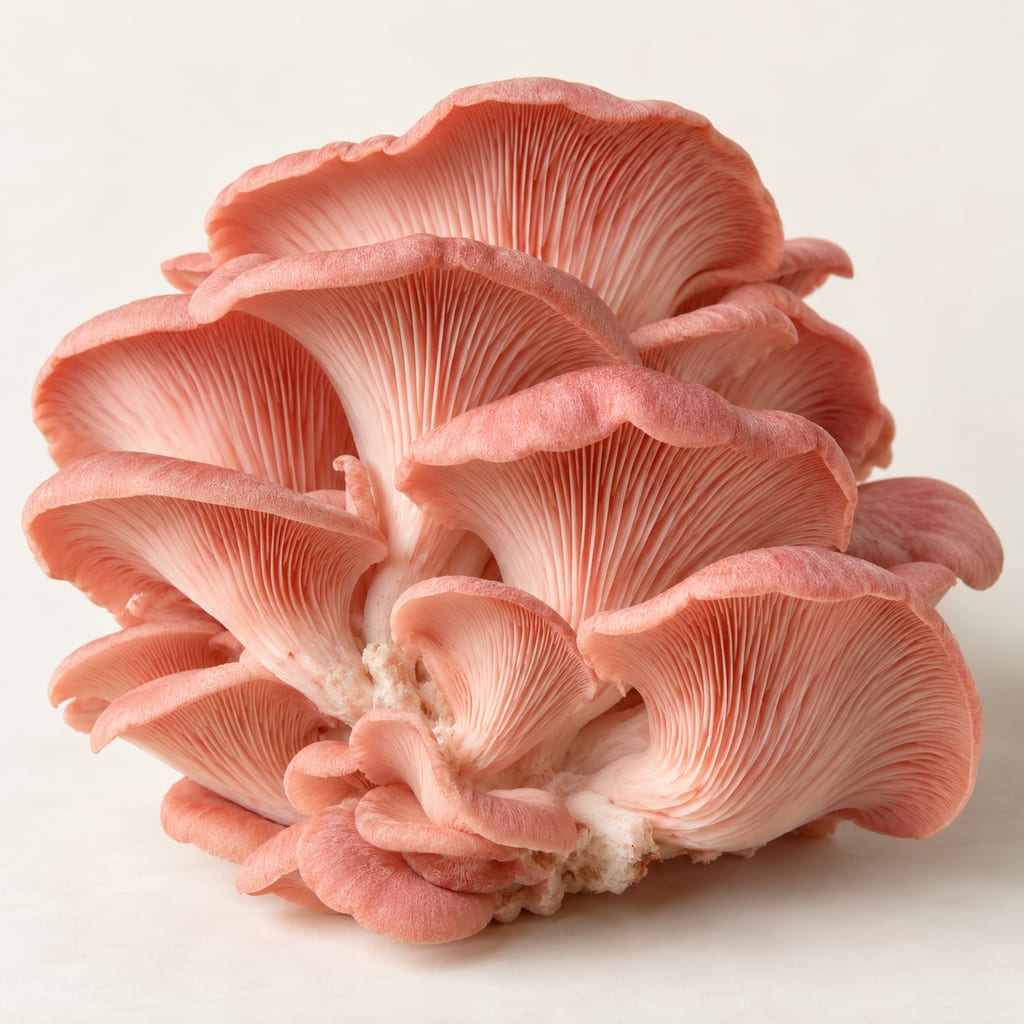
What it is
Pleurotus djamor is an oyster mushroom known as the pink oyster. The 2017 Salmones review treats it as a pantropical fungus, and it shares the shelf habit of the genus Pleurotus.
The sources reviewed do not give a detailed description of its colour, texture or flavour, so this page does not add one.
Where it is grown
The 2017 review describes P. djamor as a pantropical fungus cultivated commercially in some Asian countries. It was written as a bibliographic review of the biology and culture of the species, aimed at expanding its use in the Neotropics, so the review is about the species' potential in tropical Latin America as well as its existing record in Asia.
The review does not name the Asian countries in the summary consulted, so this page does not name them. The sources reviewed give no historical account of pink oyster as a food tradition.
How it is grown
A substrate study on tropical forest materials found that rainforest substrates supported mycelial growth and protease production by P. djamor. A commercial supplier page gives a fruiting range of 18 to 30 degrees Celsius, but the supplier is not an independent source, so this page does not use that range as a fact. The sources do not give yields, timings or a household method, and none is given here.
Cooking and eating
The sources reviewed do not describe how pink oyster is cooked or served, and this page makes no culinary claim. A preparation that uses it should carry its method and its sources.
The mushroom is a cultivated food mushroom where it is grown. It is not described in the sources as a starter culture or a fermentation organism.
Safety and handling
This page gives no identification or edibility verdict for a wild specimen. A buyer should choose cultivated product from a supplier that names the species. The sources reviewed do not give a storage life, an allergen profile or a food-safety assessment for the species, so none is given.
Open questions
The Asian commercial record, the countries of production and the yields are not established in the sources consulted. The next research pass should read the 2017 review in full and identify its Asian production sources.
Places
Asia
Modern adaptation · Region evidenceRegional. The Salmones review describes the species as pantropical and cultivated commercially in some Asian countries; the countries are not named in the summary.
Neotropics
Modern adaptation · Region evidenceRegional. The 2017 review was written to expand the species' use in the Neotropics; it does not record an older Neotropical food tradition.
Community
No community contributions have been published for this entry yet.
Share what you made
Sign in to contribute. Published comments and photos are free to read.
Sources
RedalycIdentity · Geography · Method
Salmones 2017 bibliographic review of the biology and culture of Pleurotus djamor (Scientia Fungorum)Pantropical fungus cultivated commercially in some Asian countries; review aimed at expanding use in the Neotropics (search summary; primary text not opened).
Cited in: What it is; Where it is grown; How it is grown; Cooking and eating; Safety and handling; Open questions
Research, Society and DevelopmentMethod
Evaluation of tropical forest substrates for cultivation and production of proteases by Pleurotus djamorRainforest substrates efficient for mycelial cultivation and protease production by P. djamor (search summary).
Cited in: How it is grown
Wikimedia CommonsImage
File:20210628 Pleurotus djamor 1.jpgReference photograph of cultivated pink oyster mushroom, CC BY-SA 3.0.