
Mushrooms
Pioppino
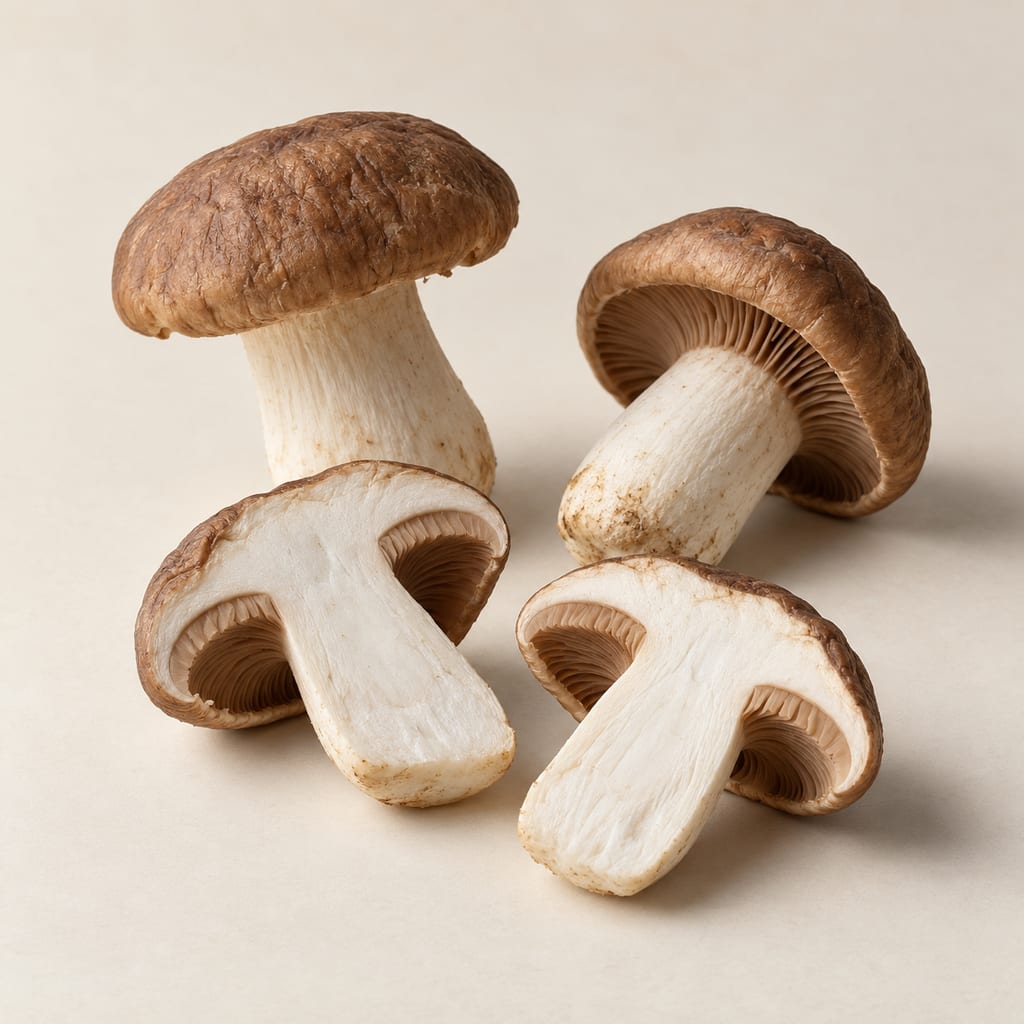
Pioppino, Cyclocybe cylindracea, is a wood-rotting mushroom of poplars and other broadleaf trees, cultivated and gathered in Mediterranean Europe and used fresh or rehydrated in Southern European and Chinese cooking.
What it is
Pioppino is the common name of Cyclocybe cylindracea, a mushroom whose name has moved between several genera. The Wikipedia treatment of the accepted species, Cyclocybe aegerita, lists Agrocybe aegerita, Agrocybe cylindracea and Pholiota aegerita among its older names. The catalogue records the synonyms the cited Species Fungorum treatment uses, and it keeps the Asian tea-tree mushroom, Cyclocybe chaxingu, separate.
The mushroom is known as the poplar mushroom or poplar fieldcap in English, and as velvet pioppini in some sources. Wikipedia also gives Chinese and Japanese names for it, which the catalogue does not treat as one species with the tea-tree mushroom.
Growth and habitat
Pioppino is a white-rot fungus. It grows in tufts on logs and on the holes of poplars and other large-leaved trees, and the catalogue records the wood-decomposing habit on poplar and willow.
The Wikipedia treatment mentions a photograph of the mushroom on a poplar stump in Girona, Spain. The mushroom is also cultivated in Korea, Japan, China and Australia.
Cultivation
The catalogue records pioppino as widely cultivated and as a wild and cultivated culinary mushroom. The Wikipedia treatment does not cover its cultivation history or the substrates growers use, so this page gives no growing method.
The Spanish decree on the sale of mushrooms lists the species under cultivated species that may be sold fresh, and under wild species as well, using the name Agrocybe aegerita (cylindracea). The same name appears on both lists, so the decree treats wild and cultivated material of this fungus as sellable under its own rules.
Culinary use
Wikipedia describes pioppino as a typical ingredient in Southern European and Chinese cuisine. In East Asia it is used fresh and rehydrated in stir-fries, soups, stews and hot pot. The sources do not give a flavour profile, so this page gives none.
The sources reviewed do not give a preservation method, so this page does not give one.
Sources for this section
Identification and safety
Wikipedia says the mushroom is edible but that it resembles some deadly species, and that it is difficult to identify. Some species in the genus are poisonous. The infobox rates it choice but not recommended for eating.
The Spanish decree bans the sale of any species recognised or suspected as toxic. This page is not an identification guide, and a wild specimen should not be picked or eaten on the basis of its name.
Places
Mediterranean Europe
Documented use · Region evidenceWild and cultivated culinary use in Mediterranean Europe as the catalogue records it; no locality is given beyond the Girona photograph.
Community
No community contributions have been published for this entry yet.
Share what you made
Sign in to contribute. Published comments and photos are free to read.
Sources
WikipediaTaxonomy · Ecology · Food use · Safety
Cyclocybe aegeritaAccepted name Cyclocybe aegerita (V. Brig.) Vizzini 2014; older names Agrocybe aegerita, Agrocybe cylindracea, Pholiota aegerita; white rot on poplars and other large-leaved trees; cultivation in Korea, Japan, China, Australia; used fresh and rehydrated in East Asia; edible but resembles deadly species; choice but not recommended.
Cited in: What it is; Growth and habitat; Cultivation; Culinary use; Identification and safety
Species FungorumTaxonomy
Species Fungorum tree of life record for the Cyclocybe and Agrocybe names (supplied catalogue source)Synonym treatment cited by the catalogue for Cyclocybe cylindracea (supplied record; not reopened here).
Cited in: What it is; Growth and habitat
Boletin Oficial del Estado (Spain)Regulation · Safety
Real Decreto 30/2009, de 16 de enero, por el que se establecen las condiciones sanitarias para la comercializacion de setas para uso alimentarioAgrocybe aegerita (cylindracea) listed in Part B (cultivated species that may be sold fresh) and in Part A (wild species that may be sold fresh); Article 3.3 bans toxic species.
Cited in: Cultivation; Identification and safety