
Sugar sources
Priming sugar
Priming sugar supplies fermentable carbohydrate for carbonation during conditioning. The name can cover sucrose, dextrose or formulated drops; the linked cider recipe specifies neither a sugar type nor an amount.
A name for the sugar’s job
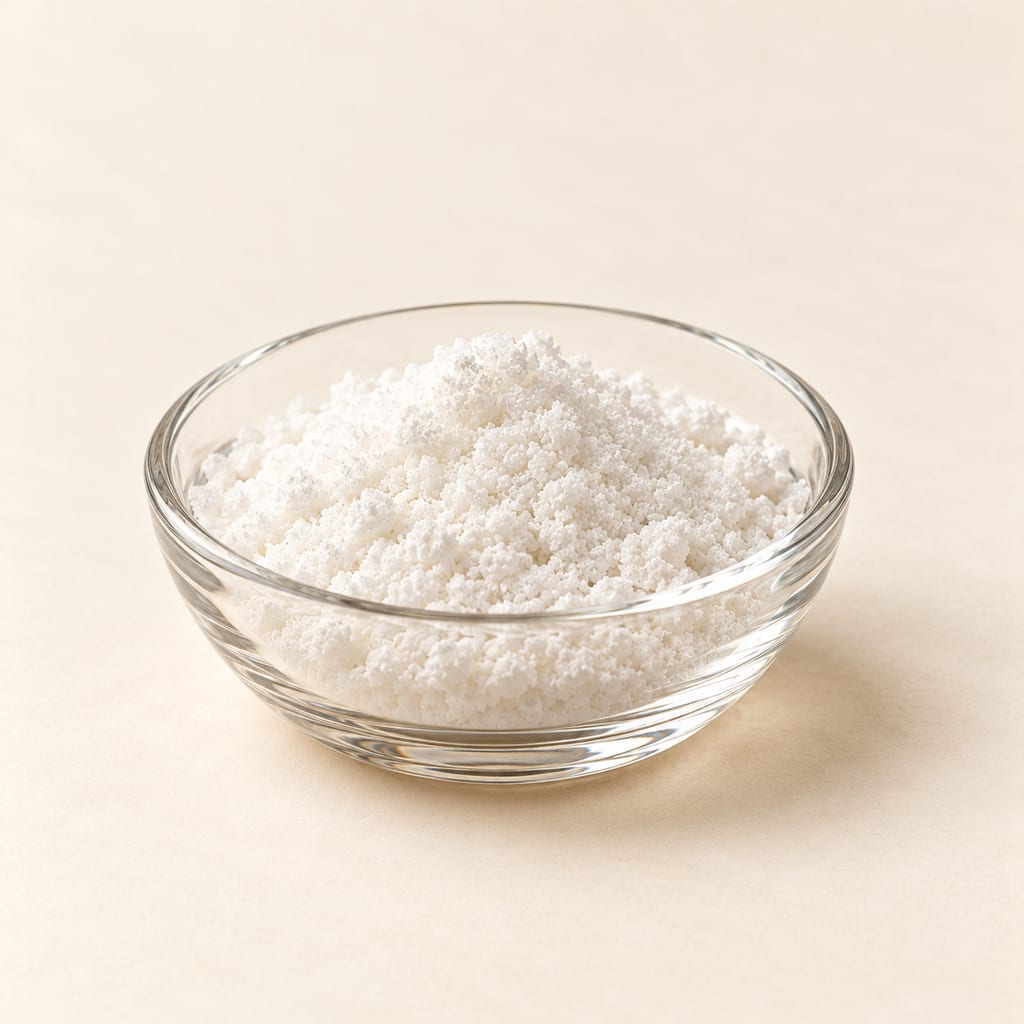
Priming sugar is a fermentable sugar added to support a later fermentation that carbonates a drink. The name describes its use rather than one chemical substance. A bag sold for priming may contain dextrose, while another process uses white sugar or a manufactured carbonation drop. The ingredient must be identified before those forms can be compared.
The cider recipe linked here lists priming sugar as optional without naming its type or amount. That wording supports a generic ingredient entry. It does not establish that the author used corn sugar, cane sugar or a particular brand of drops, and a retailer’s current product range cannot fill that gap retrospectively.
Craft a Brew provides one clear commercial example: its priming sugar is described as dextrose, also called corn sugar. BrewArt’s carbonation drops instead list sugar and glucose. Both belong to the same functional family while retaining their different compositions and supplied forms.
Sources for this section
Conditioning gave this addition its purpose
Fermentation can continue after a drink has been transferred from its main fermenting vessel. In cask and bottle conditioning, that later activity becomes part of producing the finished drink. Yeast uses available carbohydrate and produces carbon dioxide; when the process takes place in an appropriate closed package, some of that gas remains associated with the drink.
A review of bottle conditioning places the practice alongside cask maturation and sparkling-wine refermentation. These are related ways of using yeast after an initial fermentation, rather than evidence that every priming sugar has one geographical origin. The development of suitable containers and closures is part of that history.
The generic ingredient has no single cultivar, manufacturer or launch date. Its history lies in a use of fermentable sugars. A dated account of bottle conditioning attests the practice it describes; it does not establish the first person to prime a drink or the crop that supplied an unspecified recipe’s sugar.
Sucrose comes from more than one crop
Ordinary white sugar is principally sucrose, a carbohydrate whose molecule joins glucose and fructose units. Sugarcane and sugar beet are different crops that supply this same sugar. Cane stores it in the stem, while the commercially harvested beet stores it in its root.
The crops have different growing requirements and agricultural histories. Sugarcane is associated with warmer growing regions; sugar beet supports production in temperate climates. These distinctions matter to the supply chain without creating different chemical names for the sucrose extracted from them.
For an unspecified priming sugar, none of those crop associations establishes a particular packet’s provenance. A supplier may identify cane or beet on its documentation, but the word sugar alone does not. Likewise, a recipe’s place of publication is not evidence of where its sweetener was grown or refined.
Extraction and crystallization make white sugar
Sugar manufacture separates the soluble sugar from the bulk of the plant. In beet processing, washed roots are sliced so that sugar can be extracted into water. The resulting juice is purified and concentrated before crystallization. The white crystals are therefore an extracted food ingredient, not pulverized beet tissue.
Crystallization separates sugar from the surrounding liquid, with further processing producing the dry material sold to food makers. This pathway differs from converting starch into glucose. Both can result in pale crystalline ingredients, but a similar appearance does not establish the same molecule or manufacturing route.
The FAO handbook describes the beet-sugar industry as an agricultural and processing system, including its by-products. That account explains where one possible priming material comes from. It does not identify the source of the sugar in the cider recipe, which remains unspecified.
Dextrose has a different manufacturing route
Dextrose is D-glucose. Cargill describes manufacturing its crystalline product through the hydrolysis of corn starch: the larger starch carbohydrate is broken down to yield glucose, which is then supplied in a purified crystalline form. This is a named producer’s account, not a promise that every dextrose sold worldwide uses the same crop.
The manufacturer distinguishes anhydrous dextrose from dextrose monohydrate. The monohydrate includes water within its crystal structure; the anhydrous form does not. That difference concerns the supplied material, even though both provide glucose. The weight of a product and the weight of fermentable sugar it supplies are consequently different questions.
Particle size and crystalline form also vary across commercial supplies. They affect how an ingredient is supplied and handled without changing its intended role as a fermentable carbon source. Retaining the actual product identity makes a priming calculation more meaningful than treating every white powder as the same sugar.
Sources for this section
A syrup is not necessarily crystalline glucose in water
Starch conversion produces a range of sugar supplies. The FAO processing account distinguishes glucose syrup from crystalline dextrose and explains that a syrup’s properties depend on how far conversion has proceeded. Its dextrose equivalent describes reducing sugars relative to dry matter; it is not a statement that the whole liquid is pure glucose.
After conversion, the industrial liquor undergoes purification and concentration. Crystalline dextrose is obtained by growing crystals from a concentrated supply, separating them from the mother liquor and drying them. The material left in the surrounding liquid differs from the recovered crystals. A product sold as syrup therefore needs its own composition rather than an assumption based on the name glucose.
The same account describes starch from several plants as industrial raw material. Cassava is one possible source alongside cereal starches; corn sugar is a useful commercial description where corn is actually documented. This manufacturing breadth explains why a generic priming ingredient cannot be mapped to one crop. It also distinguishes a refined food-grade supply from unconverted starch, which has not passed through the same transformation into the intended sugar.
Sources for this section
Granules, liquids and counted drops
Loose sugar is normally quantified by mass, while a syrup also contains water and a manufactured drop is supplied as a unit. These formats describe different ways of delivering an amount of fermentable material. They do not create a universal spoonful, syrup volume or drop count that works for every package.
A counted carbonation drop is convenient because the producer has made a defined unit for its own instructions. BrewArt lists its drops’ ingredients and packaging information. Those details should stay with that product; another brand’s drop may have a different composition or mass.
A liquid priming supply requires its concentration to be known. A dry sugar can also contain water, as the monohydrate form shows. The Brewers Association’s calculation example explicitly accounts for solids content. That is why substituting equal gross weights of two supplies need not provide equal fermentable material.
Brewing sugar is not always a simple sugar
A brewing aisle contains adjuncts made for different purposes. Coopers distinguishes dextrose from its Brewing Sugar and Brew Enhancer products, which can contain maltodextrin and malt extract as well as dextrose. A product used to build the main wort is not automatically a suitable replacement for the sugar specified at bottling.
The manufacturer recommends its carbonation drops or ordinary white sugar for consistent priming in its own system. This distinction is about composition and use, rather than a rule that every product labelled brewing sugar is identical. Read the ingredient list before assuming that a bag supplies only a readily fermentable sugar.
Malt extract also contributes a more complex mixture than purified glucose. Substituting a blended adjunct changes what is added as well as how much is added. The correct comparison follows the actual formulation and fermentability, rather than the product’s position beside other brewing ingredients on a shop shelf.
Sources for this section
Yeast must be able to use the substrate
The sugar and the culture work together. A selected conditioning yeast can use some carbohydrates while leaving others behind. Lallemand’s CBC-1 sheet, for example, describes a culture intended for conditioning that does not metabolize maltotriose and recommends simple sugars for that application. This is a property of the named culture, not a description of Nottingham.
Sucrose use also depends on yeast physiology rather than sweetness alone. A study of fourteen Saccharomyces cerevisiae strains in high-sugar media found that invertase activity did not by itself explain fermentation performance. The ability to cope with the osmotic environment also mattered in that experiment.
Those experiments were not tests of a household priming dose. They show why a sugar’s identity and the organism’s capabilities belong in the same explanation. A sweeter-tasting ingredient is not necessarily a faster or more predictable conditioning substrate, and a general yeast name does not describe every strain’s carbohydrate use.
In the high-sugar study, the investigators compared sucrose media with media containing glucose and fructose. Similar rankings among the strains limited an explanation based only on sucrose breakdown. That finding concerns the tested concentrated environments; it does not imply that ordinary priming quantities reproduce those stresses or require a special osmotic treatment.
Sources for this section
Priming and sweetening pursue different results
Priming aims to provide substrate for fermentation. Sweetening aims to leave a perceptible sweet taste in the drink. When yeast consumes a readily fermentable sugar during conditioning, that addition should not be treated as a guaranteed source of retained sweetness. The same ingredient can serve different purposes at different stages of a recipe.
The Nottingham cider recipe makes its priming step optional. That distinction allows for a choice about carbonation, but it does not identify a method for safely retaining fermentable sweetness in a sealed cider. The page’s unspecified priming sugar cannot supply a complete packaging calculation.
Adding a second full sugar addition because one is called priming and the other sweetening would still increase the available fermentable material. Keep the total formulation visible. The name assigned to an addition does not stop a capable organism from using it or remove its contribution to later gas production.
The pressure hazard follows the complete formulation
Uncontrolled fermentation in a closed package can rupture a bottle or can and cause injury. The Brewers Association advises quantifying potential carbonation, accounting for remaining fermentable extract and obtaining pressure specifications from the package supplier. The container’s appearance does not establish its pressure rating.
Temperature also affects package pressure because carbon dioxide becomes less soluble as the drink warms. A package that is kept cold during one stage may encounter warmer conditions later. A priming calculation and a container choice therefore need to consider the actual packaging and handling conditions together.
No universal priming amount, pressure rating or conditioning temperature is supplied here. The source recipe leaves the sugar amount open, and the generic ingredient name does not resolve that omission. A smell, taste, clear appearance or visible bubbles cannot certify that a sealed drink will remain within its package’s limits.
Sources for this section
A measured ingredient within a complete process
The main fermentation and the conditioning stage present different conditions to yeast. The later drink already contains alcohol and has a different supply of nutrients from its starting wort or juice. Guidance for adding a culture at the start should not silently become guidance for adding it to a finished fermentation.
For example, Lallemand’s CBC-1 document distinguishes its bottle-conditioning handling from its primary-fermentation use. That separation belongs to the named product. It illustrates why a whole procedure needs to remain intact rather than collecting a sugar amount, yeast preparation and timetable from unrelated sources.
Keep a record of the actual sugar product, amount, drink volume and selected process. These details make a later batch understandable and a substitution assessable. The generic priming-sugar entry connects such uses without pretending that every process uses the same powder, the same culture or the same package.
Places
Unknown
historical-association · Place not establishedFunctional ingredient name; no particular crop, manufacturing location or origin of the practice established by the recipe.
Community
No community contributions have been published for this entry yet.
Share what you made
Sign in to contribute. Published comments and photos are free to read.
Sources
Adventures in HomebrewingIngredient identity · Fermentation function · Handling
How to Make Hard Cider: Hard Cider Recipe, 5 GallonsOptional priming sugar, no sugar type or amount. Nottingham packet mass also unspecified. No universal conditioning schedule inferred.
Cited in: A name for the sugar’s job; Priming and sweetening pursue different results; A measured ingredient within a complete process
Beverages 6(3), 56, MDPIIngredient identity · Fermentation function · Handling
Bottle Conditioning: Technology and Mechanisms Applied in Refermented Beers — Kateřina Štulíková et al., 2020Historical cask and bottle context, yeast refermentation and flavor changes; the reviewed processes do not establish a universal home-conditioning schedule.
Cited in: Conditioning gave this addition its purpose
Brewers AssociationIngredient identity · Fermentation function · Handling
Best Practice Guidance: Preventing Package Over-pressurizationQuantified fermentability, residual carbonation and extract, solids content, temperature and supplier package ratings inform conditioning; excess pressure creates a rupture hazard. No universal dose or package rating follows.
Cited in: Granules, liquids and counted drops; The pressure hazard follows the complete formulation
CargillIngredient identity · Fermentation function · Handling
C☆Dex DextroseD-glucose from starch hydrolysis, anhydrous/monohydrate distinction, food grade and particle forms. Product example does not establish generic crop provenance.
Cited in: Dextrose has a different manufacturing route
FAOIngredient identity · Fermentation function · Handling
Agribusiness Handbook: Sugar Beet, White Sugar — Inna Punda, 2009Sugar beet versus cane, extraction and white-sugar production. Crop history is not priming practice origin.
Cited in: Extraction and crystallization make white sugar
USDA Economic Research ServiceIngredient identity · Fermentation function · Handling
Sugar and Sweeteners: BackgroundBoth sugarcane and sugarbeet industries, different crop growth conditions. No stale production statistics used.
Cited in: Sucrose comes from more than one crop
European Commission Joint Research CentreIngredient identity · Fermentation function · Handling
Environmental Sustainability Assessment of Bioeconomy Products and Processes: Progress Report 2, Sugar factsheet, 2016Sucrose is glucose/fructose disaccharide, cane stems and beet roots as extraction sources. No environmental ranking assigned to a packet.
Cited in: Sucrose comes from more than one crop; Extraction and crystallization make white sugar
Craft a BrewIngredient identity · Fermentation function · Handling
Priming SugarThis commercial product is dextrose/corn sugar for beer and cider. Supplier dose not adopted as generic recommendation.
Cited in: A name for the sugar’s job; Granules, liquids and counted drops; Priming and sweetening pursue different results
BrewArtIngredient identity · Fermentation function · Handling
Bottle Carbonation DropsNamed solid drops contain sugar and glucose, supplied as counted units. Product-specific directions not applied to other drops.
Cited in: A name for the sugar’s job; Granules, liquids and counted drops
Coopers DIY BeerIngredient identity · Fermentation function · Handling
Frequently Asked Brewing QuestionsDifferent brewing adjunct compositions, carbonation drops and white sugar for priming; these are not generically equivalent to maltodextrin-containing enhancers.
Cited in: Brewing sugar is not always a simple sugar; A measured ingredient within a complete process
Lallemand BrewingIngredient identity · Fermentation function · Handling
LalBrew CBC-1 Cask and Bottle Conditioning Yeast, technical data sheetConditioning strain does not metabolize maltotriose and prefers simple sugars; distinct inoculation guidance for primary and bottle stages. Not Nottingham guidance.
Cited in: Yeast must be able to use the substrate; Priming and sweetening pursue different results; A measured ingredient within a complete process
Applied and Environmental Microbiology 63(1), 145–150Ingredient identity · Fermentation function · Handling
Influence of invertase activity and glycerol synthesis and retention on fermentation of media with a high sugar concentration by Saccharomyces cerevisiae — D. K. Myers, D. T. Lawlor and P. V. Attfield, 1997The abstract describes high-sugar media and fourteen yeast strains, with invertase activity insufficient on its own to explain fermentation. This is not a priming-dose or Nottingham experiment.
Cited in: Yeast must be able to use the substrate
FAOIngredient identity · Fermentation function · Handling
Cassava Processing: Utilization of Cassava Products, glucose industry sectionStarch hydrolysis, refining, concentration, crystallization, centrifugal separation and drying. Historical industrial description, not a household process or provenance for the recipe sugar.
Cited in: A syrup is not necessarily crystalline glucose in water