
Sacapulas black salt
A dark, traditionally produced salt associated with Sacapulas in Guatemala’s Quiché department.
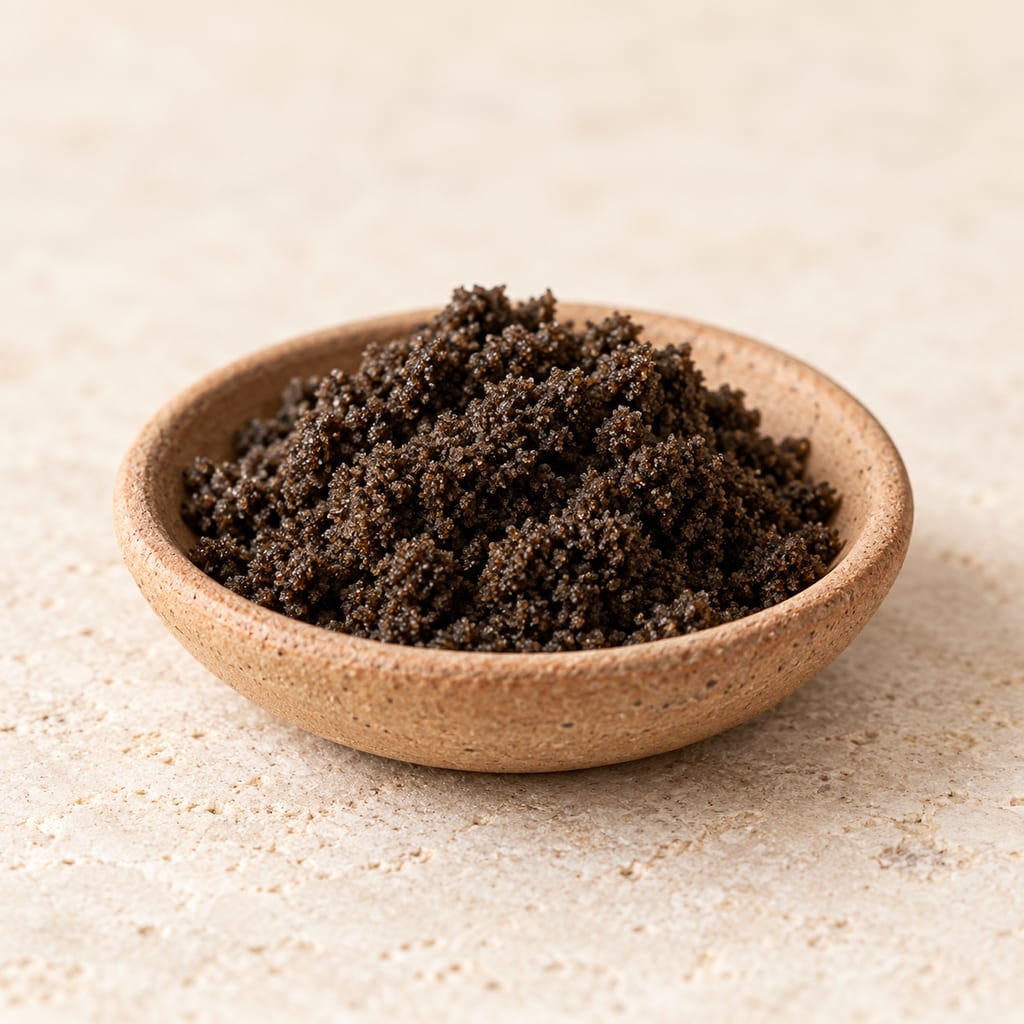
A dark salt from Sacapulas
Sacapulas black salt, or sal negra, is a traditionally produced salt associated with Sacapulas in the department of Quiché, Guatemala. Guatemalan cultural authorities describe it as a dark salt used in local gastronomy and as a practice passed between generations. Its name identifies a particular place and tradition, not every salt sold as black salt.
A documented example is dark and finely crumbled. The physical form offered to a cook may differ between producers and preparations. Obtain salt intended for human consumption from a suitable supplier; the historic production record alone cannot establish the food grade of a particular purchase.
Sources for this section
Salt, soil and heat
A 2023 study describes the Sacapulas salt-making area beside the Chixoy River and the use of local soil impregnated with salt to produce brine that is cooked. An archaeological discussion describes brine filtered through salty soil, concentrated by boiling and formed into hardened pieces. These accounts describe a local process and should not be read as a recipe to reproduce at home.
The cooking sites and the river landscape matter to the tradition. Flooding and changing economic conditions can affect production and the places where it occurs. In 2026 Guatemalan cultural authorities reported a field visit and discussions with local and ancestral authorities about safeguarding the practice.
Using it as an ingredient
The salt can season food, but its dark colour and distinctive production do not make it interchangeable with another salt by volume. Grain size, moisture and the composition of a particular food-grade product affect how it measures and dissolves. Follow the recipe and supplier’s information, particularly when salt has a preservation role.
Salt provides sodium, and claims about trace minerals or health benefits require evidence for the particular product and amounts eaten. The available sources establish a culinary and cultural tradition; they do not verify the composition or safety of every sample sold under the name.
Places
No source in this record establishes a place.
Community
No community contributions have been published for this entry yet.
Share what you made
Sign in to contribute. Published comments and photos are free to read.
Sources
Government of Guatemala, Ministry of Culture and SportsContext
Salvaguardar la sal negra en Sacapulaslocation
traditional production
culinary use
Cited in: A dark salt from Sacapulas; Salt, soil and heat; Using it as an ingredient
SustainabilityContext
Assessment of Natural Disasters Impact on Cultural Mayan Heritage Spaces in Remote Villages of Guatemala: Case of Black Saltsite
salt-making and flood risk
Cited in: Salt, soil and heat; Using it as an ingredient
Arqueología MexicanaContext
Los mayas de Belice y la sal durante el periodo Clásicodescription of Sacapulas production as an archaeological comparison
Cited in: Salt, soil and heat