
Spices and aromatics
Scurvygrass
Scurvygrass is Cochlearia officinalis, a fleshy-leaved coastal herb whose leaves have been eaten raw or boiled. Svalbard Museum records Norwegian trappers consuming it historically; that account does not give a preparation method.
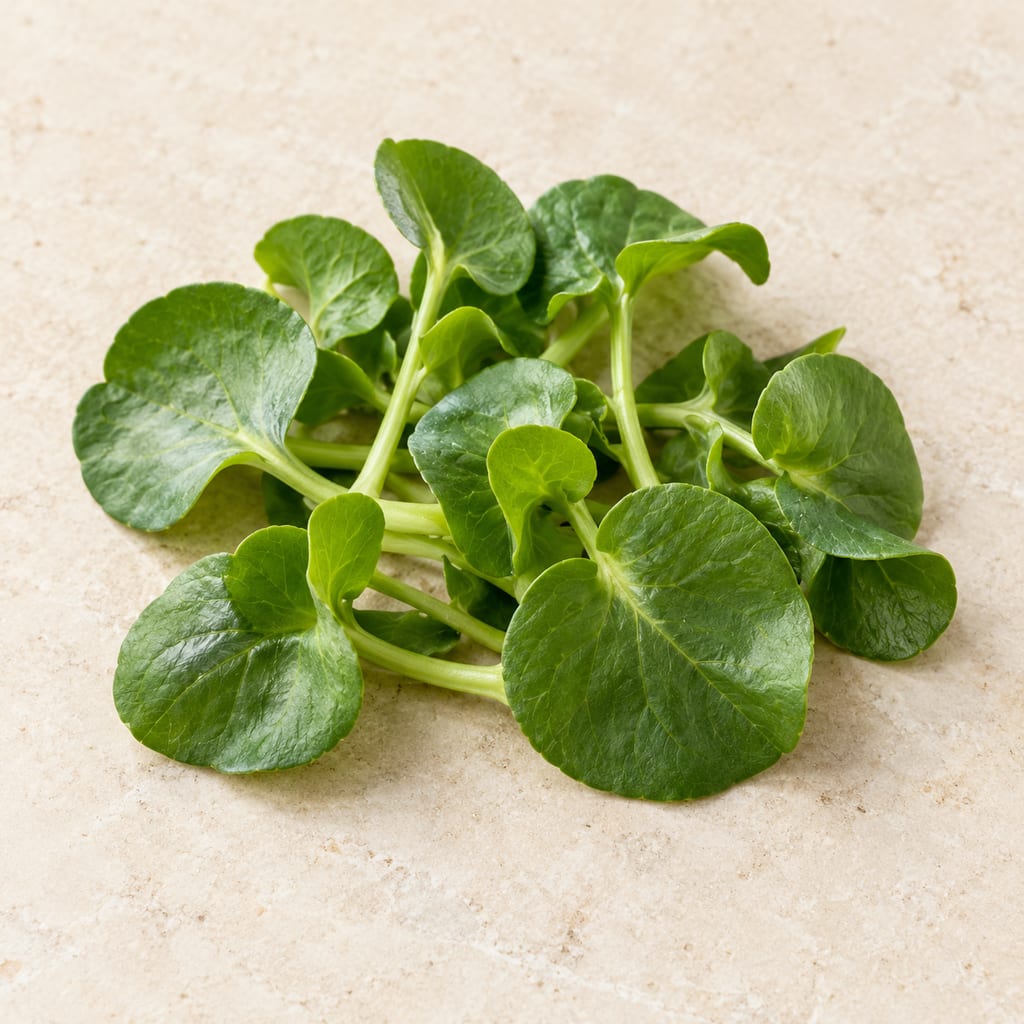
The coastal herb behind the name
Scurvygrass is the common name used here for Cochlearia officinalis L., an accepted species in the mustard family, Brassicaceae. Kew records scurvygrass among its common names. The name has also been used for related Cochlearia species, so a common-name label alone is not a dependable field identification; this entry follows the museum's explicit identification of the Svalbard plant as C. officinalis.
The plant forms fleshy, smooth leaves, with kidney-shaped basal leaves and smaller leaves higher on its stems. It grows in coastal settings. These broad features explain the food form described in the sources, but they are not a safe field-identification key. The generated image is editorial art, not identification guidance.
Sources for this section
A documented Arctic food use
Svalbard Museum records scurvygrass in its account of Norwegian fur trappers. It identifies the plant as Cochlearia officinalis, notes that it grows in Svalbard, and says earlier experience connected its consumption with preventing scurvy. The museum places this account alongside cloudberries preserved in crocks and brought from home. It does not identify a particular harvest, recipe, serving quantity, or preservation method for the scurvygrass.
Arctic plant profiles describe the leaves as eaten raw or boiled, which supports fresh leaves as a food form and a cooked use in general. No fermented or cured preparation is established.
Sources for this section
Taste, handling and limits
The sources support leafy use, but they do not provide a measured recipe, storage life, fermentation protocol, or validated preservation process. This is therefore a descriptive ingredient account, not a process instruction. Do not infer fermentation suitability or safety from the historical association with scurvy prevention.
No safe serving amount, allergy profile, toxicity threshold or handling guidance for foraged material is established, and the museum and university food-use pages are not a modern safety assessment. Correct identification and local foraging rules are not covered here, and the image must not be used to identify a wild plant. The historical scurvy association is not a treatment recommendation.
Sources for this section
Places
Svalbard
Documented use · Region evidenceSvalbard Museum records Norwegian trappers consuming scurvygrass there; this does not establish cultivation or a precise locality.
Community
No community contributions have been published for this entry yet.
Share what you made
Sign in to contribute. Published comments and photos are free to read.
Sources
Plants of the World Online, Royal Botanic Gardens, KewIdentity · Taxonomy
Cochlearia officinalis L.Kew lists Cochlearia officinalis as an accepted species in Brassicaceae; its common-name data includes scurvygrass.
Cited in: The coastal herb behind the name
Svalbard MuseumHistory · Food use · Geography
Fur huntingThe museum names scurvygrass as Cochlearia officinalis, says it grows in Svalbard, and records Norwegian trappers consuming it in a historical discussion of scurvy prevention. It gives no particular preparation method or date for that use.
Cited in: The coastal herb behind the name; A documented Arctic food use; Taste, handling and limits
ITEX-AON, Grand Valley State UniversityIdentity · Food use · Botany
ScurvygrassIdentifies Cochlearia officinalis; describes fleshy stems and kidney-shaped leaves; says leaves are eaten raw or boiled. This page concerns the North Slope and is not evidence of Svalbard preparation.
Cited in: The coastal herb behind the name; A documented Arctic food use; Taste, handling and limits
Royal Horticultural SocietyBotany
Cochlearia officinalisDescribes spoon-shaped succulent leaves and the species as a coastal herbaceous perennial.
Cited in: The coastal herb behind the name