
Mushrooms
Semi-bloody milkcap
Lactarius semisanguifluus is a pine-associated milkcap with orange latex that turns wine-red in air. Nordic sources call it edible but seldom gathered; it is kept distinct from L. sanguifluus.
Overview
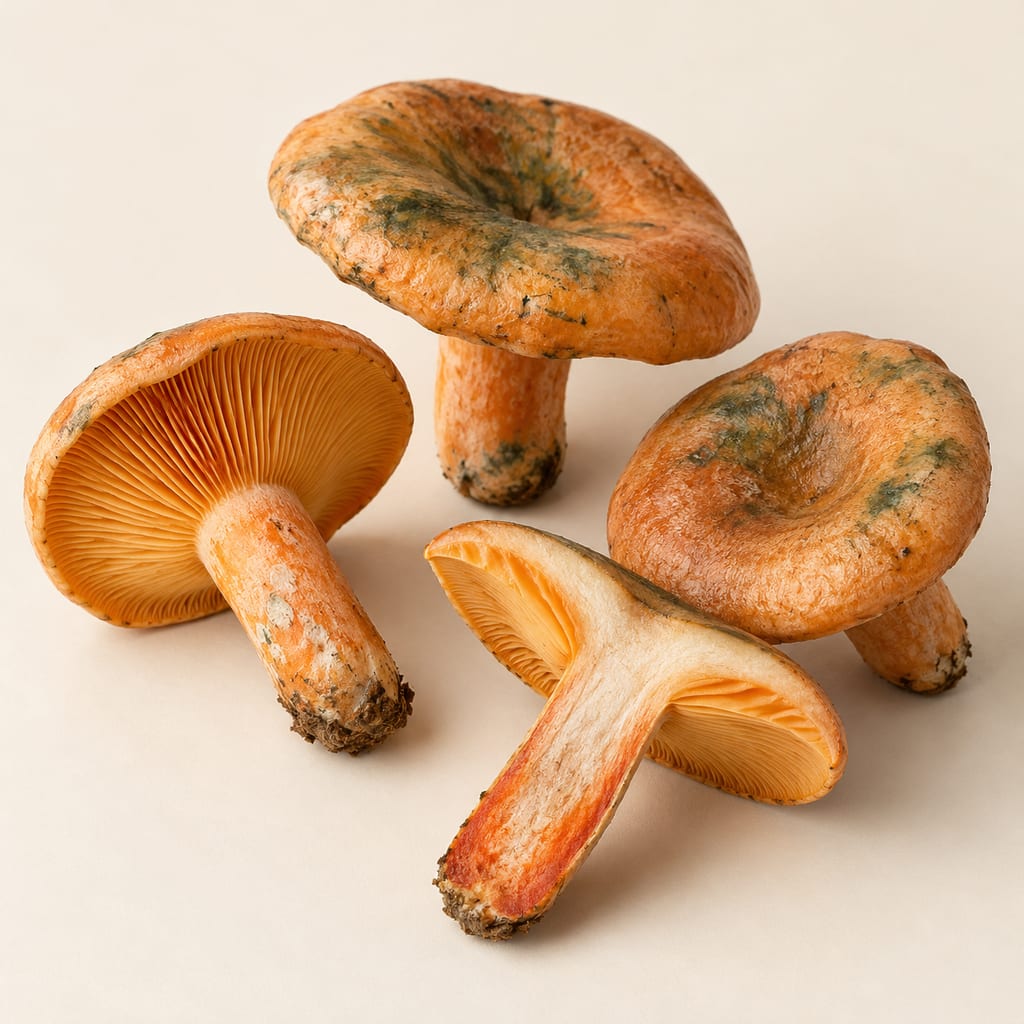
Lactarius semisanguifluus, known as the semi-bloody milkcap, is a mycorrhizal mushroom of the milkcap genus. Like the other milkcaps it exudes latex when cut or bruised. Its latex is orange and darkens to wine-red within minutes of contact with air, which is the main field character that the Nordic guides use to set it apart from its close relative.
The catalogue records it as a regional cooked and preserved milkcap in Europe. The sources reviewed for this page support that it is eaten in some places, but they describe it as rare and seldom recorded as a food mushroom, so the food role is small and not well documented.
Sources for this section
Identity and the name L. sanguifluus
The fruit bodies are smaller than those of Lactarius sanguifluus, the bloody milkcap, have violet tinges on the cap and turn greenish with age. The catalogue asks that the name be kept distinct from L. sanguifluus, and the sources reviewed bear this out: the conservation concern in Spain is recorded for L. sanguifluus, not for this species.
The Nordic guides list the species among the lactarioid agarics. Identification within the group can depend on latex colour, habitat and size, so a description on a page like this cannot replace a field key or a reference specimen.
Sources for this section
Habitat and distribution
Svampguiden describes the species as growing with pine on calcareous soil, mainly on the Swedish islands of Gotland and Öland. The Naturalis entry describes a fir-associated habitat on moderately calcareous or rich sand or loam. The Funga Nordica key lists it as very common in temperate and boreal zones but rare in the Nordic countries, and as locally occasional in the sub-Atlantic zone.
The sources reviewed contain no Spanish or other southern European occurrence data for this species, so the catalogue's European food record is not tied to a specific locality on this page.
Food use and edibility
A Nordic key lists the species as edible, and Svampguiden adds that it is edible but so rare that it is seldom noted as a food mushroom. The catalogue's food record describes it as cooked and preserved in a regional tradition, but it does not give that tradition's name, method or dishes, and the sources reviewed do not supply them.
The sources reviewed do not describe how this species is cooked or preserved, or in which place, so no preparation is recorded on this page as a method.
Sources for this section
Safety and what is not known
The sources reviewed give an edibility status but no safety assessment of their own for this species. Lactarius identification depends on latex and field characters that are easy to confuse, so a description on this page does not establish that a specimen is this species or that it is safe to eat. Nothing here is advice for collecting or identifying wild milkcaps.
The catalogue cites a Spanish official document from 2009 for this name. The text of that document was not read for this page, so no claim is drawn from it.
Sources for this section
Places
Europe
Relationship not established · Region evidenceThe catalogue lists a regional cooked and preserved food use in Europe without a named locality or tradition; the occurrence the sources reviewed locate is in Sweden, not a food record.
Community
No community contributions have been published for this entry yet.
Share what you made
Sign in to contribute. Published comments and photos are free to read.
Sources
SvampguidenIdentity · Geography · Food use
Semi-blood milkcap (Lactarius semisanguifluus)Orange latex turning wine-red within minutes; smaller than L. sanguifluus with violet cap tinges that turn greenish; grows with pine on calcareous soil on Gotland and Öland; edible but so rare it is seldom noted as a food mushroom.
Cited in: Overview; Identity and the name L. sanguifluus; Habitat and distribution; Food use and edibility
Naturalis Biodiversity Center, Linnaeus NGIdentity · Geography
Lactarius semisanguifluusDescribes a fir-associated habitat on moderately calcareous or rich sand or loam.
Cited in: Identity and the name L. sanguifluus; Habitat and distribution
Funga NordicaIdentity · Geography · Food use
Funga Nordica: LactariusKey lists the species as edible; very common in temperate and boreal zones but rare in the Nordic countries; locally occasional in the sub-Atlantic zone.
Cited in: Overview; Habitat and distribution; Food use and edibility; Safety and what is not known
Boletín Oficial del EstadoNames
Spanish official document BOE-A-2009-1110Supplied catalogue source for the name; its text was not read for this page.