
Spices and aromatics
Sheep sorrel
Rumex acetosella is a small perennial distinct from common sorrel and from Oxalis plants also called wood sorrel. RHS sources report edible leaves but also warn against eating large quantities; they do not provide a safe amount or a complete species-specific recipe.
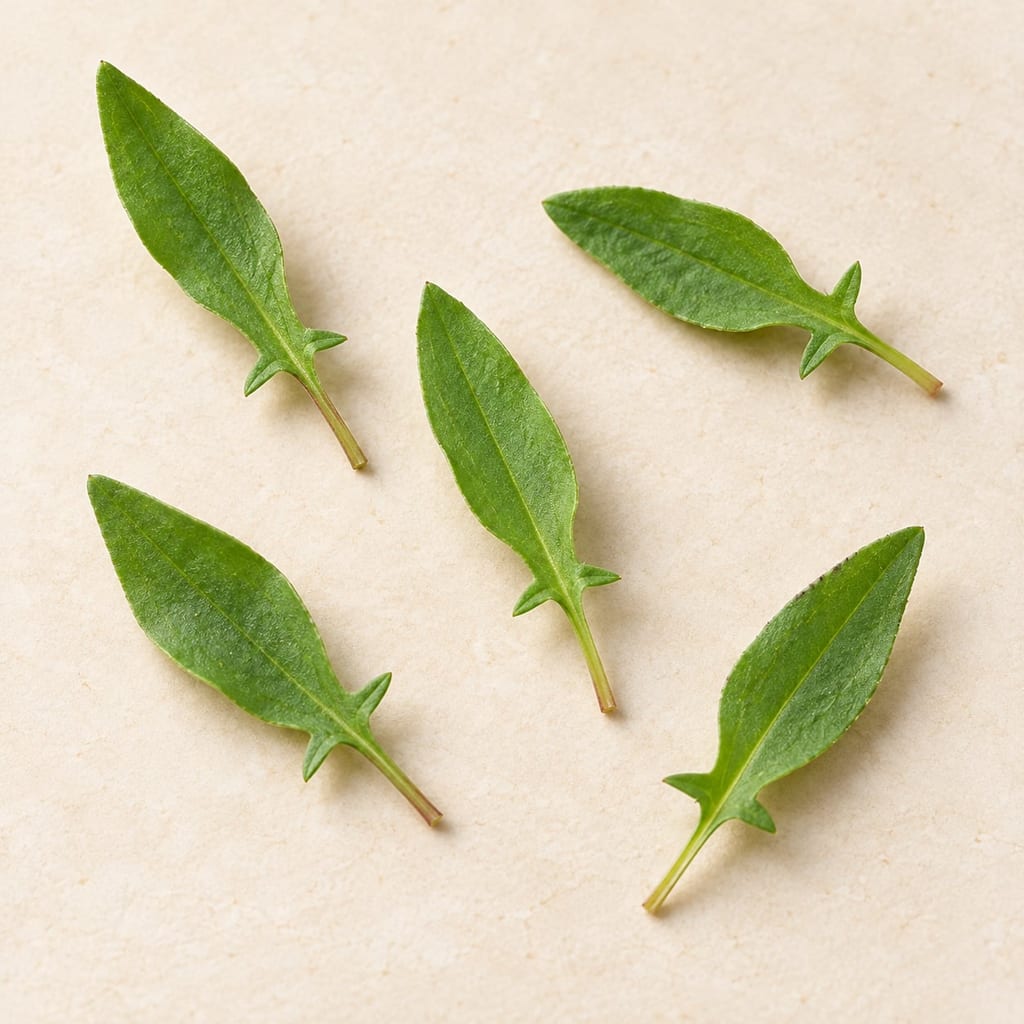
A name that needs care
Kew accepts Rumex acetosella L., a perennial native across temperate Eurasia. The RHS calls it sheep’s sorrel and describes it as smaller than common sorrel, Rumex acetosa. The Woodland Trust uses “wood sorrel” for Oxalis acetosella, a different genus. Shared sour flavour or a common-name match does not establish that their food-use reports or plant parts are interchangeable; this article is not an identification key.
Food reports and their limits
The RHS species profile explicitly describes sheep's-sorrel leaves as edible and sour-tasting, says they add a lemony tang to salads, notes that they contain oxalic acid, and warns that the plant is harmful if eaten in large amounts. It gives no quantity or preparation-specific assessment. Separately, the RHS advice guide has a general paragraph saying sorrel is used fresh in salads and cooked in soups and sauces, with small quantities advised; that sentence does not name Rumex acetosella. The species-specific salad description is therefore kept distinct from the guide's broader dish examples, which are not evidence here for a species-specific soup, sauce or recipe.
Sources for this section
What the UK growing pages describe
The RHS profile lists full sun or partial shade; chalk, clay, loam or sand; acid or neutral pH; and well-drained or moist-but-well-drained soil. Its H4 rating belongs to the RHS UK hardiness scheme, defined there as hardy through most of the UK at −10 to −5°C. That category is not a measured survival threshold for an individual plant. The profile says it is propagated by seed but supplies no sowing depth or germination conditions.
The RHS advice guide places the species in UK heathland, grassland, roadside and dune habitats and describes species-rich lawns and wildflower meadows as garden contexts. It also says spreading roots and self-seeding can make it unwelcome in some beds. Its body gives May to August for flower stems, while a gallery caption says May to September; the page does not resolve that difference. The RHS lists possible slug and aphid susceptibility. This is habitat and garden guidance, not a productive crop schedule.
Sources for this section
What remains unknown
Neither RHS page gives a measured yield, cutting interval, regrowth result, container dimensions, greenhouse method or complete sheep's-sorrel dish. The profile's large-quantity warning and oxalic-acid mention do not supply a numeric threshold, cause-specific risk explanation, or guidance for individual circumstances. No local foraging law or site permission was assessed.
Research gaps
The RHS species profile reports a lemony salad use but no complete recipe with quantities, yield, ordered preparation, endpoint or storage; the advice guide's soup and sauce examples use the generic word sorrel.
The RHS profile warns against eating large quantities and mentions oxalic acid but gives no concentration, safe quantity or preparation-specific assessment.
No botanical field-identification key or local collecting permission assessment was completed.
The RHS guide gives two flowering windows on the same page: May–August in its text and May–September in a gallery caption.
No productive yield or harvest interval, container growing instructions, greenhouse method, numeric heat limit or local seasonal calendar was found.
Research status
The underlying plant account received a partial source review. Its review scope is described in the original plant article.
Sources for this section
Places
Unknown
Relationship not established · Place not establishedThe available research does not establish a single origin for this ingredient.
Community
No community contributions have been published for this entry yet.
Share what you made
Sign in to contribute. Published comments and photos are free to read.
Sources
Royal Botanic Gardens, KewIngredient research
Rumex acetosella L. | Plants of the World OnlineCited in: A name that needs care; What remains unknown; Research gaps
Royal Horticultural SocietyIngredient research
Rumex acetosella | RHS Plant ProfileCited in: A name that needs care; Food reports and their limits; What the UK growing pages describe; What remains unknown; Research gaps
Royal Horticultural Society Advice TeamIngredient research
Sheep’s sorrelCited in: A name that needs care; Food reports and their limits; What the UK growing pages describe; What remains unknown; Research gaps
Woodland TrustIngredient research
Wood sorrel (Oxalis acetosella)Cited in: A name that needs care; Research gaps
FermenteaResearch provenance
Sheep’s sorrel: a sour-leaved UK native: original plant researchCited in: Research status