
Mushrooms
Small desert truffle / bird truffle
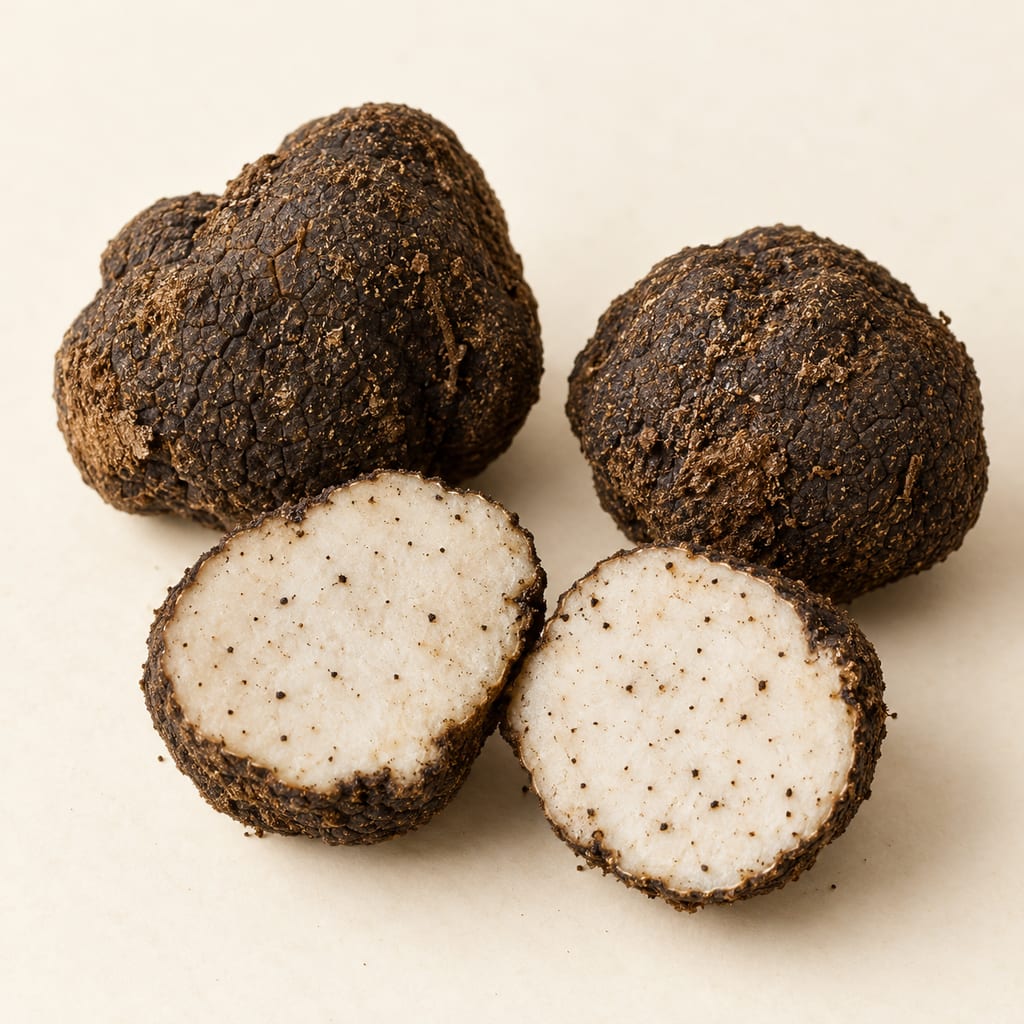
Picoa lefebvrei is a small hypogeous desert fungus of North Africa and the Middle East, called the bird truffle, whose fruiting bodies are described as edible and eaten by birds, with no food record in Africa confirmed yet.
What it is
Picoa lefebvrei is a hypogeous fungus, meaning its fruiting body forms underground, in the family of desert truffles. It was first described as Phaeangium lefebvrei in 1894 and later moved to the genus Picoa. It is called the bird truffle in English, and the Arabic name hober appears in Gulf sources.
Desert truffles grow in semi-arid and desert ecosystems, usually in association with the roots of desert shrubs, and are found from the Mediterranean basin to the Middle East. Picoa is one of several genera of such truffles, and the morphology separating it from its near relatives is a matter for a specialist, so this page does not describe one.
Food use in the sources
A review of Picoa and desert truffles in the Arabian Gulf and Middle East describes the fruiting bodies as edible and reports that the species is valued as food and used as medicine in parts of the Arabian Gulf. The same region's sources say it is commonly eaten by birds in Kuwait, which shows that the fruiting bodies are a food source in the wild.
The catalogue lists the species with a food-use label, but the label is a research flag and not a finding. The sources do not record how the fruiting bodies are cooked, how they are preserved or how they are sold.
Africa and the open question
The species is reported in North Africa, from Mauritania to Egypt, and a study of continental African truffles lists it among the desert truffles of Tunisia. Morocco has ten desert truffle species across several genera, Picoa among them.
No source reviewed for this page confirms that Picoa lefebvrei itself is harvested and eaten in Africa. Such a claim would need a targeted check in Tunisian or Moroccan ethnomycology studies, and until then the African food use stays an open question.
Sources for this section
Safety and limits
The sources describe the fruiting bodies as edible, but they give no safety assessment for this species, no preparation method and no guidance on how to tell it from other truffle-like fungi. The catalogue flags the record for specialist review and does not treat the food label as an edibility verdict.
A reader should not gather or eat a desert truffle on the basis of this page. Identification of underground fungi needs specialist knowledge, and no conclusion here replaces it.
Sources for this section
Notes
Open questions: the African food record, the local names used in North Africa and the cooking methods are not established. A targeted search of North African ethnomycology literature would address the first two.
Sources for this section
Places
North Africa
Historical attestation · Region evidenceReported from North Africa, from Mauritania to Egypt. No food use in Africa is confirmed.
Arabian Gulf
Documented use · Region evidenceDocumented as edible and valued as food and medicine in Arabian Gulf sources, and eaten by birds in Kuwait.
Community
No community contributions have been published for this entry yet.
Share what you made
Sign in to contribute. Published comments and photos are free to read.
Sources
ascomycete.orgIdentity
Picoa lefebvrei, ascomycete.org species pageFirst described as Phaeangium lefebvrei and later moved to the genus Picoa.
Cited in: What it is
Acta MycologicaGeography · Food use
Truffle and truffle-like fungi from continental AfricaPicoa species are among the desert truffle genera found across the Mediterranean and North African region; Picoa lefebvrei is among those reported in Tunisia.
Cited in: Africa and the open question; Notes
Arabian Gulf UniversityFood use · Culture
Review of Picoa and desert truffles of the Arabian Gulf and Middle EastFruiting bodies described as edible; the local name hober is reported in Gulf sources; commonly eaten by birds in Kuwait; valued as food and medicine in parts of the Arabian Gulf.
Cited in: What it is; Food use in the sources
PubMed Central, as suppliedFood use
Food-use record supplied in the fungi catalogue (entry F-486912f4dc9e)Catalogue record listing the species with a supplied food-use label; the catalogue flags the record as pending specialist evidence review.
Cited in: Food use in the sources; Safety and limits