
Mushrooms
Southern beefsteak fungus
Fistulina antarctica is a bracket fungus of Nothofagus forests in Patagonia. Local people have long eaten it. The regional food record is not a full toxicity evaluation, so its species concept needs local checking.
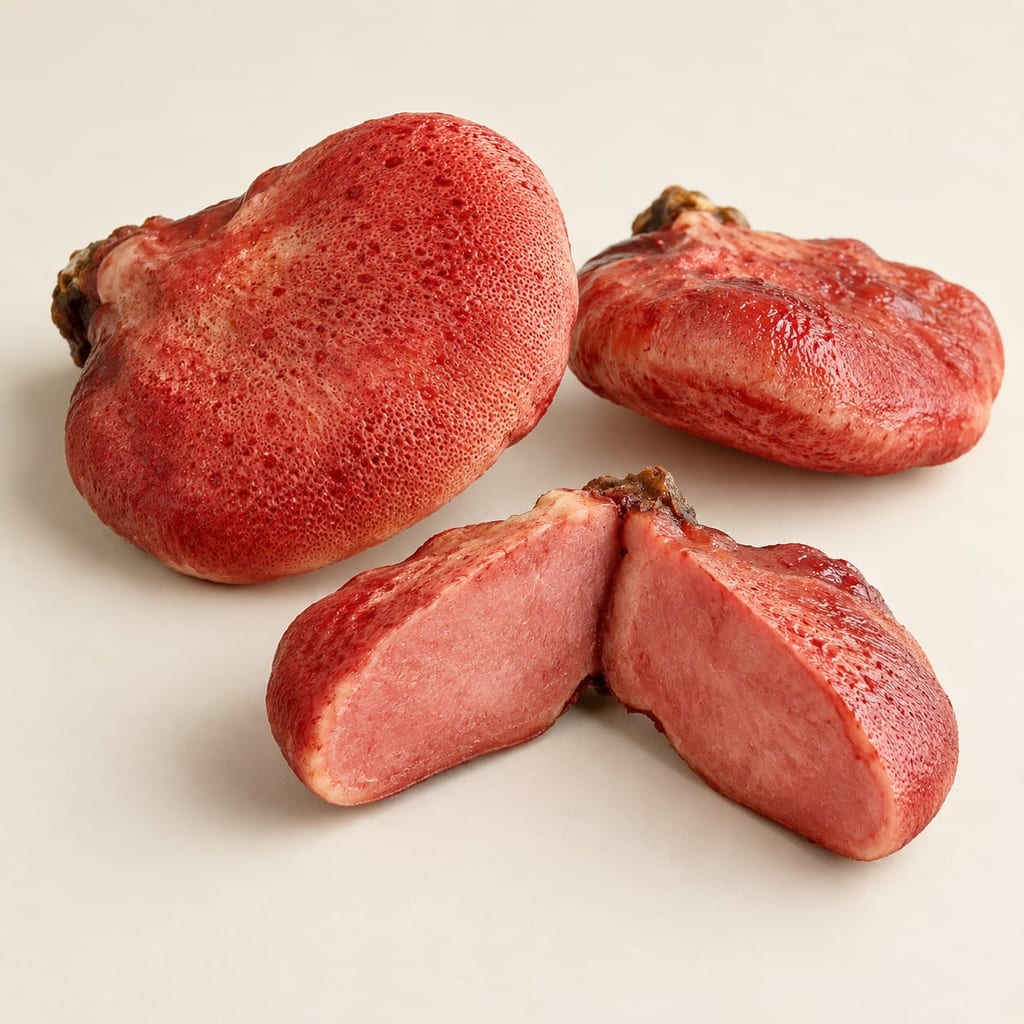
What the fungus is
Fistulina antarctica is a wood-decay bracket fungus. It grows on living and dead wood and stumps of native Nothofagaceae trees in Patagonia. It is the most host-flexible of the three Patagonian Fistulina species, according to a 2021 phylogenetic study.
The catalogue lists the species as a research name, and the same study describes the genus with several Patagonian species. The species identity should be checked against that study before the name is relied on.
Food use in Patagonia
Local people in Patagonia have long eaten the fungus. The 2021 study records ancestral use by the Mapuche-Tehuelche people. The catalogue records it as a regional consumption item and as a fungus studied for food use.
A fieldwork study of wild edible fungi in Andean-Patagonian Nothofagus forests found the fungus fruiting under high canopy cover, and tending to appear where the wood is less degraded. The sources do not give preparation methods, quantities or cooking times.
Common names
In Spanish the fungus is called lengua de vaca, meaning cow tongue, and a Spanish-language encyclopedia also gives the name podredumbre castana. These are regional names, and the sources do not show how widely each is used.
Sources for this section
Nutrition and cultivation research
A 2017 Argentine botany bulletin evaluated growth parameters for seven edible wild fungi from Nothofagus forests, including this species, with cultivation in mind. A 2022 study of the nutritional and bioactive profiles of Nothofagus-forest mushrooms exists, but the sources reviewed here show only its abstract, with no species-level figures for this fungus.
Conservation status
The IUCN Red List assessment rates the species as Least Concern. It describes the species as abundant across the Nothofagaceae range, with a stable population trend.
Sources for this section
Limits of the record and safety
The catalogue states that the food-use record is not a comprehensive toxicity evaluation and asks that the local species concept be verified. The species identity and the eating records both depend on that check.
Confirm any identification with an experienced local forager or a mycologist before eating a wild fungus. This page gives no identification, edibility verdict or safe quantity for Fistulina antarctica.
Places
Patagonia
Traditional use · Region evidenceRegional consumption record for Patagonia in Argentina and/or Chile. Local use is reported; no country is singled out.
Community
No community contributions have been published for this entry yet.
Share what you made
Sign in to contribute. Published comments and photos are free to read.
Sources
CONICETTaxonomy · Food use
Fistulina species of Patagonia (CONICET repository record)Fistulina antarctica grows on live and dead wood of Nothofagaceae in Patagonia; locals have long eaten it; the most host-flexible of three Patagonian species (2021 study, reported in a search summary).
Cited in: What the fungus is; Limits of the record and safety
CONICETFood use · History
Fistulina species of Patagonia (full CONICET record)Ancestral use by the Mapuche-Tehuelche people.
Cited in: What the fungus is; Food use in Patagonia
RedalycHabitat
Wild edible fungi in Andean-Patagonian Nothofagus forests (fieldwork study)Fruits under high canopy cover; tends to appear where wood is less degraded.
Cited in: Food use in Patagonia
DOAJ (Boletin de la Sociedad Argentina de Botanica)Cultivation
Argentine botany bulletin (2017), growth parameters of seven edible wild fungiGrowth parameters for seven edible wild fungi, including this species.
Cited in: Nutrition and cultivation research
CONICET DigitalNutrition
Nutritional composition of wild edible mushrooms from native Nothofagus forests (record)Abstract only; no species-level figures seen.
Cited in: Nutrition and cultivation research
HispanopediaCommon names
Fistulina antarcticaSpanish names lengua de vaca and podredumbre castana.
Cited in: Common names
IUCNConservation
IUCN Red List species assessment 194145Least Concern; abundant across Nothofagaceae range; stable trend.
Cited in: Conservation status
SpringerSafety
Supplied catalogue reference (Springer, s43008-019-0014-6)Supplied reference cited for the food-use limits.
Cited in: Limits of the record and safety