
Mushrooms
Sulfur shelf
Laetiporus sulphureus, sulfur shelf or chicken of the woods, is a yellow-pored bracket fungus of hardwoods in Europe and North America that is eaten young and cooked, with reported adverse reactions.
What it is
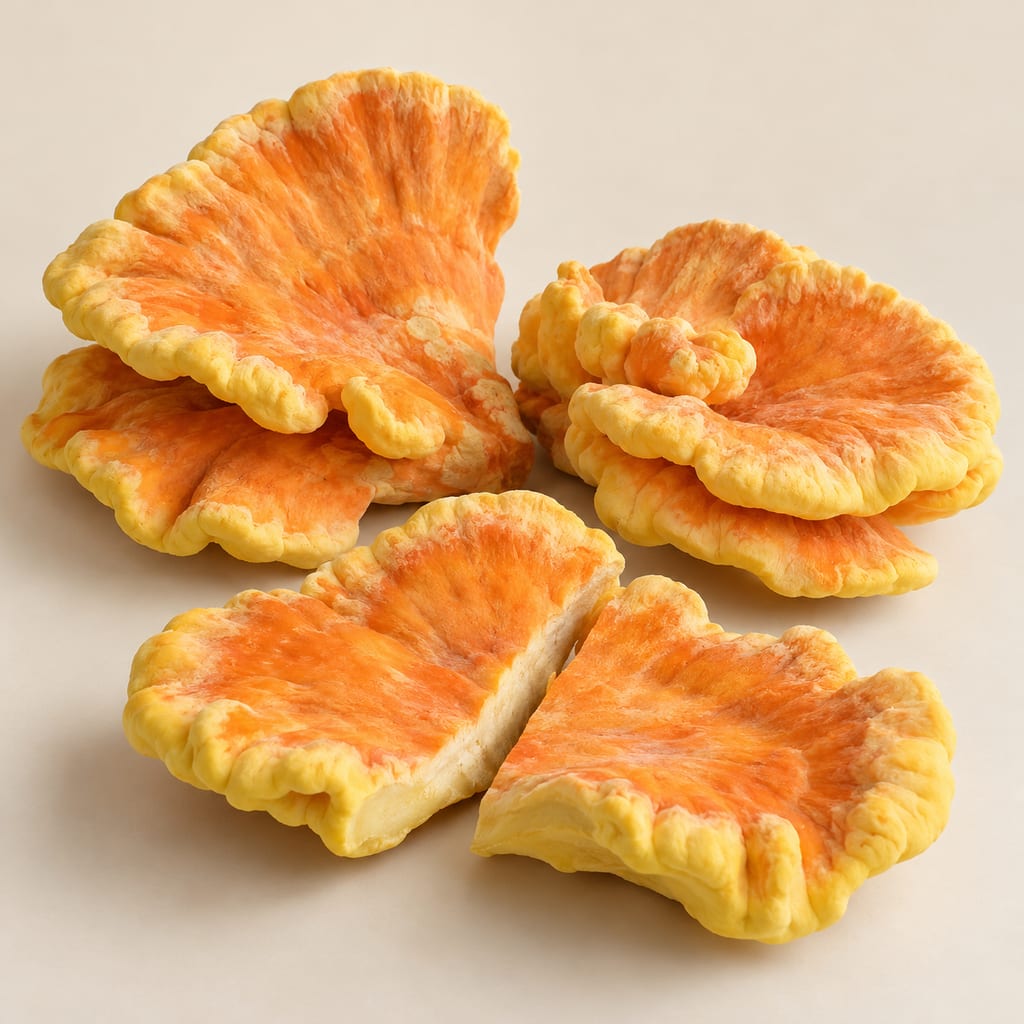
Laetiporus sulphureus is a bracket fungus that grows as golden-yellow shelves on tree trunks and branches. Its underside is covered with tubelike pores rather than gills, and the name Laetiporus means bright pores. It is known as sulphur polypore, sulphur shelf and chicken-of-the-woods.
It causes a brown, cubical heartwood rot in its hosts. Reported hosts include oak, cherry and beech, and occasionally conifers. In the Mediterranean it is usually found on carob and eucalyptus.
Sources for this section
Species complex
The name has been used broadly. North American investigations found several similar species within what had been called L. sulphureus. The true L. sulphureus may be limited to areas east of the Rocky Mountains, and genetic analyses separate clades with white pores from those with yellow pores.
The catalogue advises against transferring the name or the food status to every Laetiporus on every host, and that caution applies here.
Sources for this section
Cooking and use
The Wikipedia article describes this species as edible when young, though not raw. Only young specimens that release a large amount of clear to pale yellow watery liquid are edible, and only the young outer edges of large specimens should be picked, because older tissue is tough and may be infested with insects.
The catalogue records tender young bracket tissue used cooked. One guide cited in the article suggests sauteing it in butter or serving it in cream sauce over toast or rice. These are described as cooking suggestions in the sources, not as a tested safety method.
Adverse reactions and lookalikes
Some people have had stomach upset after eating it. Severe reactions were once reported in about one in ten people, but the article says these are now believed to come from confusion with look-alikes, notably L. huroniensis, which grows on hemlock, and L. gilbertsonii, which grows on eucalyptus.
The catalogue records that adverse reactions occur even with cooked material. The sources read do not give a dose, a preparation time or a safe amount.
Safety
The catalogue's workbook label is CONDITIONS: inspect the individual record, and it is kept as supplied. Eating it is not free of risk: adverse reactions occur even with cooked material, and the young-specimen rule above is a condition of the sources, not a safety guarantee.
This record is not a guide to identifying wild fungi. Identify any specimen with an expert before eating it, because Laetiporus species on different hosts can differ and can be confused with one another.
Places
Europe and North America
Documented use · Region evidenceRegion-level record. The catalogue records cooked use in North America and Europe; the Wikipedia article notes that Mediterranean material grows mainly on carob and eucalyptus.
Community
No community contributions have been published for this entry yet.
Share what you made
Sign in to contribute. Published comments and photos are free to read.
Sources
WikipediaIdentity · Food · Safety · Ecology · Taxonomy
Laetiporus sulphureusSulphur polypore, sulphur shelf, chicken-of-the-woods; golden-yellow shelves with pores; Europe and North America on hardwoods; Ceratonia and Eucalyptus in the Mediterranean; brown cubical heartwood rot; edible when young, not raw; only young specimens releasing clear to pale yellow liquid; young outer edges; gastrointestinal upset; earlier severe reports attributed to lookalikes L. huroniensis and L. gilbertsonii; species complex
Cited in: What it is; Species complex; Cooking and use; Adverse reactions and lookalikes; Safety
Missouri Department of ConservationFood · Safety
Sulfur-colored chicken of the woods (Missouri Department of Conservation)Catalogue-supplied source for the cooked-use record; full page not read in this recovery
Cited in: Cooking and use; Adverse reactions and lookalikes; Safety
Royal Botanic Gardens, KewIdentity
Chicken of the woods (Kew Grow Wild)Catalogue-supplied source for the common name; full page not read in this recovery