
Substrates
Tahitian chestnut
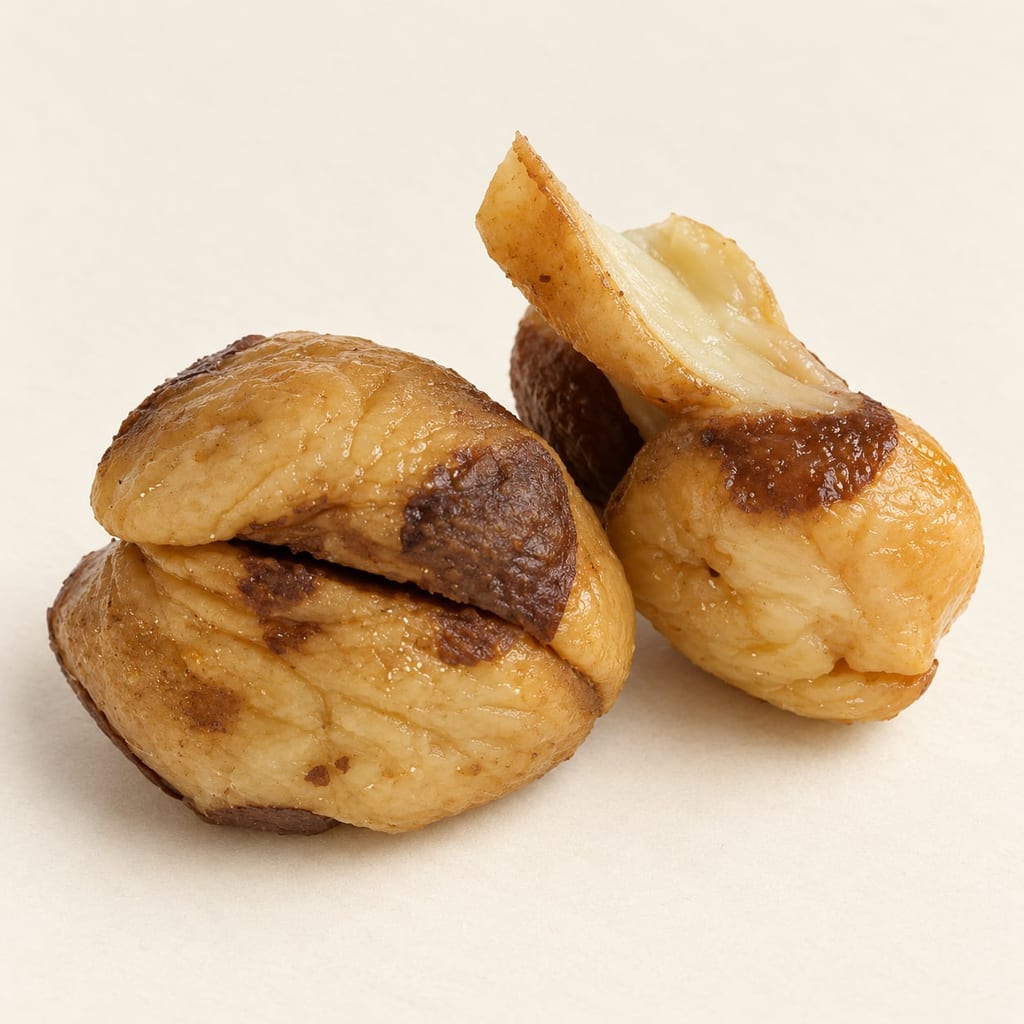
Tahitian chestnut is the starchy seed of Inocarpus fagifer, a food tree of tropical Southeast Asia and the Pacific. Despite its name, it is not a true chestnut, and the seed is cooked before eating.
Identity and names
Tahitian chestnut (Inocarpus fagifer, Fabaceae) is also called Polynesian chestnut or Tahiti chestnut. It is a Pacific and Southeast Asian food tree. The common name is misleading: the species is not a true chestnut (Castanea). Its fruit contains one large seed, the part used as food.
Edible seed and preparation
The seed is starchy and must be cooked before eating; sources describe boiling and roasting. A 2024 review cautions that the seed coat and other fruit parts are not edible. The seed should not be treated like a raw snack nut.
Food uses and growing range
Across the Pacific, nearly ripe seeds are boiled or roasted and eaten for their chestnut-like flavour. PROSEA also records grated seed mixed with coconut and baked in a stone oven, and storage in underground pits after partial fermentation. The tree occurs from tropical Southeast Asia across Micronesia, Melanesia and Polynesia; the cited sources describe this as a broad regional food, not a crop from one exclusive locality.
Places
Tropical Southeast Asia and the Pacific Islands
Traditional use · Region evidenceThe review reports a broad Southeast Asian and Pacific distribution. PROSEA suggests an eastern Malesian origin and human-carried spread, while noting cultivation elsewhere; this is not a single exclusive origin.
Community
No community contributions have been published for this entry yet.
Share what you made
Sign in to contribute. Published comments and photos are free to read.
Sources
Discover AgricultureIdentity · Safety · Culinary use · Geography
The Tahitian chestnut (Inocarpus fagifer), a neglected multi-purpose tree from the Asia–Pacific regionIdentifies the species as Inocarpus fagifer in Fabaceae and says the common name is misleading because it is not a true chestnut.
Reports widespread tropical Southeast Asian and Pacific distribution and traditional food importance of the seed.
Says seeds are cooked, usually boiled or roasted, before consumption; the seed testa and other fruit parts are not edible.
Describes traditional dishes including grated seed with coconut milk baked in an earth oven.
Cited in: Identity and names; Edible seed and preparation; Food uses and growing range
Plant Resources of South-East Asia (PROSEA)Identity · Names · Geography · Culinary use
Inocarpus fagifer (Parkinson) FosbergLists Tahiti chestnut, Polynesian chestnut and Otaheite chestnut among English names, and regional names including gayam, ivi, aila and lala.
Describes the fruit as one-seeded and the seed as large with a hard seed coat and white endosperm.
Reports boiling or roasting nearly ripe seeds, a grated-seed and coconut dish baked in a stone oven, and underground storage after partial fermentation.
Places the species across tropical Southeast Asia and Pacific islands; its eastern Malesian origin is described as probable.
Cited in: Identity and names; Edible seed and preparation; Food uses and growing range
National Parks Board, SingaporeIdentity · Culinary use · Geography
Inocarpus fagiferIdentifies Inocarpus fagifer as Tahitian chestnut and says ripe seeds are eaten after boiling or roasting, with a chestnut-like taste.
Reports a Pacific distribution and describes its place as a culturally important edible tree.
Cited in: Edible seed and preparation; Food uses and growing range