
Mushrooms
Velvet bolete
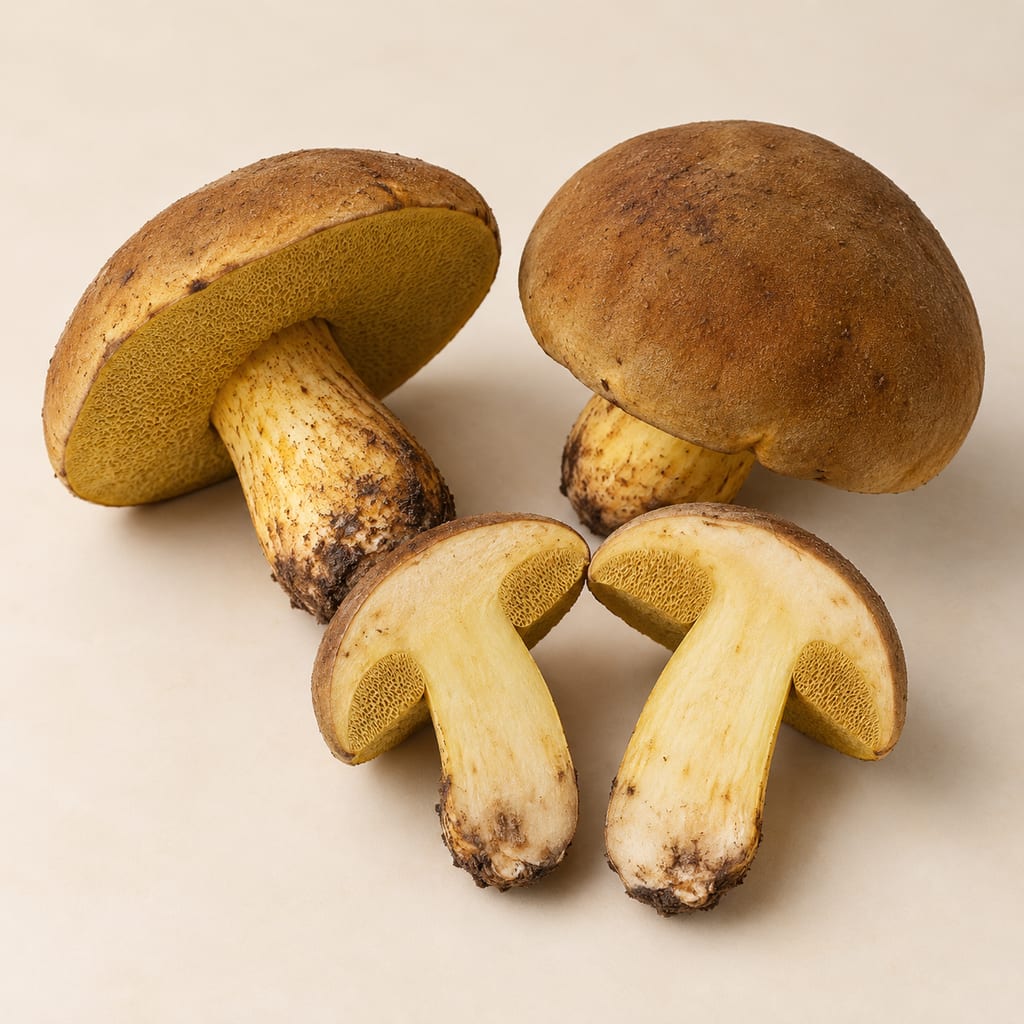
Suillus variegatus, the velvet bolete, is a wild bolete of pine woods in northern Europe that is eaten cooked or dried. Its cap and tubes are usually peeled and removed before cooking.
Overview
Suillus variegatus, the velvet bolete, is a wild bolete that grows with pine trees in northern Europe. Boletes have a spongy layer of tubes under the cap rather than gills. The catalogue records it as a cooked or dried wild bolete, supplied from the wild.
Identification
The velvet bolete is similar in appearance to Suillus luteus, but it has a darker cap and smaller pores. Unlike the slippery jack, it has no skirt, or ring, around the stem. Those features are the usual field cues for telling the two apart, and any identification should be confirmed by an expert.
Edibility and taste
Reference sources describe the velvet bolete as edible but unappealing. It has an unpleasant smell and a metallic taste. One source records it as one of the most productive wild edible species in Finland in the 1970s.
Preparation
A British foraging guide advises peeling the cap and removing the tube layer, then cooking the mushroom thoroughly. It also advises eating only small portions at first, because some people find that Suillus mushrooms upset the stomach. The catalogue records cooking and drying as the two uses.
Region
The catalogue keeps the region as northern Europe and does not assign a worldwide distribution. A traditional-food claim that appears on a commercial site was not confirmed by other sources and is not used here.
Safety
The sources read here give no safe-eating guarantee for this species. Their advice is to cook it thoroughly, begin with small portions, and identify it with care. This page gives no identification or edibility verdict.
Places
Northern Europe
Documented use · Region evidenceThe catalogue keeps the source region rather than a worldwide distribution.
Community
No community contributions have been published for this entry yet.
Share what you made
Sign in to contribute. Published comments and photos are free to read.
Sources
Nordic Council / DiVAFood use · Catalogue source
Nordic edible fungi source (catalogue source)Catalogued as a cooked or dried bolete in northern Europe; the full text was not read for this page.
First NatureIdentity · Edibility · Lookalikes
Suillus variegatus, Velvet Bolete mushroomEdible but unappealing; unpleasant smell and metallic taste; Finnish productivity in the 1970s.
Mushroom AppreciationPreparation · Lookalikes · Caution
Slippery Jacks: A Beginner's Guide to Identification and ForagingPeel the cap and remove the tube layer, cook thoroughly, eat small portions at first; differs from slippery jacks in lacking a stem skirt; resembles Suillus luteus.