
Substrates
Wild cherry (Prunus avium)
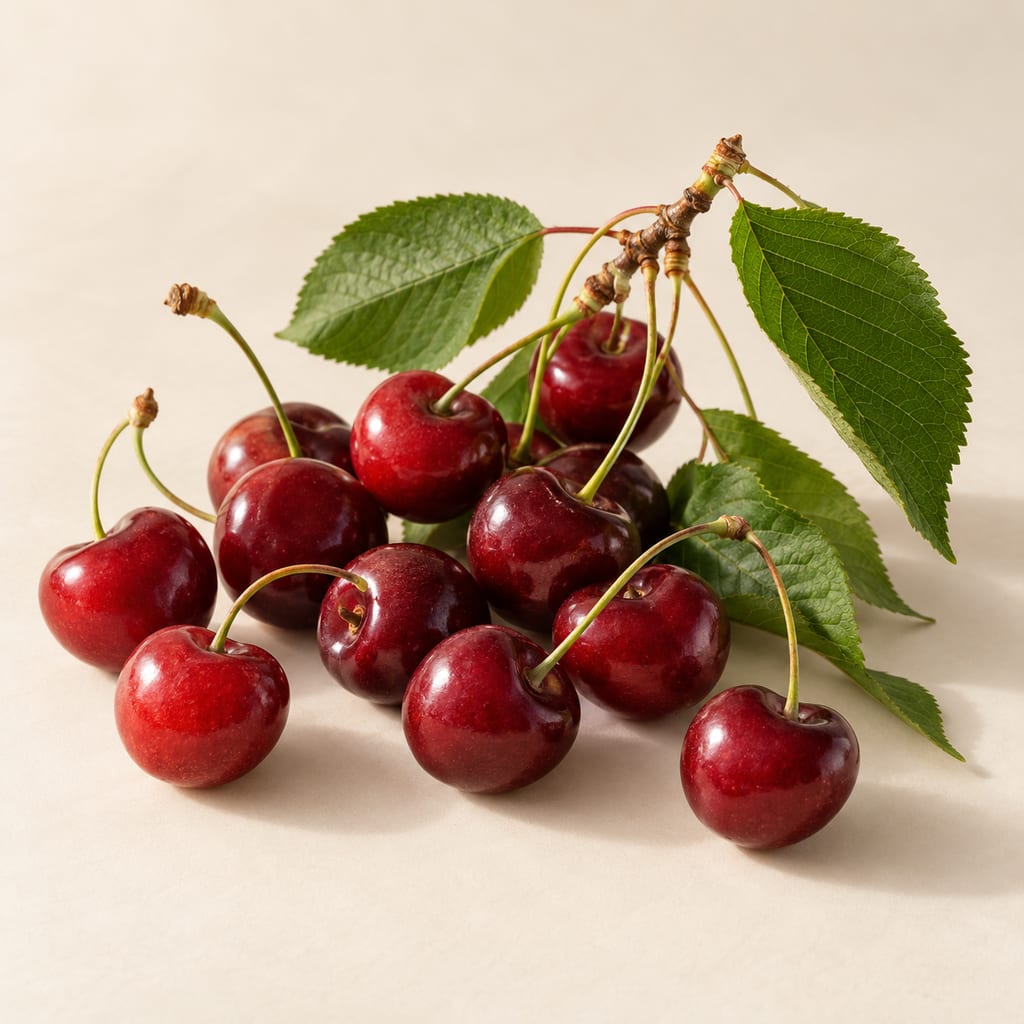
Prunus avium, the wild or gean cherry of Great Britain and Ireland, bears red summer fruit eaten by birds and used in cherry brandy. Kernel and leaf safety are not settled by the sources read.
What the plant is
Prunus avium is recorded by the RHS as native to Great Britain and Ireland, with a range given as Europe to Asia Minor, the Caucasus and western Siberia. The Wildlife Trusts describe it as growing wild on woodland edges and hedgerows and as also frequently planted in towns and gardens.
Its white flowers open in early spring and ripen into red summer fruit, the cherries. The RHS lists the tree as a fruiting plant with edible fruit.
Sources for this section
Fruit and use
The Wildlife Trusts entry calls the fruit the edible cherries we know and love and notes their use in cherry brandy. Birds and mammals eat the fruit and spread the seeds.
The sources do not describe the flesh's taste, ripeness or yield in a way that would support a recipe. Other web material describes the fruit as sometimes bitter; that statement was not verified here.
Sources for this section
Stones, leaves and bark
The RHS entry gives no toxicity warning about the stones or leaves, and the Wildlife Trusts entry gives none about kernels, leaves or bark. Neither source therefore establishes that these parts are safe, and neither establishes that they are toxic.
Other web material, read only in summary, states that the stones and other parts of the plant contain cyanogenic compounds. That statement was not verified in a primary source, so this page makes no finding on it. Kernels and leaves stay unassessed.
Sources for this section
Identification and safety limits
Reference and research only. Fermenta cannot identify a gathered specimen or guarantee that it is safe to eat. Competent local identification is needed before eating any wild plant.
The Wildlife Trusts entry gives bark description for identification, with red, papery bark that peels in horizontal bands. That description is not a field key. The sources used here do not assess lookalikes, including other wild Prunus species.
Sources for this section
Research gaps
The Kew Grow Wild entry named in the source record could not be read in this pass. Regional names, gathering season, local abundance and collection rules are not established here. The source record lists wild cherry as a discovery name for the UK and is not a completed report.
Sources for this section
Places
Great Britain and Ireland
Documented use · Region evidenceThe RHS entry marks the plant as native to GB and Ireland. Its wider range is given as Europe to Asia Minor, the Caucasus and western Siberia. Native status does not establish local abundance or collection rights.
Community
No community contributions have been published for this entry yet.
Share what you made
Sign in to contribute. Published comments and photos are free to read.
Sources
Royal Horticultural SocietyNative status · Edibility · Habitat
Prunus aviumNative to GB and Ireland
Range Europe to Asia Minor, Caucasus, western Siberia
Fruit tagged edible
No toxicity warning on the entry
Cited in: What the plant is; Fruit and use; Stones, leaves and bark
The Wildlife TrustsHabitat · Fruit · Identification
Wild cherry (Prunus avium)Woodland edges and hedgerows; frequently planted
Red summer fruit eaten by birds and mammals
Fruit used in cherry brandy
Bark description for identification
No kernel, leaf or bark warning
Cited in: What the plant is; Fruit and use; Stones, leaves and bark; Identification and safety limits
Royal Botanic Gardens, Kew (POWO)Accepted name
POWO name lookup for Prunus aviumName lookup for Prunus avium
Cited in: Research gaps